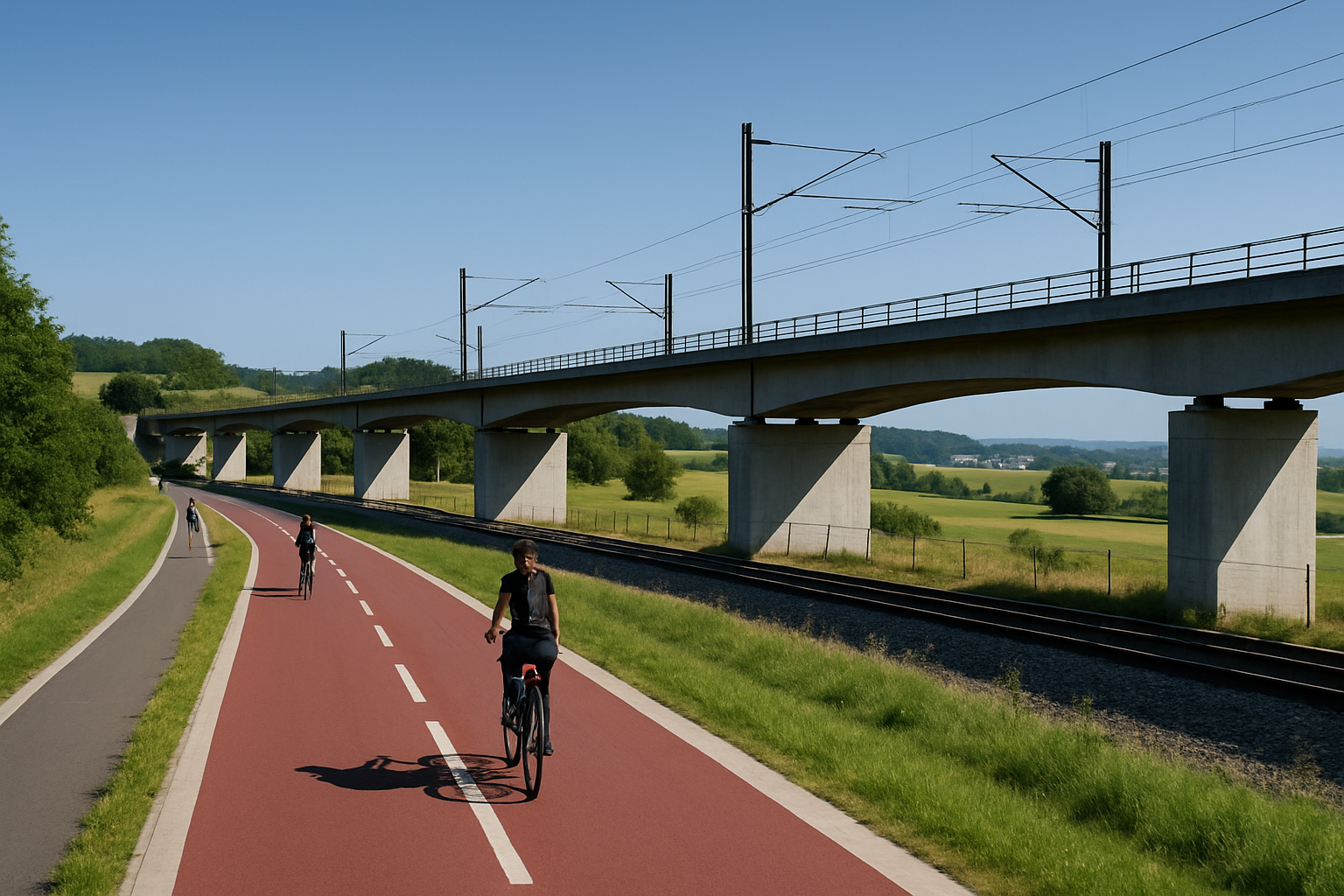
Europe is witnessing an unprecedented surge in sustainable transportation infrastructure development, with Belgium's ambitious F4 cycle superhighway between Ghent and Antwerp leading a continental shift toward green mobility solutions that promise to transform how Europeans travel while addressing climate challenges.
The F4 cycle superhighway, expected to be completed by 2030, represents one of Europe's most ambitious cycling infrastructure projects. Provincial authorities in East Flanders Province announced that work has begun on a crucial new cycle tunnel under the N70 road in the municipality of Beveren-Kruibeke-Zwijndrecht, marking significant progress in this transformative project.
Belgium's Cycling Infrastructure Revolution
The Ghent-Antwerp cycle superhighway exemplifies Europe's growing commitment to sustainable transportation alternatives. This dedicated cycling corridor will provide a safe, high-speed connection between two of Belgium's major urban centers, potentially reducing car dependency and carbon emissions while improving public health outcomes.
The project's scale reflects broader European Union infrastructure investment priorities, which have been accelerated amid concerns about climate adaptation and energy security. The cycle tunnel construction under the N70 demonstrates the technical sophistication being deployed to create seamless cycling networks that can compete with traditional transportation modes.
Continental Infrastructure Investment Surge
Belgium's cycling superhighway is part of a remarkable global infrastructure development wave that has characterized early 2026. Recent months have seen major transportation projects advance across multiple continents, from Mexico's completed "El Insurgente" interurban train connecting Mexico City to Toluca, to Paraguay's nearly-finished Bioceanic Bridge spanning 1,300 meters.
This surge reflects growing recognition of infrastructure as essential economic foundation, particularly as nations grapple with climate adaptation requirements and the need for resilient transportation networks. European projects have demonstrated particular sophistication in integrating sustainability principles with connectivity goals.
Cross-Border Rail Integration Challenges
While cycling infrastructure advances, European cross-border rail connections face mounting challenges from extreme weather conditions. Recent severe winter weather across the continent has tested transportation networks to their limits, with railway suspensions in Sweden, ice warnings in Germany, and widespread disruptions affecting international connectivity.
The current European weather crisis, which has seen temperatures drop to historic lows in some regions while others battle severe storms, has highlighted the vulnerability of existing transportation infrastructure. Estonia, experiencing its coldest winter in 25 years, exemplifies the operational challenges facing cross-border rail networks amid increasingly volatile climate conditions.

Climate Adaptation and Infrastructure Resilience
The intersection of infrastructure development and climate adaptation has become central to European transportation planning. Recent weather emergencies, including Storm Leonardo's impact on Spain and Portugal, have demonstrated the critical importance of building resilient transportation networks capable of withstanding extreme conditions.
European transport authorities have increasingly prioritized infrastructure projects that can maintain operations despite challenging weather conditions. This approach recognizes that traditional transportation networks may prove inadequate for the climate volatility expected in coming decades.
Economic and Environmental Integration
The economic implications of these infrastructure investments extend beyond transportation efficiency. Projects like the F4 cycle superhighway represent coordinated efforts to reduce carbon emissions while stimulating economic activity through construction investment and improved connectivity between major economic centers.
European Union policies have increasingly aligned transportation infrastructure development with climate goals, creating synergies between economic development and environmental protection. The focus on cycling infrastructure particularly reflects recognition that active transportation modes can contribute significantly to public health outcomes while reducing transportation-related emissions.
Technology and Innovation Integration
Advanced transportation projects across Europe demonstrate growing integration of smart technologies with traditional infrastructure development. From digital monitoring systems for cycle superhighways to sophisticated weather tracking for rail networks, technology increasingly enables more responsive and efficient transportation management.
This technological integration reflects broader European commitments to digital transformation and smart city initiatives, with transportation infrastructure serving as a key platform for implementing Internet of Things sensors, real-time monitoring systems, and predictive maintenance protocols.
Regional Development and Connectivity Goals
The emphasis on cross-border transportation infrastructure reflects European Union priorities for regional integration and economic cohesion. Projects that enhance connectivity between member states support broader goals of economic integration while providing practical benefits for citizens and businesses requiring efficient cross-border travel options.
These connectivity improvements occur amid broader global infrastructure investment trends, with multiple regions simultaneously advancing major transportation projects that promise to reshape regional economic relationships and travel patterns.
"These infrastructure investments represent more than transportation improvements – they demonstrate European commitment to sustainable development that balances economic growth with environmental responsibility."
— European Infrastructure Policy Analyst
Future Development Trajectory
The completion timeline for Belgium's F4 cycle superhighway by 2030 aligns with broader European infrastructure development schedules that prioritize sustainable transportation alternatives. This timeline reflects both the technical complexity of creating integrated cycling networks and the political commitment required to sustain long-term infrastructure investment.
As European transportation infrastructure continues evolving, the balance between traditional rail networks and innovative cycling superhighways will likely determine the continent's ability to achieve ambitious climate goals while maintaining economic competitiveness and regional connectivity.
The success of projects like the Ghent-Antwerp cycle superhighway could establish models for similar developments across Europe, potentially creating a continental network of sustainable transportation alternatives that support both environmental goals and economic development objectives.