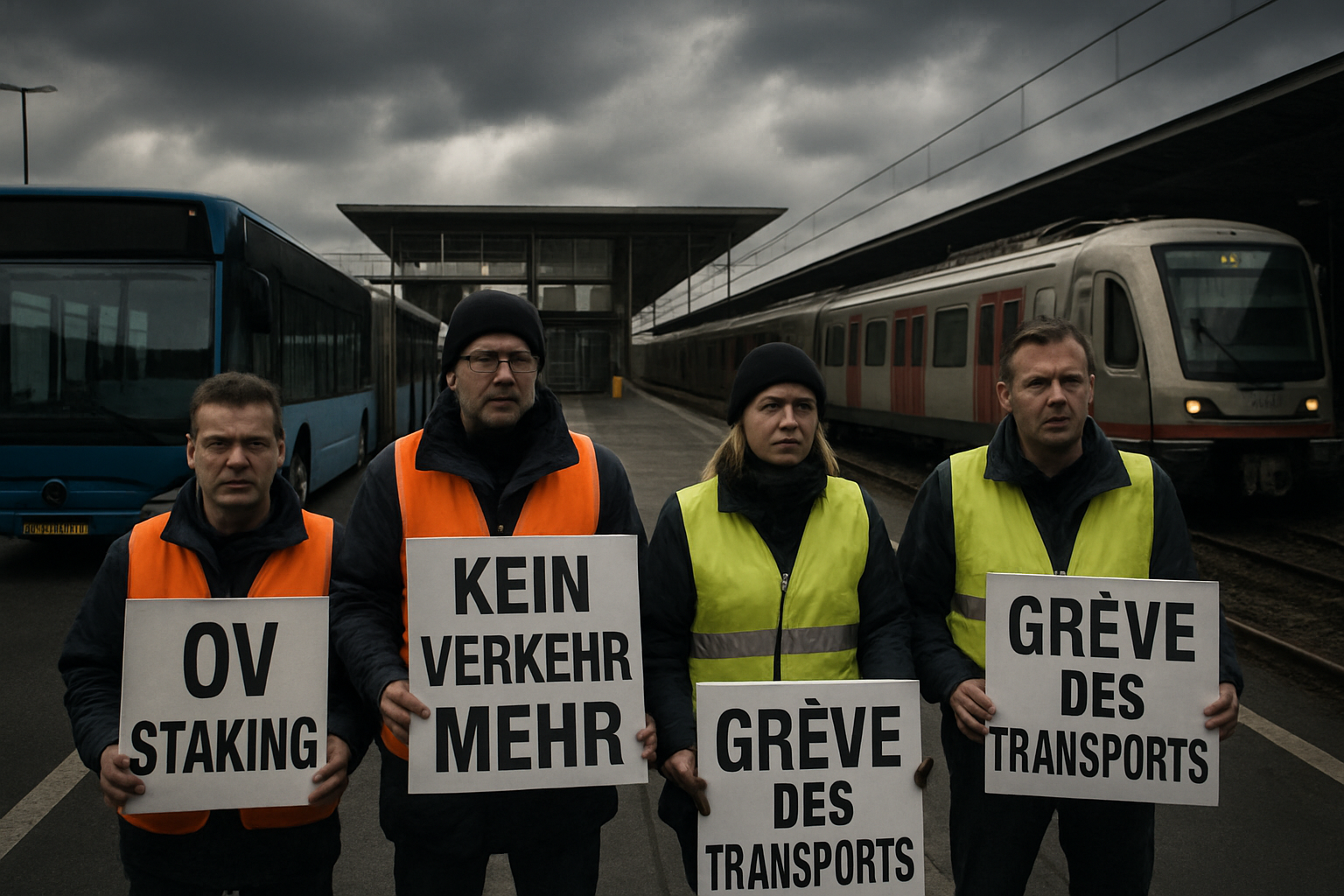
Transportation workers across Europe are mobilizing for major strike action, with labor disputes spanning Belgium, Germany, Italy, and the Netherlands as unions demand better wages and working conditions amid mounting economic pressures.
The coordinated strikes represent the latest escalation in a broader pattern of European transportation labor unrest that has marked 2026, building on previous massive disruptions including German Ver.di union strikes that affected over 100,000 workers and Belgium's ongoing disputes with the Flemish government.
Belgium: Funding Cuts Trigger Provincial Strikes
In Belgium, the Flemish public transport company De Lijn faces severe disruption as unions stage rotating one-day strikes across all five Flemish provinces this week. The action has already led to 40% of bus and tram services being cancelled in Antwerp Province alone, affecting thousands of daily commuters.
The strikes directly protest additional funding cuts announced by the Flemish Government, which unions argue threaten both service quality and worker compensation. The systematic approach of targeting one province per day maximizes political pressure while distributing economic impact across the region.
"These funding cuts are not just about money – they're about the fundamental viability of public transport in Flanders"
— De Lijn Union Representative
The Belgian strikes occur against the backdrop of broader European transportation funding challenges, as governments balance post-pandemic recovery costs with infrastructure investment needs.
Germany: Easter Travel Disruption Looms
German transportation networks face potential major disruption during the critical Easter travel period, as prolonged strike action continues to impact both air travel and public transport systems. The ongoing disputes stem from Ver.di union demands for substantial wage increases and improved working conditions.
Germany has experienced some of Europe's most significant transportation strikes in 2026, with previous actions affecting over 100,000 workers across buses, trains, and subway systems. The union has consistently demanded over 20% salary increases, shorter working hours, extended rest periods, and enhanced compensation for night and weekend shifts.
The timing of potential Easter strikes is particularly significant, as it coincides with one of Germany's busiest travel periods, potentially affecting millions of passengers and creating cascading effects across European transportation networks that rely on German hubs.
Italy: Aviation Workers Target Major Airports
Italian transportation workers are focusing their strike action on aviation, with particular disruption expected at Milan's airports and operations involving easyJet on March 18th. The targeted approach reflects the strategic importance of aviation hubs to both domestic travel and international connectivity.
Italy's strikes are part of a broader pattern of European aviation labor disputes that have affected major carriers and airports throughout 2026. The concentration on Milan airports, which serve as crucial hubs for Northern Italian commerce and tourism, demonstrates unions' understanding of economic leverage points.
Passengers traveling through affected airports face potential significant delays and cancellations, with airlines advising travelers to verify flight status and consider alternative arrangements.
Netherlands: Civil Servants Plan National Action
Dutch civil servants are preparing for a nationwide strike scheduled for April 14, targeting what unions call a "wage freeze" policy. The action represents another escalation in Dutch labor tensions, as public sector workers push back against government austerity measures.
The Dutch strike is particularly significant because it affects not just transportation but broader public services, potentially creating compound disruption across multiple sectors simultaneously. The timing suggests coordination with the broader European pattern of spring labor actions.
Civil servants argue that wage freezes amount to effective pay cuts given inflation pressures, while the government maintains fiscal constraints require measured compensation approaches.
Historical Context: European Labor Relations Under Pressure
These strikes occur within a broader context of evolving European labor relations marked by the breakdown of traditional social partnership models. Germany's departure from its historic consensus-based approach toward more confrontational tactics represents a significant shift in Continental European labor practices.
The pattern builds on months of escalating transportation strikes across Europe, including:
- February's massive 48-hour German transport strike affecting 100,000+ workers
- Repeated Lufthansa pilot strikes over pension contributions
- Italian aviation and railway worker coordinated actions
- Extensive weather-related disruptions that compounded labor tensions
Memory of previous successful strikes, including Argentina's coordinated general strikes that achieved $489 million in economic impact, demonstrates to European unions the potential effectiveness of well-organized labor action.
Economic and Political Implications
The coordinated nature of European transportation strikes carries significant economic implications beyond immediate travel disruption. Transportation networks serve as critical arteries for commerce, with strikes affecting supply chains, tourism, and business operations across multiple countries simultaneously.
Political implications are equally significant, as strikes test government capacity to balance fiscal constraints with labor demands during a period of economic pressure. The success or failure of these labor actions will likely influence future union strategies and government responses across Europe.
The strikes also highlight infrastructure vulnerabilities, as transportation disruptions expose the interconnected nature of European commerce and travel. Alternative routing and modal shifts create bottlenecks that can affect regions far beyond the immediate strike zones.
International Coordination and Union Strategy
Evidence suggests increasing coordination between European transportation unions, sharing tactical approaches and timing actions for maximum collective impact. This represents an evolution from traditional national labor actions toward more sophisticated international cooperation.
Union strategies have evolved toward "smart" strike tactics that maximize economic and political pressure while minimizing negative public relations impact. The Belgian approach of rotating provincial strikes and the Italian focus on specific aviation hubs demonstrate this tactical sophistication.
The pattern mirrors successful labor coordination seen globally, including Latin American general strikes that achieved significant policy concessions through sustained economic pressure rather than street protests.
Looking Forward: Resolution Challenges
Resolution of these transportation strikes faces significant challenges given the fundamental nature of disputes over compensation, working conditions, and public funding priorities. Unlike weather-related disruptions, labor conflicts require negotiated solutions addressing underlying economic and political tensions.
The interconnected nature of European transportation means that strikes in one country create cascading effects across the continent. This connectivity amplifies union leverage but also increases pressure for swift resolution to prevent broader economic disruption.
Coming weeks will test the effectiveness of European labor coordination against government and employer responses, with outcomes likely influencing transportation labor relations across the continent for years to come.
The stakes extend beyond immediate wage and working condition demands to fundamental questions about European social models, public service funding, and the balance between fiscal responsibility and worker welfare in an era of economic transformation.