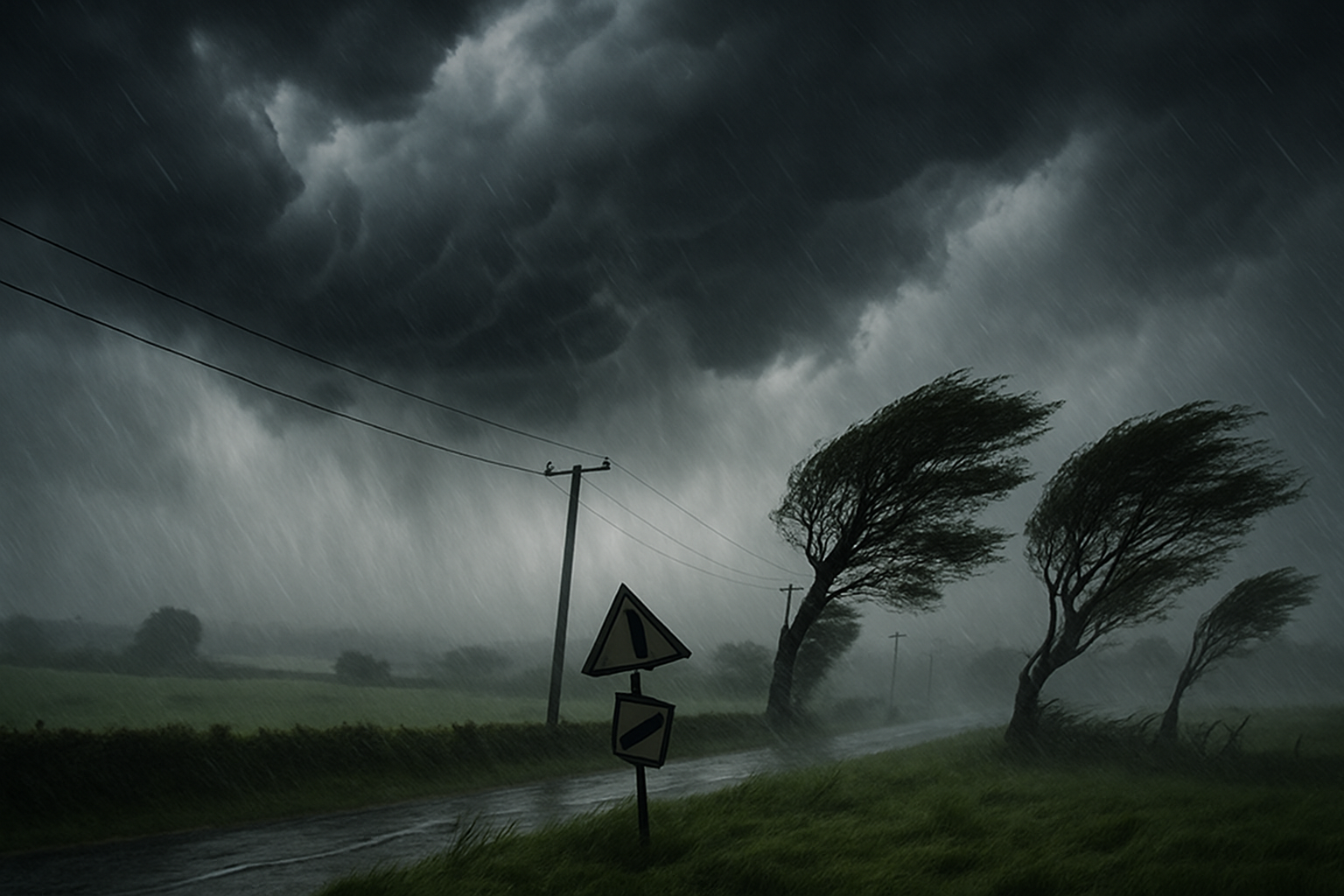
Multiple European nations issued severe weather warnings on March 12, 2026, as Ireland faced widespread power outages affecting thousands of residents, flight diversions from Dublin Airport, and plummeting temperatures, while Norway and Sweden battled powerful storms in what meteorologists describe as another chapter in Europe's ongoing climate emergency.
Met Éireann issued wind and rain warnings across Ireland as atmospheric conditions deteriorated rapidly throughout Thursday, with afternoon temperatures set to drop as low as 4 degrees Celsius. The Irish weather service's alerts triggered immediate impacts on critical infrastructure, forcing several flights to divert from Dublin Airport as crosswinds exceeded safe landing thresholds.
In County Donegal, over 1,000 homes and businesses lost power in Stranorlar, while an additional 134 properties in Derrybeg were left without electricity as the region endured a Status Yellow wind and rain warning that remained in effect from 6 AM until 6 PM. The rain warning was lifted at 3 PM, but dangerous conditions persisted across the northwestern county.
Multi-National Weather Emergency Unfolds
Norway's meteorological service issued urgent warnings as a powerful storm system swept across southern regions, bringing dangerous winds and precipitation that prompted authorities to advise against unnecessary outdoor activities. The storm, originating from Atlantic weather patterns, created hazardous conditions from the coast to inland mountain regions.
Simultaneously, Sweden faced its own meteorological challenges as a Norwegian storm system moved eastward across Scandinavian territory. SMHI issued yellow warnings for the Västkusten and Bohuslän regions, extending up toward Värmland, where mountain areas received special attention due to dangerous wind conditions.
The Swedish meteorological institute specifically warned residents in fjälltrakterna (mountain regions) about severe weather risks, issuing comprehensive yellow warnings as the storm system tracked across the country's western territories.
Infrastructure Strain and Transportation Disruption
Ireland's transportation networks faced significant disruption as Met Éireann's weather warnings materialized into dangerous conditions. Dublin Airport authorities advised passengers to check with airlines for potential delays and cancellations as crosswinds and visibility issues affected flight operations throughout the day.
The weather system brought heavy rainfall to already saturated ground across Ireland, creating concerns about localized flooding in vulnerable areas. Met Éireann meteorologists warned that the combination of wind and rain would create "difficult travelling conditions" and potential for "debris or loose objects displaced" across affected regions.
Transportation authorities across the Nordic countries reported challenging conditions as the storm system moved through the region. In Norway, where similar weather patterns have caused significant disruptions in recent months, officials advised residents to secure loose outdoor objects and avoid unnecessary travel during peak wind periods.
Historical Context of European Weather Volatility
The March 12 weather warnings represent a continuation of Europe's unprecedented climate volatility, occurring during what scientists confirm is the 20th consecutive month of global temperatures exceeding 1.5°C above pre-industrial levels. This sustained warming period represents the longest streak of extreme temperature anomalies in recorded human history.
European nations have faced relentless severe weather since the beginning of 2026, with the February storm succession of Kristin, Leonardo, Marta, Nils, and Pedro claiming over 35 lives across Portugal, Spain, and France. That crisis required Portugal's largest peacetime rescue operation, deploying 26,500 emergency personnel including 1,975 military personnel and 30 naval vessels.
The February storms caused unprecedented infrastructure damage, including the collapse of Portugal's A1 highway viaduct near Coimbra due to flooding from the Mondego River. Recovery efforts from those storms are still ongoing, with transportation corridors requiring weeks to months for full restoration.
Ireland has particular vulnerability to Atlantic storm systems, having experienced significant flooding events in recent months. The Kilternan Dublin housing estate remains largely abandoned following Storm Chandra flooding, with residents displaced indefinitely due to severe property damage that rendered homes uninhabitable.
Climate Science and Adaptation Challenges
European Scientific Advisory Council climate experts have repeatedly warned that the continent remains "critically unprepared" for accelerating climate impacts. The frequency and intensity of severe weather events have overwhelmed traditional emergency response frameworks designed for sequential rather than simultaneous regional disasters.
Dr. Roxana Bojariu, Head of the Climatology Department at Romania's National Meteorological Administration, previously warned that "winter is not over, March is a capricious month" when discussing Europe's weather volatility. Her observations have proven prescient as March 2026 continues the pattern of unpredictable and severe atmospheric conditions.
"The current conditions we're experiencing represent a preview of routine 2030s weather patterns without significant climate adaptation investment."
— European Climate Adaptation Research Council
Infrastructure systems across Europe, designed for historical climate patterns, are operating beyond their design parameters. Transportation networks, power grids, and communication systems face repeated stress from extreme weather events that exceed the assumptions used in their construction.
Emergency Response and International Cooperation
The European Union's Civil Protection Mechanism has been activated multiple times throughout 2026, with Sweden and Denmark providing a €246 million assistance package that represents the largest coordinated European weather response on record. This unprecedented level of international cooperation reflects the scale and frequency of climate emergencies affecting the continent.
Emergency services across affected regions have reported operating at or near capacity limits, with traditional mutual aid mechanisms strained by the simultaneous nature of weather emergencies. Ireland's emergency responders, already managing recovery efforts from previous storms, faced additional challenges as new weather systems brought fresh risks to vulnerable communities.
Norway's emergency preparedness systems, considered among the world's most robust, have been tested repeatedly by severe weather throughout 2026. The country's experience in managing extreme conditions provides valuable lessons for other European nations adapting to increased weather volatility.
Economic and Social Impact
The cumulative economic impact of Europe's weather crisis extends across multiple sectors, with agricultural operations facing billions in losses from damaged crops and disrupted supply chains. Tourism infrastructure has suffered extensive damage, particularly in coastal regions exposed to Atlantic storm systems.
Rural communities bear disproportionate impacts from power outages and transportation disruptions. In Donegal, where over 1,100 properties lost electricity, residents face challenges accessing essential services and maintaining communication during extended outages.
Mental health services across Europe report increased demand as communities grapple with repeated extreme weather trauma. Families have lost generational homes, small businesses face extinction threats, and vulnerable populations require extended emergency support.
Adaptation Imperatives and Future Preparedness
Climate adaptation experts emphasize that March 2026 represents a potential watershed moment for European climate preparedness. The choice between reactive crisis management and transformative infrastructure adaptation becomes increasingly critical as extreme weather frequency and intensity continue to increase.
The concept of "building back better" has evolved from an optional enhancement to an essential survival strategy for communities facing repeated extreme weather events. Infrastructure reconstruction must account for future rather than historical climate conditions, incorporating enhanced resilience against wind, rain, flooding, and temperature extremes.
International cooperation frameworks require restructuring to address the reality of permanent climate volatility. Traditional bilateral aid mechanisms, designed for isolated regional emergencies, prove inadequate when multiple countries face simultaneous weather disasters.
Immediate Outlook and Ongoing Risks
Meteorological services across Europe maintain high alert status as additional Atlantic weather systems develop. The March 12 warnings represent immediate risks, but broader atmospheric patterns suggest continued volatility throughout the remainder of the month.
Authorities across affected regions advise residents to monitor weather warnings closely, secure outdoor objects, and avoid unnecessary travel during peak wind and rain periods. Emergency supplies including flashlights, batteries, and emergency communications should be readily accessible as power infrastructure remains vulnerable.
Transportation networks face ongoing disruption potential, with aviation particularly sensitive to crosswind and visibility conditions. Road travel requires heightened caution due to debris, standing water, and reduced visibility from heavy precipitation.
The window for effective climate action continues to narrow as ecological systems approach critical thresholds. February and March 2026's extreme weather events demonstrate the urgent need for comprehensive adaptation strategies that address both the symptoms and causes of environmental vulnerability across all sectors of European society.
As recovery efforts from previous storms continue across Portugal, Spain, and France, the emergence of new severe weather warnings underscores the relentless nature of Europe's climate challenge and the imperative for transformative rather than reactive approaches to continental weather resilience.