Portugal's presidential election runoff proceeded Sunday despite unprecedented flooding and storm damage across the Iberian Peninsula, as Europe grapples with its most severe weather emergency in recent memory, forcing evacuation of thousands and testing democratic institutions under extreme climate conditions.
The election between Socialist candidate António José Seguro and far-right challenger André Ventura took place as Storm Marta, the third consecutive major Atlantic storm in two weeks, continued to batter Portugal and Spain with 120 km/h winds and 13-meter waves. At least 14 people have died from the succession of storms that began with Kristin in late January, followed by Leonardo, and now Marta.
Massive Rescue Operation Underway
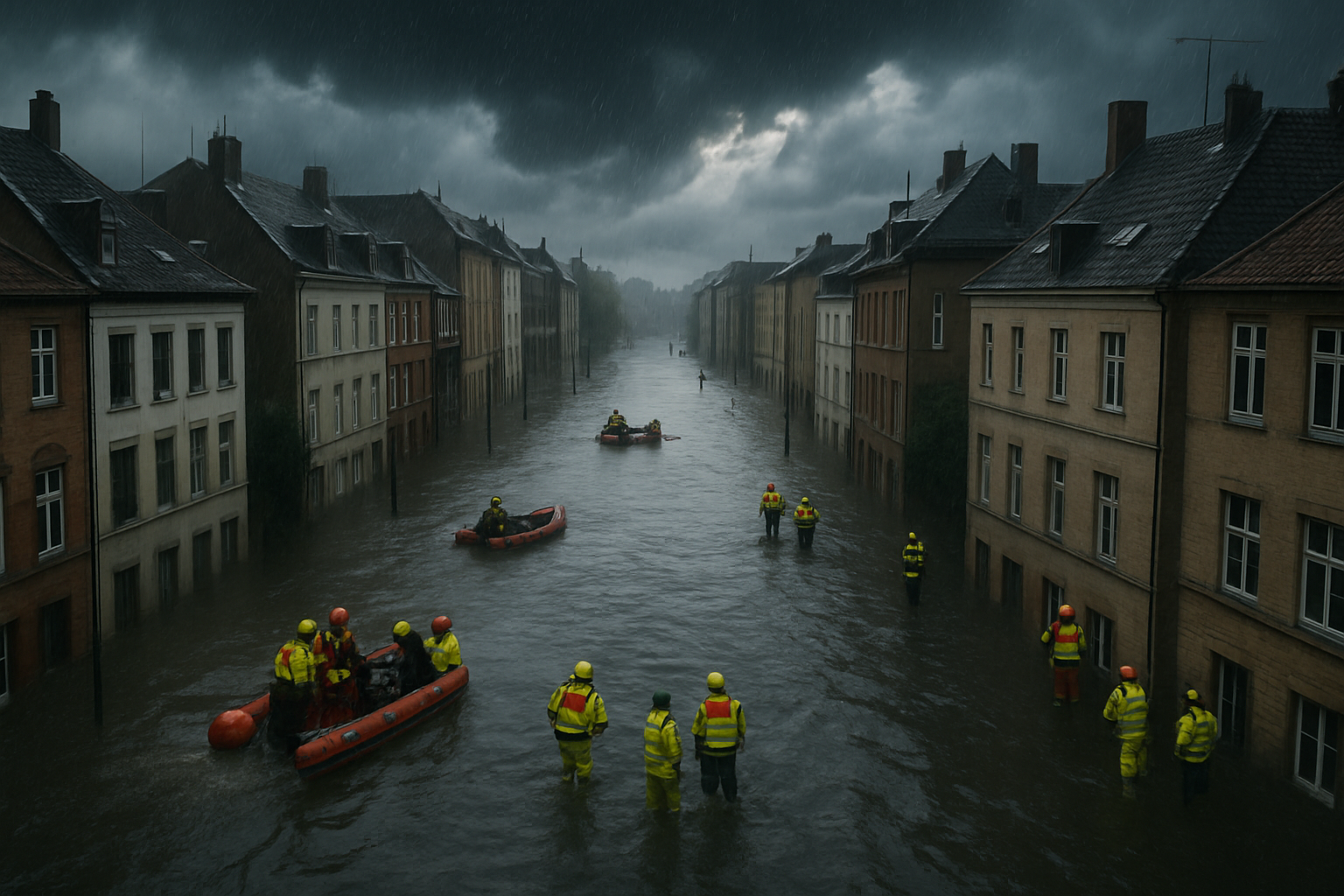
Portugal has deployed its largest peacetime rescue operation in history, with 26,500 personnel including 1,975 military staff and 30 naval vessels responding to more than 1,800 weather incidents since February 1. The country has extended its national calamity status through February 15 as rivers overflow and infrastructure collapses under the relentless assault.
In Arruda dos Vinhos, more than 40 people have been evacuated as roads have literally been lifted and broken by water accumulation, while houses face imminent collapse. The Douro River in Porto and Vila Nova de Gaia has reached critical 1997 flood levels, threatening historic neighborhoods.
Volunteers from Vale da Pedra parish in Cartaxo mobilized Sunday to bring essential supplies to the isolated village of Valada do Ribatejo, which has been cut off for days due to flooding. Dozens of volunteers transported food, hygiene products, blankets, and tarps to residents trapped by the rising waters of the Tagus River.
Infrastructure Crisis Across Europe
The weather emergency extends far beyond the Iberian Peninsula. Power outages have tripled in Portugal from 56,000 to 167,000 residents, with some localities in Pombal remaining without electricity for over 10 days, prompting public demonstrations. Railway services remain suspended on multiple lines including the critical Castanheira-Alverca route affecting Lisbon commuters.
Spain continues to battle the aftermath of Storm Leonardo, which forced the evacuation of over 8,000 people from Andalusia provinces. The town of Grazalema recorded an extraordinary 1,500 liters per square meter of rainfall in just 36 hours, exceeding Madrid's entire annual precipitation total. Spanish reservoirs have surged to 67.3% capacity, with 31 reservoirs at 100% capacity.
Ireland is experiencing its own weather crisis, with Met Éireann forecasting continued rain in flood-affected areas. Government minister Kevin 'Boxer' Moran is visiting flood-hit areas of County Waterford as authorities warn of persistent flooding risks.
Democratic Resilience Under Climate Pressure
The Portuguese presidential election represents an unprecedented test of democratic institutions under environmental emergency conditions. Despite calls from far-right candidate André Ventura to postpone the election due to infrastructure damage and fairness concerns, constitutional law prevented national postponement.
Approximately 36,000 voters in the worst-affected areas were unable to participate, representing 14.4% of the electorate in these regions. However, the election proceeded with polling stations operating from 8 AM to 7 PM, demonstrating what officials describe as democratic resilience in the face of climate challenges.
A broad political coalition formed to support Seguro against the far-right challenger, with prominent conservatives backing the Socialist candidate to defend democratic values during this critical moment for Portugal's future direction.
International Response and Cooperation
The European Union has activated its Civil Protection Mechanism as the crisis overwhelms national response capabilities. Sweden and Denmark have announced a €246 million assistance package to support emergency operations across the affected regions.
Portugal, Belgium, France, and Sweden have collectively sent 93 tons of humanitarian aid to Mozambique, which is simultaneously battling its own devastating floods affecting over 724,000 people. This demonstrates how climate emergencies are creating multiple simultaneous crises requiring international coordination.
The Pope has also appealed for solidarity with those affected by the storms, highlighting the global attention these unprecedented weather events are receiving.
Climate Context and Future Implications
These extreme weather events occur within the broader context of January 2026 being confirmed as the hottest month in global history, with 18 of the past 19 months exceeding 1.5°C above pre-industrial levels. This juxtaposition of record global heat with devastating regional storms demonstrates the volatility and complexity of our changing climate system.
The succession of Storms Kristin, Leonardo, and Marta represents an unprecedented challenge to European emergency response systems. Emergency services are operating at capacity limits, with infrastructure vulnerabilities exposed across transportation networks, power grids, and communication systems.
Agricultural and tourism sectors face devastating losses that will require months of recovery. The economic impact extends beyond immediate damage to long-term reconstruction needs, with billions anticipated in damages across affected regions.
Looking Forward
The crisis provides a template for understanding how climate change will increasingly intersect with democratic processes and governance systems. As extreme weather events become more frequent and intense, European nations must develop enhanced adaptation strategies that can maintain social and political stability under environmental stress.
Insurance companies are urging those with weather-damaged property to contact their providers within eight days to activate claims, as the scale of damage assessment begins. Recovery efforts are expected to continue for weeks and months, requiring sustained international cooperation and resource allocation.
The new Portuguese president, likely to be António José Seguro based on polling, will inherit massive reconstruction challenges while needing to strengthen democratic institutions against future climate emergencies. The election results, expected Sunday evening, will be closely watched as a barometer of democratic resilience under environmental pressure.
As Europe continues to battle these unprecedented weather conditions, the crisis serves as a stark reminder of the urgent need for enhanced climate adaptation infrastructure and international cooperation frameworks capable of responding to the increasing frequency and severity of extreme weather events.