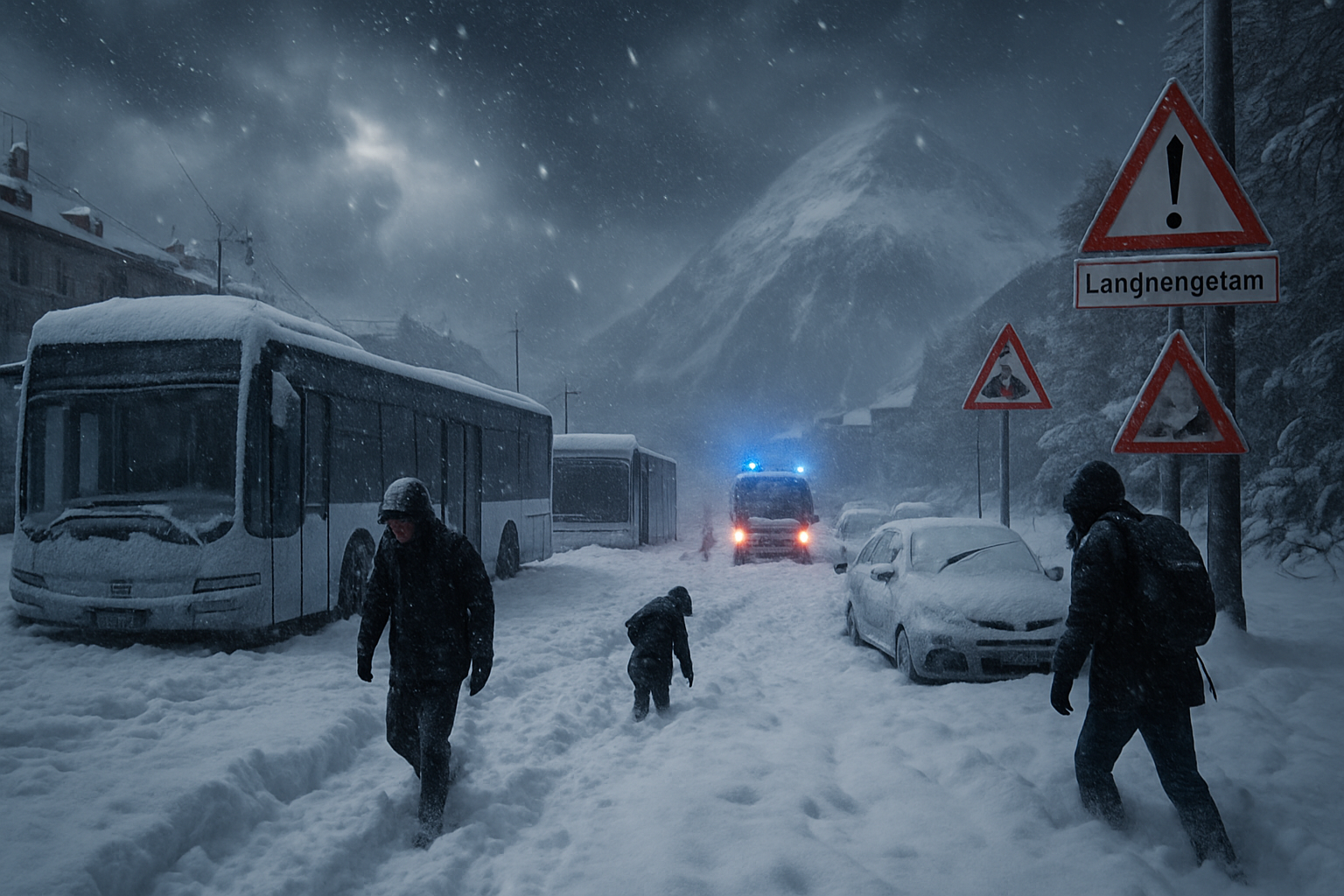
A bus carrying 12 passengers was struck by an avalanche on Friday morning in Austria's Tyrol region, miraculously leaving all occupants uninjured, as extreme winter weather continues to paralyze transportation systems across Central Europe.
The incident occurred around 5:00 AM local time on the Lechtal Road (B198) near Bach in the Reutte district, when an avalanche swept down onto the roadway, struck the company bus, and pushed it off the road. Despite the dramatic nature of the accident, a police spokesperson confirmed that no injuries were reported among the 12 employees who were traveling in what local media described as a company shuttle.
Widespread Transportation Disruptions
The avalanche incident is part of a broader pattern of severe weather-related disruptions affecting multiple European nations. Rail services across the region are experiencing significant delays and cancellations due to heavy snowfall, with Austrian sources reporting that "snow is causing problems in railway traffic."
Denmark is also facing weather-related challenges, with local authorities being forced to close ice skating lakes due to forecasted thaw conditions. The decision reflects the volatile weather patterns that have characterized this winter season across Northern and Central Europe.
Extreme Weather Context
According to historical weather data accessed by Planet News, this latest incident occurs within the context of one of Europe's most severe winter seasons in decades. Previous reports indicate that the continent has been experiencing unprecedented weather extremes, with temperatures dropping as low as -32°C in some regions and massive snowfall accumulations.
The current crisis builds upon a devastating sequence of Atlantic storms that struck Europe throughout February 2026, including Storms Kristin, Leonardo, Marta, and Nils, which collectively claimed over 30 lives across Portugal, Spain, and France. These storms required the deployment of more than 26,500 emergency personnel in what became Portugal's largest peacetime rescue operation.
"The frequency and intensity of extreme weather events this winter has been unprecedented, testing our emergency response systems to their limits."
— European Emergency Response Official
Infrastructure Under Strain
Transportation networks across Europe have been operating beyond their design parameters, with infrastructure originally built for historical rather than current climate conditions showing significant vulnerabilities. The Austrian avalanche incident highlights the particular risks faced by Alpine regions, where mountain transportation routes become extremely hazardous during periods of heavy snowfall.
Emergency services throughout the continent are reportedly operating at capacity limits, with traditional regional aid mechanisms strained by the simultaneous nature of weather emergencies across multiple nations. The EU Civil Protection Mechanism has been activated, with Sweden and Denmark providing €246 million in assistance – representing the largest coordinated European weather response effort in recent history.
Climate Adaptation Challenges
The current weather crisis occurs during what has been confirmed as the 18th consecutive month exceeding 1.5°C above pre-industrial levels, demonstrating how global warming can override natural climate variability while enabling extreme regional weather events through mechanisms such as polar vortex disruption.
Scientists warn that the conditions experienced in February 2026 may represent a preview of routine weather patterns expected in the 2030s without significant climate adaptation investments. The crisis is forcing European nations to reconsider their approach to infrastructure resilience and emergency preparedness.
Recovery and Adaptation Efforts
Recovery timelines from the current weather crisis are expected to extend from weeks to months, with some infrastructure projects requiring years for complete reconstruction. The emphasis is increasingly on "building back better" with climate-resilient infrastructure designed for future rather than historical weather patterns.
International cooperation has intensified, with enhanced coordination between meteorological services and transportation authorities becoming essential for managing volatile climate conditions. The template emerging from the European response may influence global approaches to climate adaptation and emergency management in an era of increasing weather volatility.
As additional Atlantic weather systems continue to develop, authorities across Europe are maintaining high alert levels and advising citizens to avoid unnecessary travel while monitoring weather warnings. The current crisis represents a watershed moment that may fundamentally reshape European preparedness for the permanent climate volatility that scientists predict will characterize the coming decades.