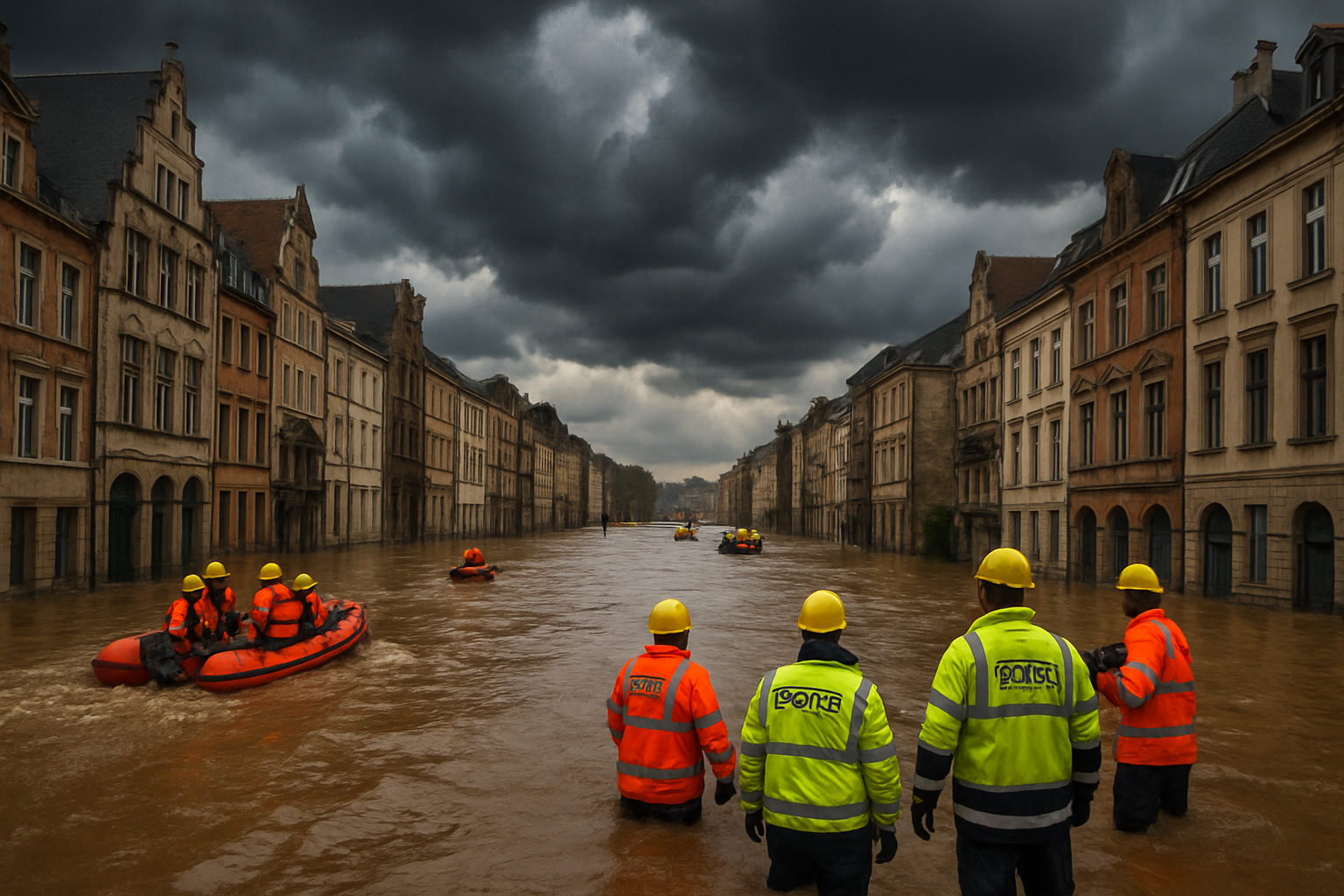
Europe faces an escalating weather crisis as Storm Nils approaches the Atlantic coast, threatening to become the fourth major storm system to devastate the continent in February 2026, with Portugal reporting over a hundred museums and monuments damaged while maintaining the largest peacetime rescue operation in the nation's history.
The Portuguese civil protection authority confirmed extensive damage to cultural heritage sites across multiple regions, with more than 100 museums and monuments suffering structural damage from the succession of Atlantic storms that have battered the Iberian Peninsula. The devastation comes as authorities prepare for Storm Nils, which meteorological services predict will bring violent winds exceeding 100 km/h to western France and potentially compound the ongoing crisis across Portugal and Spain.
Transportation Networks Under Severe Strain
Railway services continue to face widespread disruption across Portugal, with the Castanheira-Alverca line remaining suspended indefinitely, affecting thousands of Lisbon commuters. The suspension, now entering its second week, has forced authorities to implement emergency bus services and alternative transport arrangements as flood damage to infrastructure proves more extensive than initially assessed.
The civil protection services in Portugal's western regions have been placed on high alert due to flood risks, with the Mondego River basin emerging as a primary concern. Water levels in the region have approached critical thresholds, prompting authorities to prepare for potential evacuations in Coimbra and surrounding municipalities.
"The situation requires our utmost vigilance as we face the possibility of a fourth consecutive major storm system in just two weeks,"
— Portuguese Civil Protection Authority
Historical Context of Crisis
The current emergency represents the culmination of an unprecedented weather sequence that began with Storm Kristin in early February, followed by the devastating Storms Leonardo and Marta. This succession has claimed at least 14 lives across Portugal and Spain while requiring the deployment of 26,500 rescue personnel, including 1,975 military staff and 30 naval vessels – constituting Portugal's largest peacetime rescue operation.
The crisis has exposed significant vulnerabilities in European infrastructure, with power outages affecting 167,000 Portuguese residents at the peak of the emergency. The Douro River reached critical levels last seen in 1997, while flooding in Alcácer do Sal exceeded the catastrophic records set in 1963, marking the worst flooding in over 60 years.
International Response and Support
The European Union has activated its Civil Protection Mechanism to coordinate international assistance, with Sweden and Denmark announcing a €246 million emergency aid package to support affected regions. The assistance includes both financial support and specialized equipment for flood management and infrastructure repair.
Emergency services across the continent report operating at capacity limits, with the simultaneous nature of the crisis preventing the typical regional aid mechanisms from functioning effectively. Traditional support networks that rely on unaffected neighboring countries providing assistance have been strained as multiple nations face concurrent emergencies.
Cultural Heritage Under Threat
The damage to Portugal's cultural institutions represents a significant loss to European heritage. Museums and monuments that have survived centuries of history now face threats from increasingly severe weather patterns. Authorities report that some cultural sites have experienced flooding, structural damage from high winds, and power outages that have compromised climate control systems essential for preserving artifacts.
The University of Coimbra, a UNESCO World Heritage site, was forced to close on Friday due to deteriorating meteorological conditions and civil protection recommendations. The closure affects not only current academic activities but also raises concerns about the preservation of historic buildings and collections housed within the university complex.
Climate Context and Future Implications
The crisis unfolds against the backdrop of January 2026 being confirmed as the hottest month in recorded global history, marking the 18th consecutive month to exceed 1.5°C above pre-industrial levels. This paradox of global warming enabling both record heat and extreme regional weather events demonstrates the complex volatility of the changing climate system.
Scientists emphasize that the current weather pattern represents a preview of conditions expected to become routine by the 2030s without significant climate action and adaptation measures. The frequency and intensity of such extreme weather events are projected to increase, requiring fundamental changes to infrastructure design and emergency response capabilities.

Economic and Social Impact
The economic toll of the successive storms is estimated in the billions of euros, with agricultural sectors, tourism infrastructure, and transportation networks bearing the brunt of the damage. Spanish reservoirs have surged to 67.3% capacity, with 31 reservoirs reaching 100% capacity, while Portuguese agriculture faces devastation across multiple regions.
Recovery timelines have been extended from the initially projected weeks to months or potentially years for full reconstruction. The scale of damage has prompted discussions about "building back better" with climate-resilient infrastructure that can withstand the increasingly frequent extreme weather events.
Democratic Resilience Tested
The crisis provided an unprecedented test of democratic institutions when Portugal's presidential election proceeded on February 8 despite the ongoing emergency. The election, which saw Socialist António José Seguro defeat far-right candidate André Ventura with 66.82% of the vote, demonstrated institutional resilience under extreme conditions, though 36,000 voters were unable to participate due to storm damage.
The successful conduct of the election during a natural disaster has been cited by international observers as a template for maintaining democratic processes under environmental stress, a challenge expected to become more common as climate change intensifies.
Preparing for Storm Nils
As Storm Nils approaches, French meteorological services have issued red alerts for multiple departments, including flood warnings for Gironde and Lot-et-Garonne, violent wind alerts for Aude and Pyrénées-Orientales, and avalanche warnings for Savoie. The storm is expected to bring winds exceeding 100 km/h and significant rainfall to regions already saturated from previous weather systems.
Emergency services across Western Europe are preparing for what could be the most challenging phase of the crisis yet, with infrastructure already weakened by previous storms and emergency resources stretched to their limits. The coordinated response involves multiple nations sharing resources and expertise in an effort to minimize the impact of the approaching system.
Long-term Adaptation Strategies
The ongoing crisis has accelerated discussions about fundamental changes to European emergency response systems and infrastructure design. The need for enhanced climate adaptation has moved from a long-term planning consideration to an immediate operational necessity.
Key areas identified for improvement include strengthening cross-border emergency coordination, developing climate-resilient infrastructure standards, and expanding emergency response capabilities to handle simultaneous multi-national disasters. The success or failure of these adaptations will likely determine Europe's ability to cope with the increasing frequency and severity of extreme weather events predicted for the coming decades.
As Storm Nils approaches and recovery efforts continue from previous storms, the European weather emergency of February 2026 stands as a watershed moment in the continent's confrontation with climate change, demonstrating both the vulnerability of current systems and the urgent need for transformative adaptation strategies.