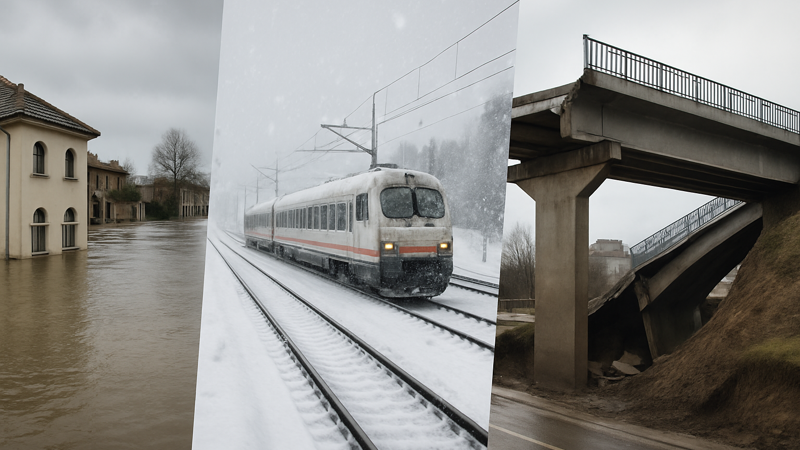
Europe faces an unprecedented weather emergency as multiple countries battle severe flooding, snow disruptions, and infrastructure failures, with emergency services stretched to their limits across the continent.
France Grapples with Record-Breaking Floods
France is experiencing some of the most severe flooding in recent memory, with the Seine River in Paris reaching four meters above its normal level. The unprecedented water levels have forced authorities to close the riverside motorway and several commuter rail stations, severely disrupting transportation in the capital.
Two départements in southwestern France remain under the highest red alert level, indicating a possible danger to life, following days of torrential rain that have caused rivers across the region to burst their banks. The situation has been exacerbated by already saturated ground that cannot absorb additional rainfall.
Cyprus Struggles with Drought Despite Recent Rainfall
Cyprus presents a complex weather scenario as the island grapples with a prolonged drought crisis despite recent heavy rainfall. Over the past three days, storms delivered 9.2 million cubic meters of water to the island's dams, with nearly half—4.5 million cubic meters—flowing into the critical Southern Conveyor dams.
However, dam levels remain at historically low levels despite the improved inflows. The Southern Conveyor dams, which include Kouris, Kalavasos, Lefkara, Dipotamos, Germasogeia, Polemidia, and Arminou, form the backbone of water supply for large areas of the island but continue to struggle with the effects of extended dry conditions.
Ireland Braces for More Severe Weather
Ireland's meteorological service, Met Éireann, has issued new snow, rain, and wind warnings for several counties in the coming days. Forecasters predict frost on Monday with cold spells early in the week, though temperatures are expected to become milder by Friday.
The country faces a particularly concerning situation as new flood warnings have been issued for seven counties amid continued heavy rainfall. Met Éireann warned that rain falling on already saturated ground, combined with high river levels, will lead to additional flooding across affected regions.
Switzerland Confronts Snow-Related Transport Disasters
Switzerland experienced a serious railway accident when a train derailed near Goppenstein in the canton of Wallis after colliding with snow accumulated on the tracks. According to police reports, five people were injured in the incident, highlighting the dangerous conditions created by heavy snowfall in alpine regions.
The accident underscores the broader challenges facing European transportation networks as extreme weather conditions overwhelm infrastructure designed for more moderate climate patterns.
Portugal Faces Economic Impact Assessment
Portugal's government has revealed that the full economic impact of recent storms on public finances will not be known until next month. This delayed assessment reflects the massive scale of damage inflicted by successive weather systems that have battered the Iberian Peninsula.
The economic implications extend far beyond immediate emergency response costs, affecting agriculture, tourism, and critical infrastructure across multiple sectors of the Portuguese economy.
Norwegian Infrastructure Under Threat
Norway faces its own set of challenges as objects on railway tracks force trains on the Østfold line to operate at reduced speeds past Råde station. Authorities warn that such incidents could potentially lead to major accidents, representing what officials describe as sabotage that poses serious safety risks.
The situation demonstrates how even minor disruptions can have cascading effects on transportation networks already strained by severe weather conditions.
Continental Infrastructure Vulnerabilities Exposed
The current crisis exposes fundamental vulnerabilities in European infrastructure systems that were designed for historical rather than current climate conditions. Transportation networks, power grids, and emergency services are operating at capacity limits, highlighting the urgent need for climate adaptation strategies.
"The frequency and intensity of extreme weather events are testing our systems in ways they were never designed to handle. We need transformative approaches rather than reactive responses."
— Emergency Management Specialist, EU Civil Protection Mechanism
Historical Context and Climate Implications
Based on historical analysis, Europe has experienced an extraordinary succession of severe weather events in recent months. Previous storm systems have claimed multiple lives, required massive emergency deployments, and caused billions in damages across agricultural, tourism, and infrastructure sectors.
The current crisis occurs against a backdrop of global climate volatility, with recent months showing consistent temperature anomalies that enable both extreme heat and devastating regional weather events. This pattern demonstrates how climate change can override natural cooling cycles while creating conditions for unprecedented weather extremes.
International Coordination and Response
The scale of the current weather emergency has prompted enhanced international cooperation across European nations. Emergency services are sharing resources and expertise across borders, while the EU Civil Protection Mechanism remains on standby to coordinate continental response efforts.
Previous similar events have seen assistance packages worth hundreds of millions of euros, demonstrating both the financial scale of weather-related disasters and the importance of coordinated international response mechanisms.
Economic and Social Consequences
The economic impact of the current weather crisis extends across multiple sectors. Agricultural operations face crop losses and infrastructure damage, while tourism industries struggle with transportation disruptions and safety concerns. The energy sector experiences increased demand during extreme cold periods while dealing with infrastructure vulnerabilities.
Recovery timelines are expected to extend from weeks to months, with some infrastructure projects requiring years for complete reconstruction. The frequency of such events is putting increased pressure on insurance systems and government emergency funds.
Looking Forward: Adaptation and Resilience
The current crisis provides a template for understanding how extreme weather will increasingly affect European societies. Emergency management experts emphasize the need for "building back better" approaches that incorporate climate resilience into reconstruction efforts.
Key areas requiring attention include:
- Infrastructure hardening against extreme weather events
- Enhanced early warning systems with cross-border coordination
- Emergency service capacity expansion and resource stockpiling
- Climate-adaptive urban planning and water management systems
- Improved international cooperation frameworks for multi-national crises
The scientific community warns that current conditions may represent a preview of routine circumstances in the coming decade without significant climate adaptation investments. The choice facing European leaders is between continuing reactive crisis management and implementing transformative infrastructure adaptation for long-term resilience.
Human Impact and Community Response
Beyond the statistics and infrastructure damage, the current weather crisis represents profound human costs. Families are losing generational homes, small businesses face extinction, and vulnerable populations require extended emergency support. Mental health services report increased demand as communities struggle with repeated disasters.
However, the crisis has also demonstrated remarkable community resilience, with volunteers mobilizing to assist isolated areas and neighbors helping neighbors during evacuation and recovery efforts. These community responses provide hope and practical models for building social resilience alongside infrastructure improvements.
As Europe continues to battle these severe weather conditions, the events of February 2026 may prove to be a watershed moment that forces fundamental reconsideration of how continental societies prepare for and respond to climate volatility in an era of accelerating environmental change.