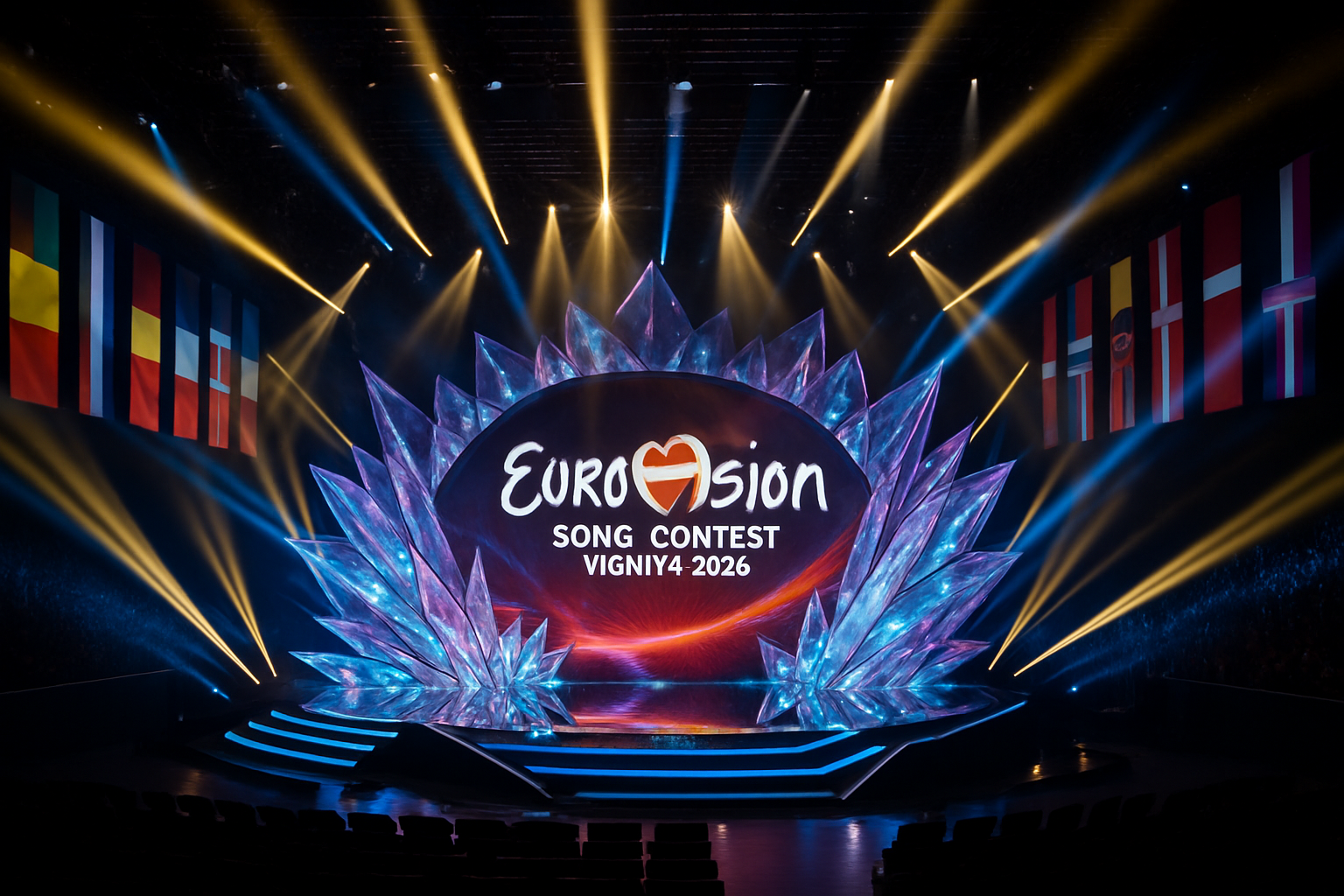
The road to Eurovision 2026 in Vienna is taking shape as national selections across Europe conclude, delivering a diverse lineup of established stars and fresh talent preparing to compete on Europe's biggest musical stage this May.
Estonia's Spectacular Return: Vanilla Ninja Takes Vienna
Estonia has made one of the most talked-about selections for Eurovision 2026, with the legendary trio Vanilla Ninja claiming victory at Eesti Laul on February 14. The group, comprising Lenna Kuurmaa, Piret Järvis, and Kerli Kivilaan, won with their anthemic track "Too Epic to Be True," securing 35% of the superfinal vote in a decisive victory.
The winning song was crafted by Sven Lõhmus, one of Estonia's most influential pop songwriters whose catalogue has shaped much of the country's modern Eurovision sound. This marks a significant moment for Estonian Eurovision history, as the country has chosen "familiarity, scale and unapologetic spectacle" for their Vienna campaign.
"This represents Estonia's commitment to delivering a memorable performance on Europe's biggest stage"
— Eurovision Estonia, Official Statement
The Eesti Laul final featured twelve finalists in a dramatic two-round format, with established names and returning favorites competing alongside newcomers. The selection process demonstrated Estonia's sophisticated approach to Eurovision preparation, balancing radio-friendly polish with spectacular stage presentation.
Latvia's Rising Star: Atvara Claims Victory
Latvia completed their national selection with Atvara emerging victorious in the Supernova 2026 final on February 14. The artist will represent Latvia in Vienna with the song "Ēnā" (In the Shadow), marking another chapter in Latvia's Eurovision journey.
The Supernova final was described as particularly competitive, with the selection process highlighting Latvia's commitment to finding the perfect representative for the Vienna stage. Atvara's victory represents the culmination of an extensive selection process that began with dozens of hopeful artists.
Sweden's Melodifestivalen: The Eurovision Machine Continues
Sweden's renowned Melodifestivalen continues to deliver high-quality entertainment as the competition progresses through its traditional format. The third semi-final in Kristianstad saw Medina and Saga Ludvigsson secure direct qualification to the final, maintaining Sweden's reputation for producing Eurovision contenders.
The evening featured standout performances and memorable moments, with veteran performer Nanne Grönvall providing a particularly riveting interval act that reminded audiences why Melodifestivalen remains television gold. Cultural critics noted that while the show maintained its trademark polish, the competition felt more open than in recent years.
"When Medina sings that everything will work out, you want to believe them"
— Matilda Källén, Cultural Critic
Eva Jumatate, making her Melodifestivalen debut, secured third place and advancement to the "Second Chance" qualifying round, demonstrating the depth of talent in Sweden's selection process. The competition continues to set the standard for national Eurovision selections worldwide.
Spain's Benidorm Fest: A New Chapter Without Eurovision
Spain's Benidorm Fest celebrated its fifth edition in a dramatically different context - as a standalone music festival rather than Eurovision selection, following RTVE's decision to withdraw from the 2026 contest. The festival proceeded with €150,000 in prize money, featuring artists like Miranda & bailamamá, Kenneth, and Rosalinda Galán.
This transition marks a significant shift in Spanish Eurovision culture, with Benidorm Fest establishing itself as an independent celebration of contemporary Spanish music. The festival's evolution reflects changing approaches to music industry promotion and audience engagement beyond the Eurovision framework.
Nordic Preparations: Finland's Eurovision Enthusiasm
Finnish media coverage highlighted the broader Nordic engagement with Eurovision 2026, with particular attention to Estonia's Vanilla Ninja selection. The cross-border cultural connections in the Baltic and Nordic regions continue to strengthen Eurovision's role as a platform for regional cultural exchange.
Finland's interest in neighboring countries' selections demonstrates the interconnected nature of Eurovision preparation, where national selections become international cultural events followed by music fans across borders.
The Vienna Context: A Return to Austria
Eurovision 2026 returns to Vienna, Austria, building on the country's successful hosting of Eurovision 2015. The selection of Vienna as host city reflects Austria's continued commitment to European cultural cooperation and the Eurovision tradition.
According to memory archives, Eurovision 2026 represents a significant moment in European cultural diplomacy, with the contest serving as more than entertainment - it functions as a platform for showcasing cultural identity and artistic innovation on a continental scale.

Cultural Significance Beyond Competition
The 2026 Eurovision preparations occur within what cultural analysts describe as a "February 2026 Cultural Renaissance," with unprecedented international artistic collaboration and community engagement with traditional and contemporary arts across Europe.
Eurovision's evolution beyond simple entertainment to become a platform for cultural diplomacy demonstrates the contest's maturation into a significant European institution. The diversity of approaches taken by different countries in their national selections reflects the rich tapestry of European musical traditions and contemporary innovation.
Looking Ahead to Vienna
As national selections conclude across Europe, the Eurovision 2026 lineup takes shape with a compelling mix of established stars, returning favorites, and fresh talent. Estonia's choice of Vanilla Ninja represents a bold statement about experience and spectacle, while Latvia's Atvara brings new energy to the competition.
Sweden's methodical approach through Melodifestivalen continues to set industry standards, even as Spain forges a new path with its independent festival model. The diversity of approaches to Eurovision preparation reflects the contest's unique position in European culture - simultaneously competitive and collaborative, traditional and innovative.
The Vienna finale promises to showcase this rich diversity when Europe's musical representatives gather in May 2026, continuing Eurovision's tradition as the continent's premier celebration of musical artistry and cultural unity.