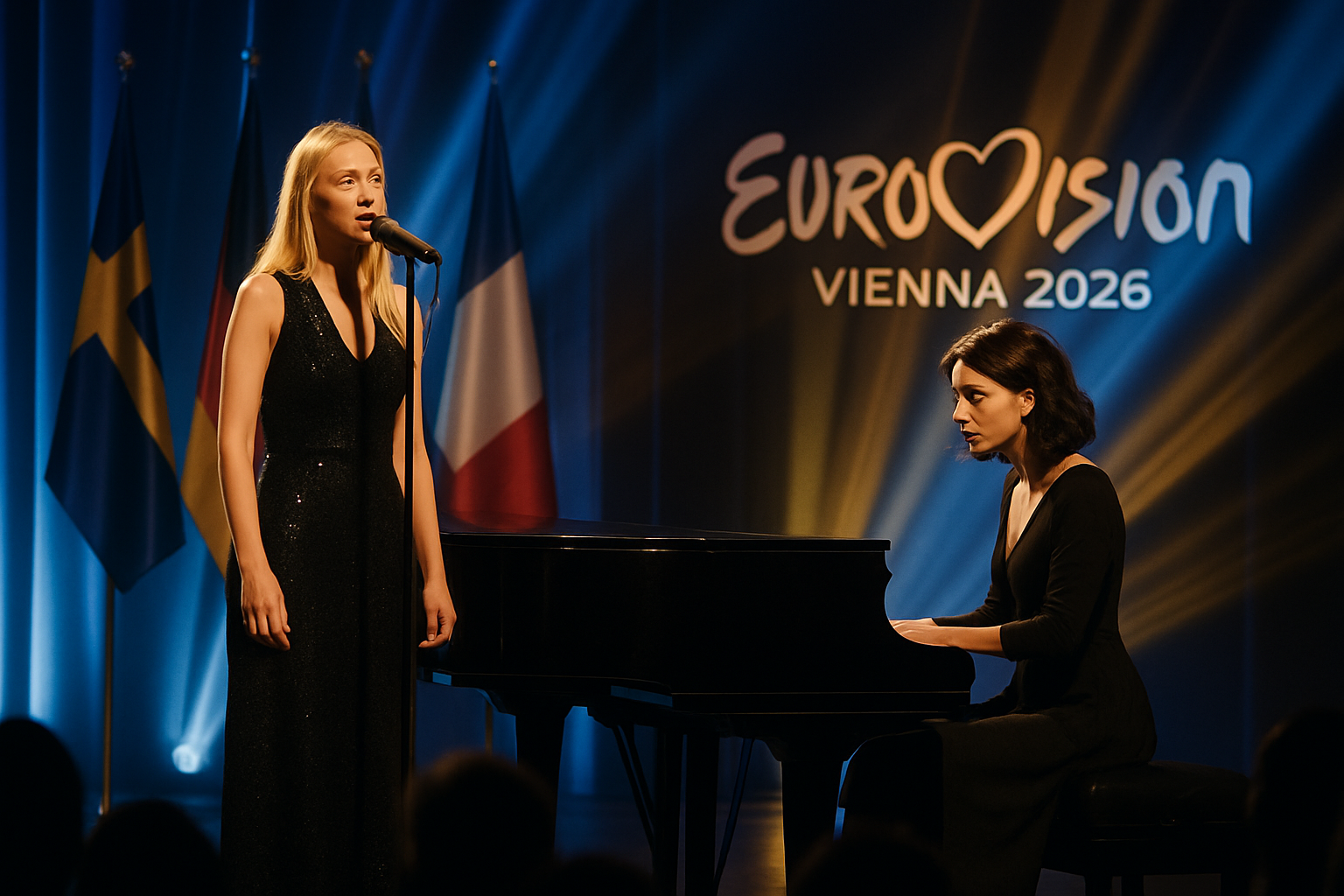
Sweden's electropop sensation Felicia has triumphed at Melodifestivalen 2026, winning with her powerful anthem "My System," while France has selected the 17-year-old vocalist Monroe to represent the nation with her lyrical pop song "Regarde!" at Eurovision 2026 in Vienna this May.
The weekend of March 7-8, 2026 marked a pivotal moment in Eurovision preparations as two major broadcasting nations finalized their representatives for what promises to be one of the most competitive contests in recent history. Both selections reflect the evolving landscape of European popular music and the contest's continued role as a platform for cultural diplomacy.
Sweden's Melodifestivalen Victory
Felicia Eriksson, the 24-year-old artist previously known as Fröken Snusk, delivered a commanding performance that secured her victory as the pre-competition favorite. Despite battling illness during the week leading up to the final, Felicia's electropop track "My System" resonated with both jury members and the Swedish public.
"Det känns helt overkligt, helt otroligt, jag är så glad" (It feels completely surreal, completely incredible, I am so happy), Felicia told Swedish media immediately following her victory. The triumph represents a significant career milestone for the artist who has spent years building her reputation in Sweden's electronic music scene.
"Inte ens sjukdom kunde stoppa henne" (Not even illness could stop her)
— Swedish Media Coverage
The victory was particularly notable given the international collaboration behind "My System." Norwegian songwriter Julie Bergan was among the creative team, highlighting the Nordic cooperation that continues to define Eurovision excellence. "Gratulerer Felicia! Du er rå!" (Congratulations Felicia! You're amazing!), Bergan commented to Norwegian broadcaster NRK.
France's Young Talent Monroe
France's selection of Monroe represents a bold choice, with the 17-year-old becoming one of the youngest representatives in recent Eurovision history. The young cantatrice, who won the televised talent competition "Prodiges" in 2025, will perform "Regarde!" – described as a lyrical pop song with classical influences.
Monroe's selection reflects France's strategy of combining traditional vocal excellence with contemporary appeal. The song represents what French media characterized as "lyrique mais consensuel" (lyrical but consensual), designed to bridge classical and popular music traditions for the Eurovision stage.
The choice of such a young performer demonstrates France's confidence in nurturing emerging talent on Europe's biggest stage, continuing the country's tradition of selecting artists who embody both technical skill and contemporary relevance.
Nordic Excellence Continues
Sweden's victory adds another chapter to the Nordic region's Eurovision dominance, with neighboring Norway having selected Jonas Lovv with "Ya ya ya" after he defeated heavy favorite Alexander Rybak in a major upset at Melodi Grand Prix. The Nordic countries' continued excellence reflects sophisticated cultural production capabilities and strategic approach to the contest.
Finland has also positioned itself strongly with Linda Lampeniuksen and Pete Parkkosen creating what experts describe as a compelling "violin with fire and flames" performance. The Nordic rivalry intensifies as these countries prepare to compete against each other in Vienna while maintaining their collective reputation for Eurovision excellence.
Eurovision 2026: Vienna Awaits
The contest returns to Vienna, Austria in May 2026, building on the city's successful hosting experience from 2015. Vienna's preparations include comprehensive cultural programming beyond the main competition, with the contest evolved into what organizers describe as a "cultural diplomacy platform" showcasing European diversity and unity.
This year's contest occurs during what has been termed the "February 2026 Cultural Renaissance," a period of unprecedented international cultural collaboration and community-centered programming across Europe. Eurovision serves as the centerpiece of this cultural moment, demonstrating how the contest has transcended entertainment to become a significant platform for European cultural expression.
International Reactions and Expert Analysis
Swedish music critics praised Felicia's victory while acknowledging the competitive nature of this year's selections. "Felicia vann Melodifestivalen välförtjänt – även om finalbidragen nog inte kommer att ta sig längre än till min gymspellista" (Felicia deserved to win Melodifestivalen – even though the final entries probably won't make it further than my gym playlist), noted Swedish cultural commentator Matilda Källén.
The international Eurovision community has responded positively to both selections, with experts noting the diversity of approaches represented. While Sweden maintains its methodical Melodifestivalen approach that has yielded multiple victories, France's selection of Monroe represents a more nurturing strategy focused on developing young talent.
Contest Evolution and Cultural Impact
Eurovision 2026 reflects the contest's continued evolution from a simple song competition to a comprehensive cultural event. The selection of artists like Felicia, with her background as an innovative electronic musician, and Monroe, representing France's classical-pop fusion approach, demonstrates the contest's capacity to accommodate diverse musical expressions while maintaining broad appeal.
Both selections occurred amid broader discussions about Eurovision's role in contemporary culture. Felicia notably expressed views on international participation policies, while France's choice of Monroe signals continued commitment to showcasing emerging talent alongside established names.
Looking Ahead to Vienna
With major nations like Sweden and France having made their selections, attention now turns to the remaining national finals and the intensive preparation period leading to Vienna. Both Felicia and Monroe face months of vocal coaching, staging development, and promotional activities as they adapt their songs for the Eurovision stage.
The contest's continued relevance as a platform for cultural diplomacy, artistic innovation, and international cooperation ensures that Eurovision 2026 will serve multiple functions beyond entertainment. As European nations navigate complex political and cultural challenges, Eurovision provides a space for celebration of diversity and shared musical heritage.
The Vienna contest promises to showcase not only individual national representatives but also the collective strength of European cultural cooperation, with Sweden's electronic innovation and France's classical traditions contributing to a musical tapestry that reflects the continent's artistic diversity and creative vitality.