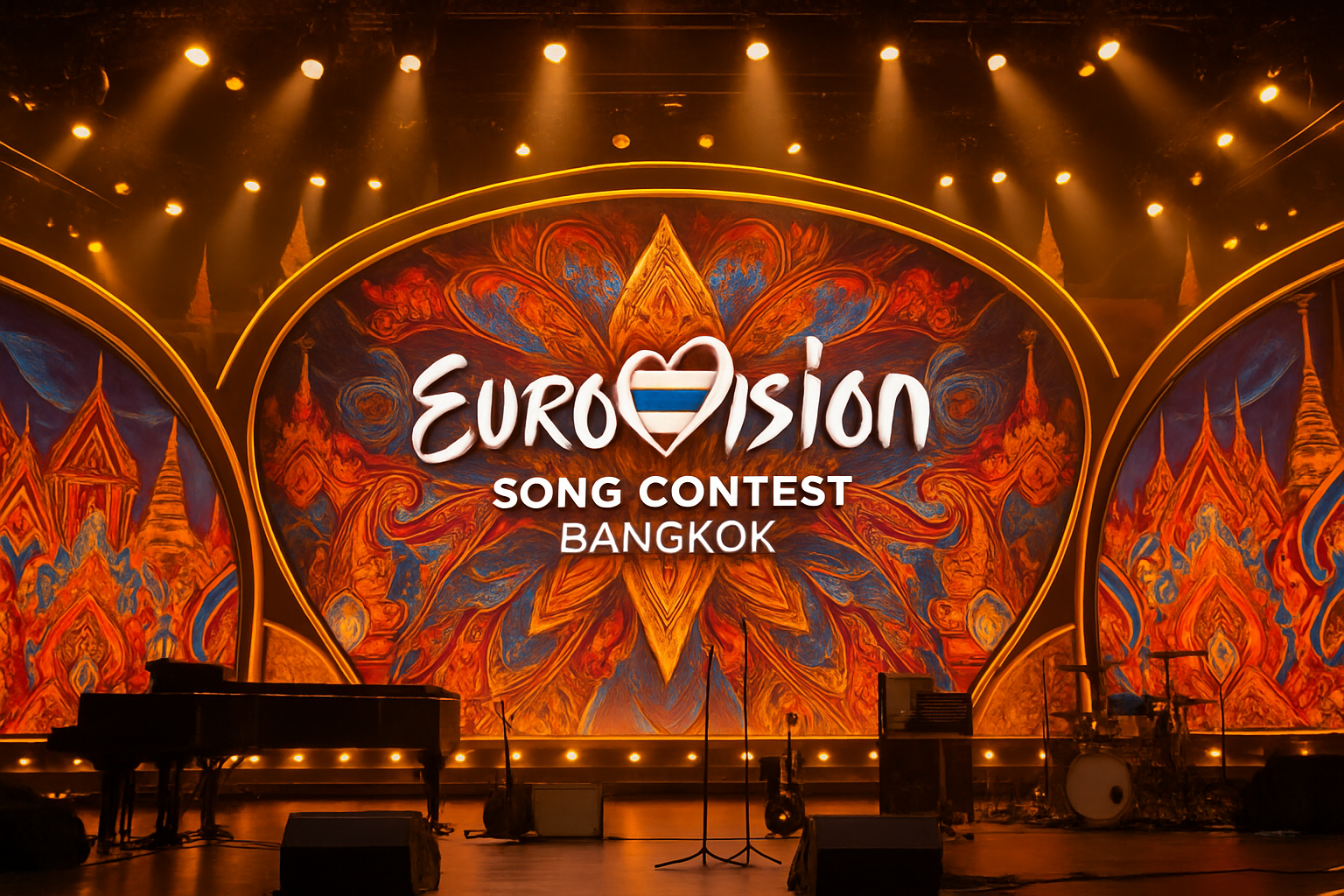
Eurovision Song Contest is making its most ambitious expansion yet, with the European Broadcasting Union (EBU) announcing Eurovision Song Contest Asia 2026, set to take place in Bangkok, Thailand on November 14, 2026, bringing together ten countries across the continent in the world's most iconic music competition's first Asian edition.
The historic announcement was made jointly by the EBU and Voxovation, in partnership with Thailand's S2O Productions and Channel 3, marking a watershed moment for international entertainment that extends Eurovision's cultural diplomacy mission far beyond its European origins.
Bangkok Selected as Pioneer Host City
Bangkok's selection as the inaugural host city represents Thailand's growing prominence in the regional entertainment landscape and the nation's commitment to cultural exchange. The Tourism Authority of Thailand's Deputy Governor for Policy and Planning, Chuwit Sirivajjakul, received the Eurovision Song Contest Asia 2026 trophy from Martin Green, Director of Eurovision Song Contest, in a ceremony that symbolized the competition's evolution from a European tradition to a global cultural phenomenon.
The choice of Bangkok builds upon Thailand's established reputation as a cultural hub in Southeast Asia, with the city's modern infrastructure and entertainment industry expertise positioning it ideally to handle the complex logistics of international broadcasting and live performance requirements that Eurovision demands.
Ten-Nation Debut Competition
Eurovision Song Contest Asia 2026 will feature ten participating countries in its inaugural edition, though specific details about which nations will compete remain under development. The format follows the established Eurovision model of combining musical performance with cultural celebration, allowing each participating country to showcase their unique artistic traditions while competing for continental recognition.
The competition represents a significant expansion of Eurovision's cultural diplomacy mission, which has successfully promoted European unity and diversity for over six decades. Martin Green emphasized that the Asian edition will maintain the core values that have made Eurovision a global phenomenon while adapting to reflect the rich cultural diversity of the Asian continent.
Building on Global Cultural Renaissance
The announcement comes during what cultural observers have termed the "February 2026 Cultural Renaissance," a period of unprecedented international cultural cooperation and authentic artistic expression. Eurovision's expansion to Asia aligns with broader trends toward cultural authenticity over manufactured content, regional cooperation replacing competition, and technology enhancing rather than replacing traditional cultural forms.
This initiative follows Eurovision's successful evolution from a simple song contest to a comprehensive cultural diplomacy platform, serving multiple functions including entertainment, international cooperation, artistic innovation, and unity celebration. The European edition scheduled for Vienna in May 2026 has already demonstrated this evolution, with extensive cultural programming surrounding the main competition.
Strategic Partnership Framework
The collaboration between the EBU, Voxovation, S2O Productions, and Channel 3 represents a sophisticated approach to international cultural programming that balances global Eurovision standards with local expertise and authentic regional representation. This partnership model ensures that Eurovision Song Contest Asia maintains the competition's trademark quality while respecting and celebrating Asian cultural traditions.
S2O Productions brings extensive experience in large-scale entertainment production to the partnership, while Channel 3's broadcasting expertise ensures comprehensive coverage across Thailand and regional markets. The involvement of established Eurovision production company Voxovation provides crucial continuity with the competition's established standards and production values.
Cultural Impact and Significance
Eurovision's expansion to Asia represents more than entertainment export—it signifies the maturation of cultural exchange in an increasingly connected world. The competition has historically served as a platform for emerging artists to gain international recognition while promoting cross-cultural understanding through music and performance.
The timing of this announcement is particularly significant, occurring as Asian entertainment industries, particularly K-pop and J-pop, have achieved unprecedented global influence. Eurovision Song Contest Asia provides a structured platform for the continent's diverse musical traditions to engage with international audiences while maintaining authentic cultural expression.
Economic and Tourism Implications
Bangkok's hosting of Eurovision Song Contest Asia 2026 is expected to generate substantial economic benefits through international tourism, media attention, and entertainment industry development. The Eurovision brand's global recognition, combined with the novelty of the Asian expansion, positions the inaugural edition to attract significant international interest.
Tourism officials anticipate increased visitor numbers during the competition period, with Eurovision's established track record of generating substantial economic activity for host cities. The event's international broadcasting reach, extending to hundreds of millions of viewers globally, provides Bangkok and Thailand with unprecedented promotional opportunities.
Technical and Production Challenges
Organizing Eurovision Song Contest Asia 2026 presents unique logistical challenges, from coordinating international broadcasting standards across diverse technical infrastructures to managing cultural sensitivities while maintaining competition integrity. The November timing requires careful climate consideration, though Bangkok's modern venue capabilities and established entertainment infrastructure provide strong foundations.
Production teams must balance Eurovision's established format requirements with adaptations necessary for Asian markets, including different broadcasting standards, cultural expectations, and regional communication patterns. The success of this inaugural edition will establish templates for future Asian Eurovision competitions.
International Cooperation Model
Eurovision Song Contest Asia represents a significant test of international cultural cooperation frameworks, demonstrating whether successful European models can adapt to different continental contexts while maintaining their core mission of promoting unity through cultural expression.
The competition's expansion occurs during a period of complex international relations, making Eurovision's traditionally apolitical focus on cultural celebration particularly valuable. By providing a platform for artistic expression that transcends political boundaries, Eurovision Song Contest Asia could contribute to regional diplomatic dialogue through cultural engagement.
Future Expansion Possibilities
The success of Eurovision Song Contest Asia 2026 will likely influence decisions about further global expansion of the Eurovision brand. The competition's ability to maintain quality standards while respecting local cultural traditions in the Bangkok inaugural edition will establish precedents for potential future expansions to other continents.
Industry observers suggest that successful implementation of Eurovision Song Contest Asia could accelerate discussions about similar competitions in other regions, potentially creating a global network of Eurovision-style cultural celebrations that promote international understanding through music and performance.
Looking Toward November 2026
As preparations begin for Eurovision Song Contest Asia 2026, the focus shifts to creating a competition that honors Eurovision's tradition of excellence while authentically representing Asian cultural diversity. The November 14 Grand Final in Bangkok promises to be a historic moment in international entertainment, marking Eurovision's successful transition from European tradition to global cultural phenomenon.
The inaugural Eurovision Song Contest Asia represents more than entertainment expansion—it symbolizes the evolution of cultural diplomacy in the 21st century, where authentic artistic expression serves as a bridge between nations and cultures. Bangkok's hosting of this groundbreaking event positions both the city and the broader Asian entertainment industry at the forefront of global cultural innovation.