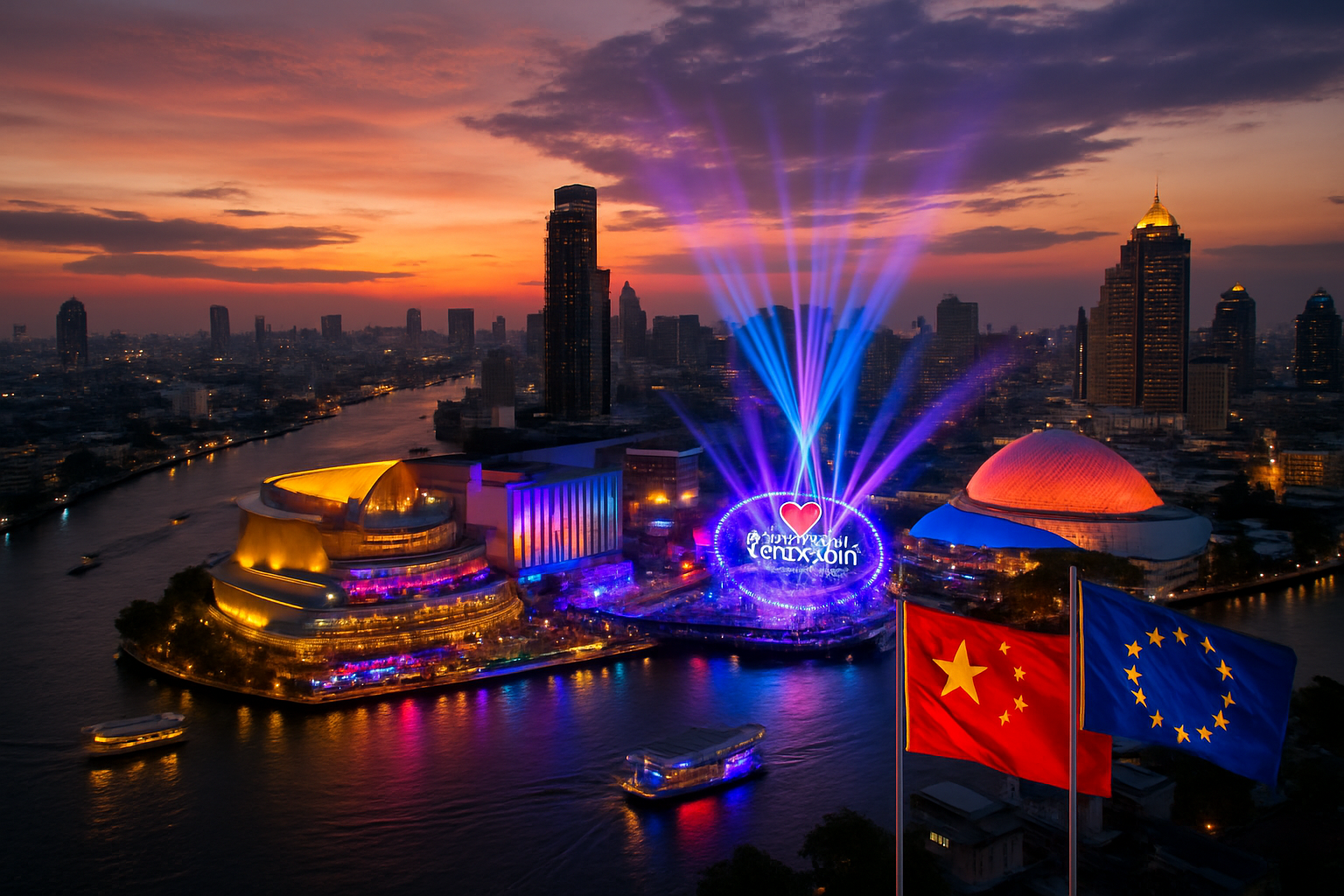
The Eurovision Song Contest is set to make history with its first-ever Asian edition, as Bangkok, Thailand has been officially selected as the host city for the inaugural Eurovision Song Contest Asia, scheduled for November 14, 2026.
This groundbreaking announcement represents the most significant international expansion of Eurovision since the competition's inception, transforming what began as a European tradition into a global cultural diplomacy platform that promises to unite diverse nations through the universal language of music.
A Strategic Partnership for Cultural Bridge-Building
The Eurovision Song Contest Asia emerges from a collaborative partnership between the European Broadcasting Union (EBU), Voxovation, Thailand's S2O Productions, and Channel 3. This framework carefully balances established Eurovision standards with authentic regional representation, ensuring that the Asian edition maintains the contest's core values while celebrating the rich musical diversity of the continent.
Martin Green, Eurovision Director, personally presented the trophy to Chuwit Sirivajjakul, Deputy Governor of the Tourism Authority of Thailand, in a ceremony that symbolized the cultural bridge being built between continents. "This marks a new chapter not just for Eurovision, but for international cultural cooperation," Green stated during the presentation.
"Bangkok represents the perfect convergence of entertainment infrastructure, cultural heritage, and modern venue capabilities that will allow Eurovision to flourish in Asia while maintaining its authentic character."
— Martin Green, Eurovision Director
Ten Founding Nations Lead the Way
The inaugural competition will feature ten confirmed participating countries: Thailand, South Korea, Philippines, Vietnam, Malaysia, Cambodia, Laos, Bangladesh, Nepal, and Bhutan. This diverse roster represents a remarkable geographical and cultural span, from the technological powerhouses of East Asia to the emerging economies of Southeast Asia and the Himalayan kingdoms of South Asia.
Additional countries are expected to join before the grand finale, potentially expanding the competition's reach across the continent. The selection of these founding nations demonstrates a commitment to inclusive representation that goes beyond economic or political considerations, embracing the full spectrum of Asian musical traditions.
Bangkok: The Ideal Pioneer Host
Bangkok's selection as the pioneer host city leverages Thailand's position as a cultural hub with sophisticated entertainment infrastructure and proven track record in hosting international events. The city's modern venue capabilities, combined with its strategic location at the crossroads of Southeast Asia, make it an ideal launching pad for Eurovision's Asian journey.
The choice of Bangkok also reflects the broader "February 2026 Cultural Renaissance," a period marked by unprecedented emphasis on authentic artistic expression over manufactured content. This cultural moment provides the perfect backdrop for Eurovision's expansion, as audiences worldwide increasingly seek genuine cultural experiences that celebrate local traditions while fostering international understanding.
Cultural Diplomacy in the Digital Age
Eurovision Song Contest Asia represents more than entertainment; it serves as a sophisticated platform for cultural diplomacy that promotes cross-cultural understanding through music. The competition will follow the established Eurovision format, combining musical performance with cultural celebration while incorporating cutting-edge technology to enhance rather than replace authentic cultural elements.
Social media integration will extend the contest's cultural influence beyond immediate audiences, creating global participation opportunities that transform viewers into active participants in this international cultural dialogue. The digital component ensures that Eurovision Asia can reach diaspora communities worldwide, strengthening cultural connections across continents.
Economic Impact and Tourism Boost
The economic implications of Eurovision Song Contest Asia extend far beyond the immediate event. The competition is expected to generate substantial benefits through international tourism, media attention, and entertainment industry development. Bangkok's selection positions Thailand to capture significant economic multiplier effects while showcasing the country's cultural richness to a global audience.
The contest creates opportunities for year-round cultural programming, with participating countries likely to develop ongoing cultural exchanges and collaborative projects that extend well beyond the November finale. This sustainable approach to cultural development ensures lasting benefits for all participating nations.
Regional Cooperation and Multi-Destination Experiences
Eurovision Song Contest Asia pioneers a regional cooperation model that creates multi-destination cultural experiences. Rather than competing against each other for tourism and cultural attention, participating countries are working together to promote the region as a comprehensive cultural destination.
This collaborative approach demonstrates how contemporary cultural events can serve multiple functions simultaneously: entertainment, education, economic development, and international cooperation. The success of this model could influence future cultural initiatives worldwide, establishing new standards for international cultural collaboration.
Technology Meets Tradition
The Asian edition will showcase sophisticated technology integration while preserving authentic cultural elements that define each participating nation's musical heritage. Advanced staging capabilities will support ambitious artistic projects without compromising the essential character of traditional musical expressions.
This technology-tradition synthesis represents a mature approach to cultural modernization, where innovation builds on established foundations rather than replacing them. The Eurovision Asia platform will demonstrate how cutting-edge production values can enhance traditional performances while maintaining cultural authenticity.
Looking Forward: A Global Cultural Network
The success of Eurovision Song Contest Asia will establish crucial precedents for potential future Eurovision expansions to other continents, creating a global network of cultural celebrations. This vision represents a fundamental shift toward viewing Eurovision not as a European institution, but as a template for 21st-century international cultural cooperation.
The November 2026 grand finale in Bangkok will serve as more than a musical competition; it represents a pivotal moment in global cultural history where traditional boundaries between regions dissolve in favor of shared artistic expression and mutual understanding.
As Eurovision prepares to embrace Asia, the contest reaffirms its evolution from a simple song competition to a comprehensive platform for authentic artistic expression and international cooperation. The Bangkok grand finale promises to be not just entertainment, but a celebration of humanity's remarkable capacity for cultural connection across all boundaries.