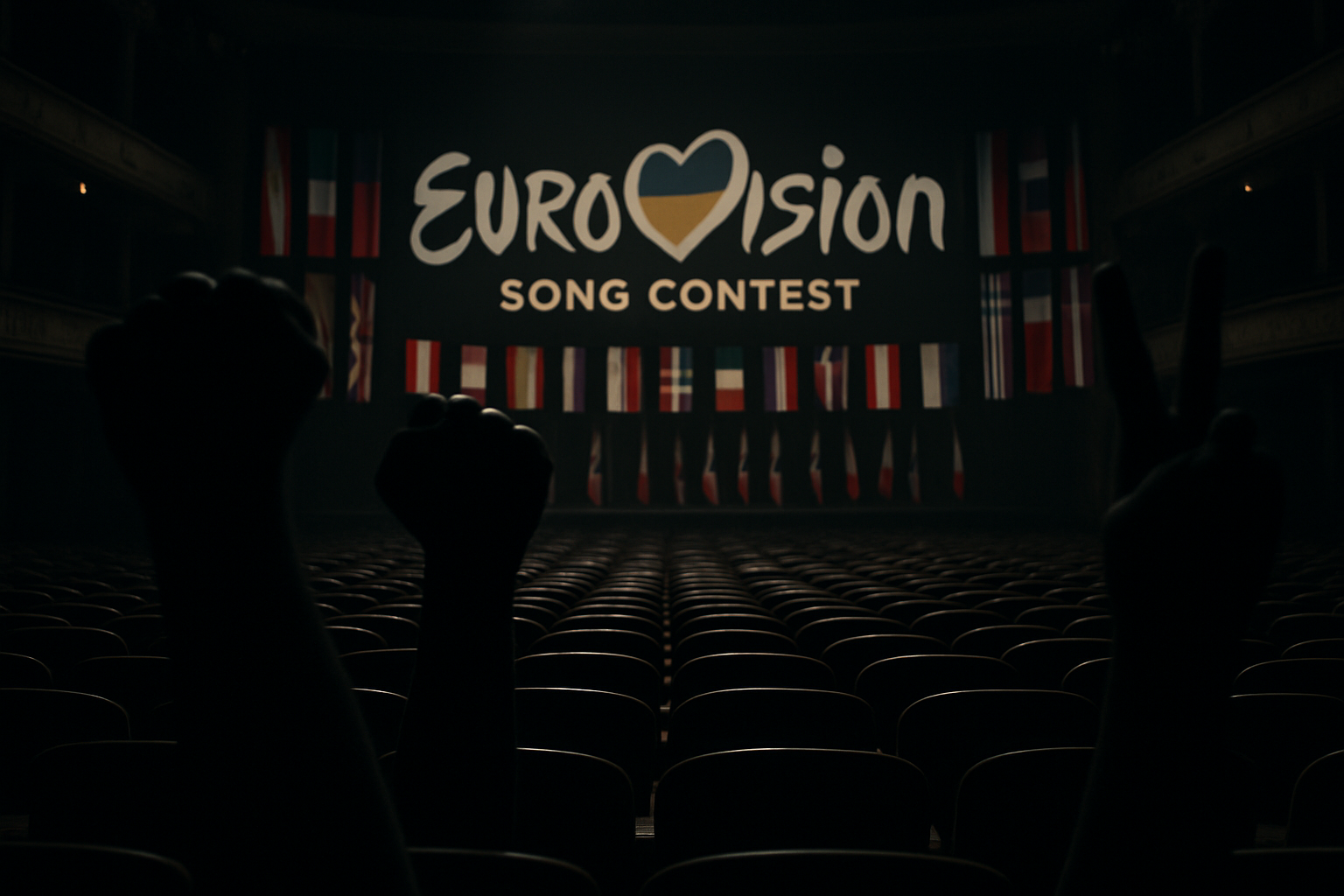
More than 1,000 international musicians, including major artists like Massive Attack, Kneecap, and Macklemore, have signed an unprecedented open letter calling for a boycott of Eurovision 2026 over Israel's participation amid ongoing military operations in Gaza.
The campaign, organized under the banner "No Music for Genocide," represents the most significant political challenge to Eurovision's traditional mission as a unifying cultural event since the contest's inception in 1956. The boycott movement has gained momentum across multiple countries, with Iceland contributing 120 artists to the international protest.
According to sources from Bosnia and Herzegovina's N1 info and Iceland's RÚV, the open letter was initially signed by prominent figures including Ólafur Arnalds, Sigur Rós, Of Monsters and Men, Brian Eno, and former Eurovision winners Emmelie de Forest and Charlie McGettigan. The list has since expanded to include over 1,000 artists worldwide.
International Artist Coalition Emerges
The Icelandic contingent represents one of the largest national groups participating in the boycott, featuring established artists such as Benni Hemm Hemm, BlazRoca, Bragi Valdimar Skúlason, Bríet, Daði Freyr, Eiríkur Hauksson, FM Belfast, GusGus, Hatari, Hildur Guðnadóttir, Lay Low, MAMMÚT, and Megas. This represents a significant portion of Iceland's contemporary music scene across multiple genres.
The campaign has drawn particular attention due to its timing with Eurovision 2026 scheduled for Vienna in May, marking the contest's 70th edition. The European Broadcasting Union and Austrian hosts now face an unprecedented diplomatic and cultural crisis as the boycott gains international support.
"There can be no music while genocide continues,"
— No Music for Genocide Campaign Statement
The boycott represents a broader trend of cultural institutions grappling with the intersection of entertainment and political activism. Previous Eurovision controversies have typically focused on individual entries or national selections, but this campaign challenges the fundamental framework of the contest itself.
Context of Cultural Renaissance and Political Activism
The Eurovision boycott occurs during what cultural observers have termed the "February 2026 Cultural Renaissance," a period of heightened international artistic collaboration and political engagement by entertainment figures. This movement has seen increased intersection between cultural events and social justice advocacy across Europe.
Eurovision has evolved from a simple song competition into a platform for cultural diplomacy and European unity. The contest regularly attracts over 180 million viewers globally, making it one of the world's most-watched non-sporting events. This massive audience amplifies the potential impact of the current controversy.
Historical precedent exists for political tensions affecting Eurovision participation. Countries have withdrawn from the contest for various reasons, including political disputes, but never has such a large coalition of individual artists mobilized against a participating nation's inclusion.
Gaza Conflict Background
The boycott campaign references ongoing Israeli military operations in Gaza, which have continued despite ceasefire agreements established in October 2025. According to documentation from multiple international sources, over 1,600 violations of the ceasefire have been recorded since its implementation, resulting in significant civilian casualties.
The Gaza crisis has drawn unprecedented international condemnation, with 85 UN member states issuing joint statements and eight Arab nations, including countries with normalized relations with Israel such as the UAE and Saudi Arabia, calling for intervention. Over 400 EU diplomats have signed petitions demanding increased pressure on Israeli authorities.
The humanitarian situation in Gaza remains critical, with the Civil Defense completely shut down due to fuel shortages, the Rafah crossing restricted to 27 people daily versus a 200-person quota, and over 20,000 Palestinians awaiting medical evacuation. These conditions have intensified calls for cultural and diplomatic pressure.
Eurovision's Political Dilemma
Eurovision's official position maintains that the contest is "non-political," but this principle has been repeatedly tested throughout its history. The current situation presents organizers with an impossible choice between maintaining their stated neutrality and addressing widespread concern from the artistic community.
The European Broadcasting Union (EBU) has historically allowed countries facing international criticism to participate, arguing that Eurovision represents cultural exchange rather than political endorsement. However, the scale of the current boycott movement exceeds any previous challenge to this approach.
Vienna's preparations for hosting Eurovision 2026 continue despite the controversy, building on the city's successful 2015 hosting experience. Austrian officials have implemented comprehensive cultural programming beyond the main competition, positioning Eurovision as a centerpiece of European cultural expression and unity.
"Eurovision serves as a platform for cultural diversity and international cooperation through music,"
— European Broadcasting Union Statement
Impact on European Cultural Landscape
The boycott movement extends beyond Eurovision to broader questions about the role of cultural institutions in addressing international conflicts. This reflects a generational shift in how artists and audiences view the relationship between entertainment and political responsibility.
Nordic countries, traditionally Eurovision powerhouses, face particular pressure given Iceland's significant artistic participation in the boycott. Norway selected Jonas Lovv with "Ya ya ya," Finland chose Linda Lampeniuksen and Pete Parkkosen, and Sweden picked Felicia Eriksson with "My System" – all while navigating the political controversy.
The cultural implications extend to Eurovision's expansion plans, including the inaugural Eurovision Song Contest Asia scheduled for November 2026 in Bangkok, Thailand. The success or failure of addressing the current crisis could influence the contest's global credibility and future international partnerships.
Industry Response and Divisions
The music industry response reveals significant divisions within the cultural community. While over 1,000 artists support the boycott, many others advocate for Eurovision's traditional approach of separating politics from cultural celebration.
Some industry professionals argue that boycotting Eurovision penalizes individual artists and fans rather than addressing governmental policies. Others contend that cultural platforms carry moral responsibilities that extend beyond entertainment value.
The controversy has sparked debates about the effectiveness of cultural boycotts as tools for political change, with historical examples producing mixed results. The current movement represents one of the most organized and internationally coordinated cultural protest campaigns in recent decades.
Global Implications and Precedent
The Eurovision boycott movement has implications extending far beyond the contest itself. Success in forcing policy changes could establish precedents for cultural activism affecting international sporting events, film festivals, and other global cultural gatherings.
International observers view the controversy as a test case for 21st-century approaches to cultural diplomacy and the balance between artistic freedom and political engagement. The resolution could influence how cultural institutions worldwide navigate similar conflicts between entertainment missions and social justice advocacy.
The movement occurs amid broader regional instability, including the complete collapse of the November 2024 Israel-Hezbollah ceasefire, with over 1.2 million Lebanese displaced and systematic targeting of medical personnel raising questions about international humanitarian law enforcement.
Future of Eurovision and Cultural Events
Eurovision 2026 in Vienna faces the challenge of proceeding with its cultural celebration while addressing the most significant political controversy in the contest's seven-decade history. The outcome will likely influence Eurovision's future direction and its role in European cultural politics.
The contest's evolution from entertainment to cultural diplomacy platform means that political controversies carry greater weight than in previous decades. Eurovision now serves multiple functions beyond entertainment, including promoting European unity, cultural exchange, and international cooperation.
Regardless of the immediate outcome, the boycott movement has permanently altered Eurovision's relationship with political activism. Future contests will likely face increased scrutiny regarding participating countries' human rights records and international law compliance.
As Eurovision approaches its May 2026 dates in Vienna, organizers must balance preserving the contest's traditional mission with addressing unprecedented artistic and political pressure. The resolution of this crisis will establish important precedents for the intersection of culture, politics, and international relations in the 21st century.