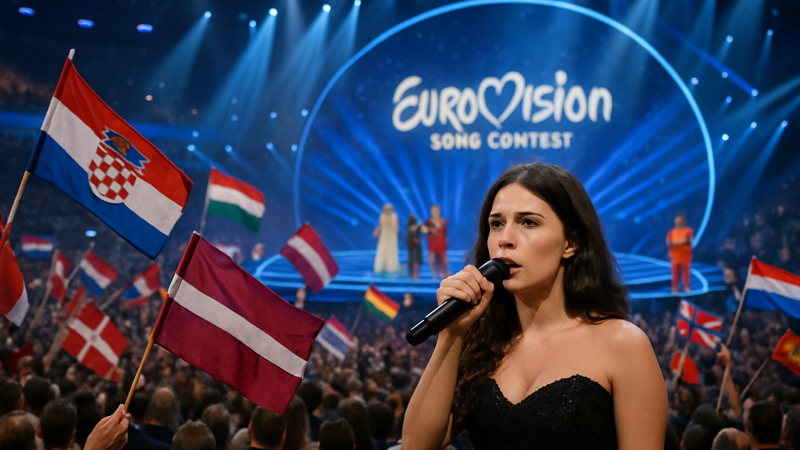
Eurovision Song Contest 2026 preparations are reaching fever pitch as Croatia, Latvia, and other European nations finalize their artistic representatives for Vienna, while an unprecedented cultural festival renaissance sweeps across the continent this February.
Eurovision National Selections Showcase Diverse Talent
Croatia has officially selected Lelek to represent the nation at Eurovision 2026 in Austria with the captivating song "Andromeda." The announcement, made on February 15th in Zagreb, marks another significant milestone in Croatia's Eurovision journey as the country prepares to showcase its musical artistry on the continental stage once again.
Meanwhile, Latvia has chosen singer Atvara with her powerful track "Ena" to carry the nation's hopes to Vienna. The selection, which emerged victorious from the Latvian national final, represents the country's commitment to presenting authentic and compelling musical storytelling at Europe's premier song competition.
These selections come as part of a broader pattern across Europe, where nations are increasingly focusing on artistic authenticity and cultural representation rather than simply commercial appeal. The choices reflect a mature understanding of Eurovision as both entertainment spectacle and cultural diplomacy platform.
Unexpected Challenges Hit Eurovision Touring Circuit
However, not all Eurovision-related activities are proceeding smoothly. Norwegian reports indicate that a planned Eurovision tour featuring various artists, including Norway's Alessandra, has been postponed indefinitely due to what organizers describe as "unforeseen challenges." The tour postponement affects multiple venues and represents a significant setback for fans eager to experience live Eurovision performances ahead of the main competition.
"Uforutsette utfordringer," organizers stated, citing complications that have made the current tour schedule impossible to maintain.
— Eurovision Tour Organizers
This development highlights the complex logistics involved in mounting large-scale cultural events across multiple European countries, particularly during the busy pre-Eurovision season when artist schedules become increasingly demanding.
Vienna Prepares for Continental Showcase
Austria's preparation for hosting Eurovision 2026 continues to progress, building on the country's successful hosting experience from 2015. Vienna's venues are being readied to accommodate not just the main competition but also the numerous cultural events, media activities, and fan gatherings that have become integral to the Eurovision experience.
The contest's return to Vienna represents a homecoming of sorts, as the city has established itself as a premier destination for large-scale cultural events. The Austrian capital's infrastructure and cultural venues provide an ideal backdrop for Eurovision's combination of musical competition and cultural celebration.
Cultural Festival Renaissance Sweeps Europe
Eurovision preparations are occurring against the backdrop of what cultural analysts are calling the "February 2026 Cultural Renaissance." From Iceland's Winter Festival celebrating the interplay of light and shadow, to Latvia's own cultural programming expanding beyond Eurovision, European nations are experiencing an unprecedented surge in cultural activity.
This cultural momentum extends far beyond Eurovision, encompassing traditional festivals, contemporary arts programming, and community celebrations that demonstrate Europe's commitment to cultural expression as both heritage preservation and contemporary innovation. The timing suggests a coordinated effort across the continent to position culture as strategic infrastructure for community development and international cooperation.
Eurovision as Cultural Diplomacy Platform
Eurovision 2026 is increasingly being viewed not merely as a song competition but as a sophisticated form of cultural diplomacy. National selections like Croatia's choice of "Andromeda" and Latvia's selection of "Ena" reflect careful consideration of how music can represent national identity while appealing to international audiences.
The contest serves as an annual opportunity for European nations to showcase their musical traditions, contemporary creativity, and cultural values to a global audience estimated in the hundreds of millions. This soft power aspect has become particularly significant in recent years as cultural exchange takes on added importance in an increasingly interconnected world.

Technology and Tradition in Modern Eurovision
The 2026 contest preparations also showcase how traditional Eurovision elements are being enhanced through technological innovation. From advanced staging techniques to digital audience engagement platforms, Vienna 2026 promises to blend Eurovision's established traditions with cutting-edge presentation technologies.
This technological integration mirrors broader trends in European cultural programming, where digital tools are being used to enhance rather than replace authentic cultural expression. The approach ensures that Eurovision maintains its distinctive character while reaching new audiences through modern communication channels.
Looking Ahead to Vienna
As February progresses toward the May competition, Eurovision 2026 is shaping up to be a celebration of European cultural diversity and artistic excellence. Croatia's "Andromeda" and Latvia's "Ena" join a growing roster of entries that promise to deliver both entertainment value and cultural authenticity.
The contest's integration into Europe's broader cultural renaissance suggests that Eurovision 2026 will be remembered not just as a music competition but as part of a pivotal moment when European culture reasserted its vitality and relevance in the 21st century. Despite challenges like the tour postponements, the fundamental excitement and cultural significance of Eurovision continues to grow, setting the stage for what promises to be a memorable Vienna gathering.
The combination of strong national selections, sophisticated hosting preparations, and the continent's cultural momentum suggests that Eurovision 2026 will successfully balance its entertainment mission with its increasingly important role as a platform for cultural diplomacy and European unity through artistic expression.