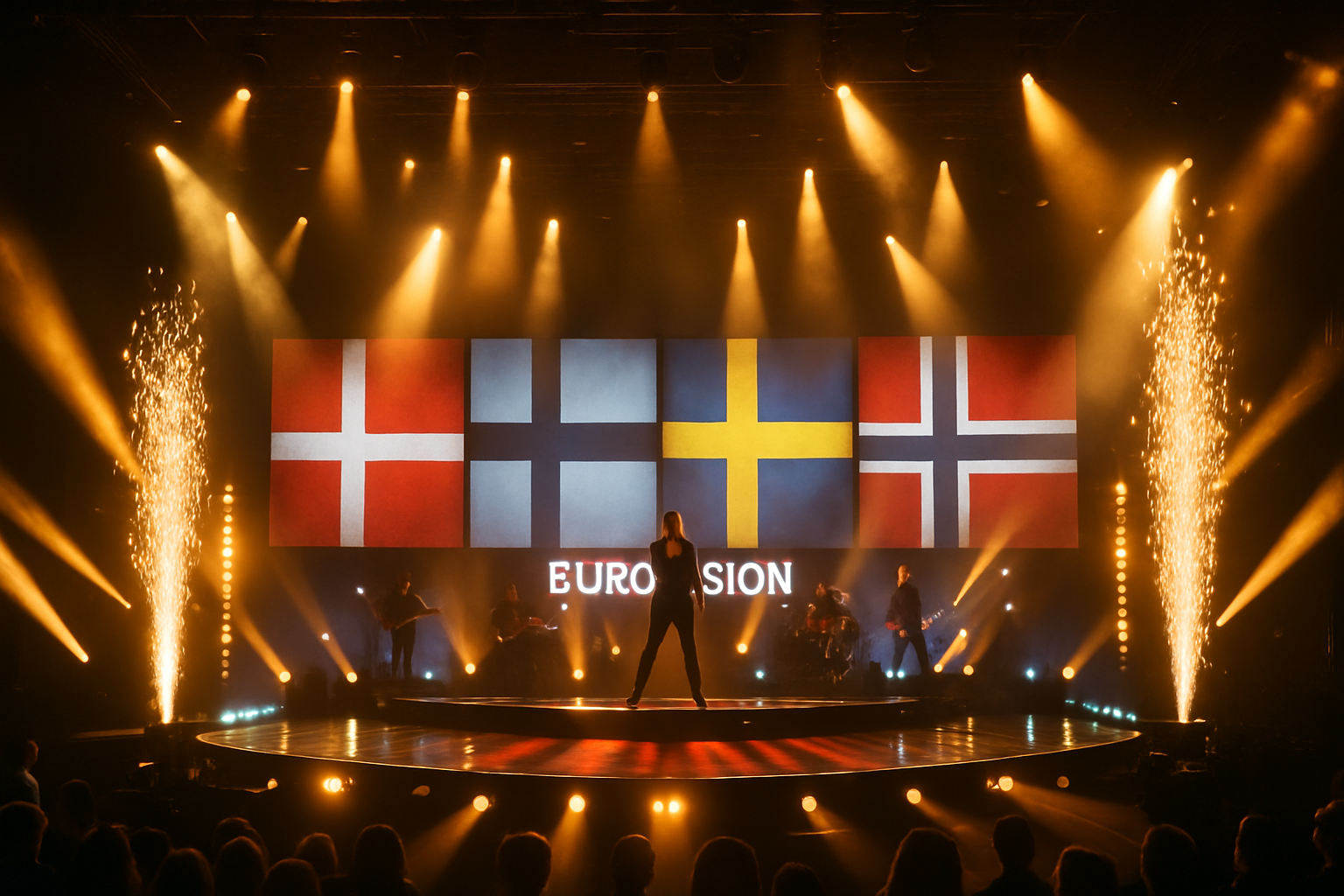
Norway has crowned Jonas Lovv as the winner of Melodi Grand Prix 2026, while Sweden's Melodifestivalen continues its methodical march toward selecting their Eurovision representative, with veteran Sanna Nielsen and surprise contender Lilla Al-Fadji advancing to the final from Saturday's semifinal in Sundsvall.
The victory marks a significant upset in the Norwegian selection, as Lovv defeated heavy favorite Alexander Rybak, the 2009 Eurovision winner who was among the bookmakers' top choices. The dramatic finale at Lillehammer saw Lovv capture both jury and public support, with Norwegian media describing his win as proof that "everyone loves an underdog."
Norway's Surprising Choice
Jonas Lovv's triumph at the Melodi Grand Prix final represents more than just a victory – it signals Norway's commitment to fresh faces over established names in their Eurovision strategy. The decision to send Lovv to Vienna comes after a competitive national final featuring nine entries, where the relatively unknown artist managed to overcome the considerable star power of Alexander Rybak.
"MGP-veteran Alexander Rybak was among the great favorites, but had to be defeated at the finish line by the jury favorite Jonas Lovv, who won the people's hearts," reported NRK, capturing the essence of what many are calling an upset victory.
The selection process in Norway has been particularly significant this year, as it marks the country's bid to improve on their recent Eurovision performances. With the contest returning to Vienna – where Norway previously achieved success – the choice of Lovv suggests a strategic pivot toward newer talent that can connect with contemporary Eurovision audiences.
Sweden's Methodical Approach Continues
Meanwhile, Sweden's Melodifestivalen maintained its reputation for producing polished, competitive entries as the fourth semifinal from Sundsvall delivered both expected results and genuine surprises. Veteran performer Sanna Nielsen, making her return after a 12-year absence, secured her place in the final as bookmakers had predicted.
However, the evening's standout moment came from Lilla Al-Fadji, whose performance of "Delulu" charmed viewers and secured the second direct qualification spot. The humor-tinged performer's advancement represents the kind of unexpected breakthrough that has become a Melodifestivalen trademark.
From the Second Chance round (Andra Chansen), Meira Omar and Robin Bengtsson earned their places in the final, setting up what promises to be a competitive conclusion to Sweden's selection process. The systematic approach of Melodifestivalen continues to demonstrate why Sweden remains one of Eurovision's most consistent performers.
The Vienna Connection
Both Norway and Sweden's selections carry added weight as Eurovision 2026 returns to Vienna, Austria – the same city that hosted the successful 2015 contest. The Austrian capital's experience with Eurovision, combined with its central European location, positions it as an ideal venue for what many expect to be a showcase of European musical diversity.
According to my memory of previous Eurovision coverage, the contest's return to Vienna builds on the successful 2015 hosting and represents part of the broader "February 2026 Cultural Renaissance" that has seen Eurovision evolve into a comprehensive cultural diplomacy platform beyond mere entertainment.
This evolution has seen national selections become increasingly sophisticated affairs, with countries focusing on artistic authenticity over pure commercial appeal. The contrast between Norway's surprise choice and Sweden's methodical progression illustrates the different strategies nations employ in pursuit of Eurovision success.
Nordic Rivalry Intensifies
The Nordic region's Eurovision preparations highlight the friendly but intense competition between neighboring countries. While Norway has opted for fresh talent in Jonas Lovv, Sweden's final will feature a mix of established performers and emerging artists, maintaining their reputation for strategic artist development.
The selection of these representatives comes at a crucial time for Eurovision, as the contest continues to expand its global reach while maintaining its European cultural identity. Both Norway and Sweden's choices reflect different philosophies about how to achieve success in Vienna – whether through established expertise or breakthrough performances.
European Cultural Momentum
The Eurovision national finals are occurring within a broader context of European cultural vitality. As documented in various cultural reports throughout February 2026, there has been unprecedented international cooperation and cultural programming across the continent, with Eurovision serving as a flagship example of how cultural events can bridge national boundaries.
The timing of these selections, with their emphasis on both tradition and innovation, positions Eurovision 2026 as a potential pivotal moment for European culture demonstrating its vitality and 21st-century relevance to a global audience of hundreds of millions.
Looking Ahead to Vienna
As Eurovision national selections continue across Europe, the choices made by Norway and Sweden provide early indicators of the contest's likely character. Norway's willingness to embrace an underdog story, combined with Sweden's methodical approach to artist development, suggests Vienna 2026 will showcase both the unpredictability and professionalism that have made Eurovision a cultural phenomenon.
The contest's evolution into what industry observers call a "cultural diplomacy platform" means that these national selections carry weight beyond entertainment value. They represent how European nations choose to present their cultural identity to a global audience, balancing authenticity with broad appeal.
With Jonas Lovv now confirmed as Norway's representative and Sweden's final approaching, the Nordic countries are positioning themselves as serious contenders for Eurovision 2026. The contest in Vienna promises to be a celebration of European musical diversity, with these early selections setting the stage for what could be one of the most competitive Eurovision contests in recent memory.
As other European nations complete their selection processes in the coming weeks, the foundation laid by Norway's surprising choice and Sweden's systematic approach will influence how the broader Eurovision landscape develops ahead of the May showdown in Austria's elegant capital.