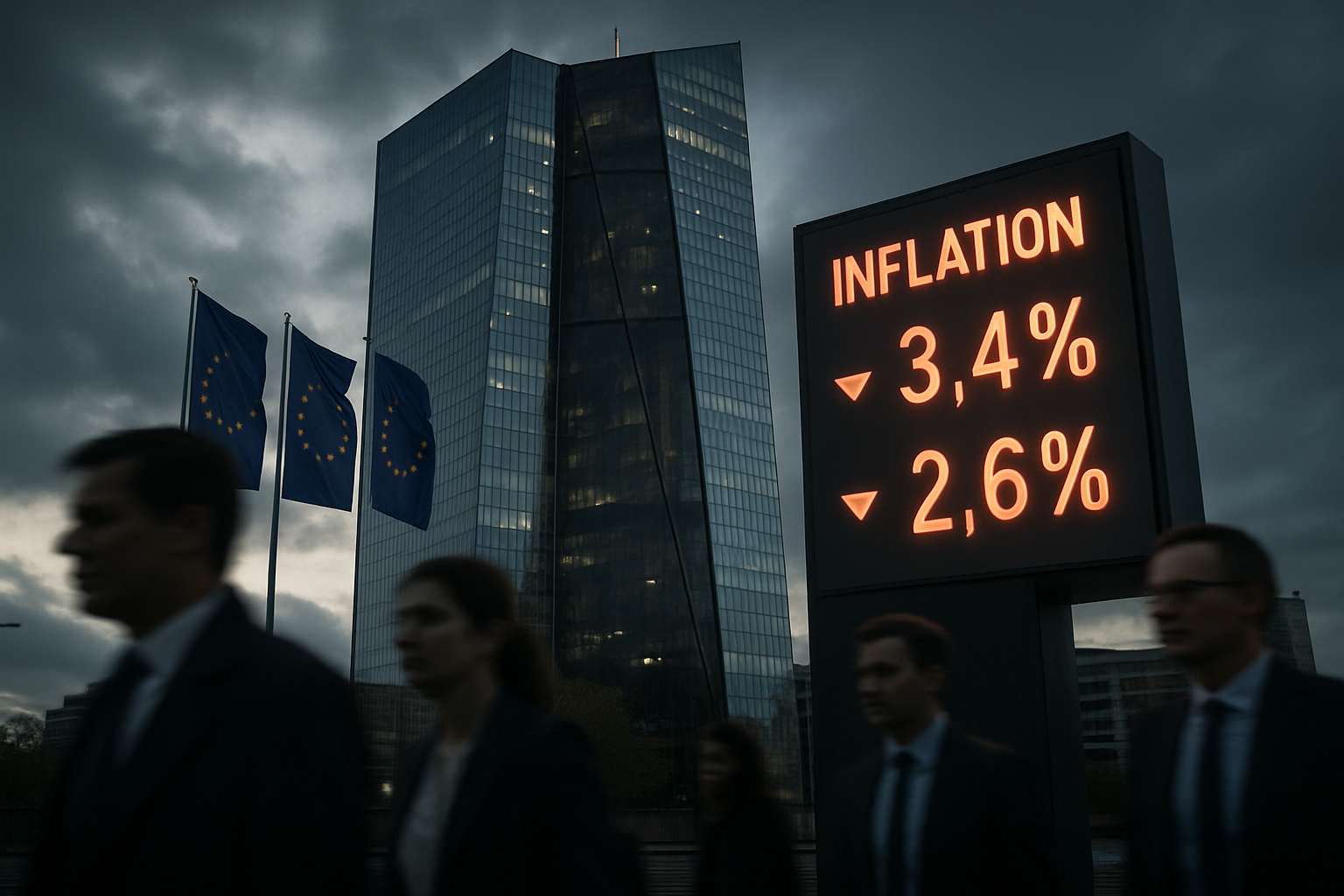
Eurozone inflation dropped to 1.7% in January 2026, marking the lowest level since 2021 as declining energy costs and targeted government interventions helped moderate price pressures across Europe's largest economies.
The significant decline from previous months represents a turning point for European monetary policy, with consumer price growth falling well below the European Central Bank's 2% target for the first time in nearly five years. The broad-based deceleration was evident across major economies, with Germany leading the trend that has provided relief to millions of European households.
Country-by-Country Analysis
Austria reported inflation at exactly 2.0% in January, with household electricity prices serving as a key factor in the decline. The Austrian government's targeted measures on basic foodstuffs, combined with falling global commodity prices including cocoa, contributed to the moderation. Energy costs, which had been a primary driver of inflation throughout the post-pandemic period, ceased to be a major price accelerator.
Germany experienced the most dramatic improvement, with the Tagesschau reporting that eurozone inflation had reached its lowest point in almost five years. The 1.7% figure represents a substantial decline from the double-digit rates that plagued the region during 2022 and 2023.
Italy saw inflation slow to 1.0% in January, with the deceleration primarily driven by food prices and housing-related services. However, the country continued to experience price increases in housing services and tobacco products, indicating that inflation pressures remain uneven across different sectors of the economy.
Regional Variations Persist
The Netherlands recorded inflation at 2.4% in January, representing a decline but still above the eurozone average. Dutch consumers faced a 2.6% increase in the cost of daily life compared to the same period last year, highlighting how inflation experiences vary significantly across the monetary union.
Slovakia's reporting focused on neighboring Austria's sharp decline, attributing the improvement primarily to cheaper energy and lower taxes. This cross-border analysis underscores how energy policy and fiscal measures have become crucial tools in the fight against inflation across the European Union.
Energy Sector Transformation
The moderation in inflation comes amid a complex global energy landscape. While European countries are experiencing relief from energy-driven price pressures, global energy markets continue to show volatility. Natural gas prices surged 24% in Europe and 78% in the United States in recent weeks, though these increases appear to have occurred after the January inflation measurements.
The contrast between current inflation moderation and ongoing energy market volatility highlights the lag effects in economic data and the continuing vulnerability of European economies to energy supply disruptions.
Government Intervention Impact
Targeted government measures have played a crucial role in the inflation decline. Austrian authorities specifically implemented policies affecting basic foodstuffs, while broader energy subsidies and tax adjustments across the region have helped shield consumers from the full impact of global price fluctuations.
These interventions represent a significant shift in European fiscal policy, with governments taking more active roles in moderating price increases for essential goods and services. The approach marks a departure from purely market-based solutions to inflation control.
Economic Policy Implications
The sharp decline in inflation rates across the eurozone creates new challenges and opportunities for the European Central Bank. With inflation now below the 2% target, pressure may build for monetary policy adjustments, potentially including interest rate cuts to support economic growth.
The uneven distribution of inflation rates across member countries – from Italy's 1.0% to the Netherlands' 2.4% – also highlights the ongoing challenge of conducting monetary policy for a diverse economic union with varying national conditions.
Central bank officials will need to balance the encouraging inflation data against ongoing risks, including potential energy price volatility and the sustainability of current government intervention programs.
Consumer Impact and Economic Recovery
For European consumers, the inflation moderation represents significant relief after years of elevated living costs. Lower inflation rates effectively increase purchasing power, potentially supporting consumer spending and economic growth across the region.
The improvement is particularly notable in essential categories like food and energy, which have the most direct impact on household budgets. Austrian data specifically highlighted the role of cheaper electricity and food price interventions, while Italian consumers benefited from moderating food price inflation.
However, the persistence of price increases in certain sectors, such as housing services and tobacco products in Italy, indicates that the inflation story remains complex and uneven across different areas of the economy.
Looking Ahead
The January inflation data represents a significant milestone in Europe's economic recovery from the inflationary shock that began in 2021. However, several factors will determine whether this moderation can be sustained throughout 2026.
Global commodity prices, energy market stability, and the continuation of government support programs will all play crucial roles in determining future inflation trajectories. The effectiveness of current policy interventions in maintaining price stability without creating other economic distortions will be closely watched by policymakers and economists.
As European economies navigate this transition period, the balance between supporting growth through accommodative policies and maintaining long-term price stability will remain a central challenge for both national governments and European Union institutions.