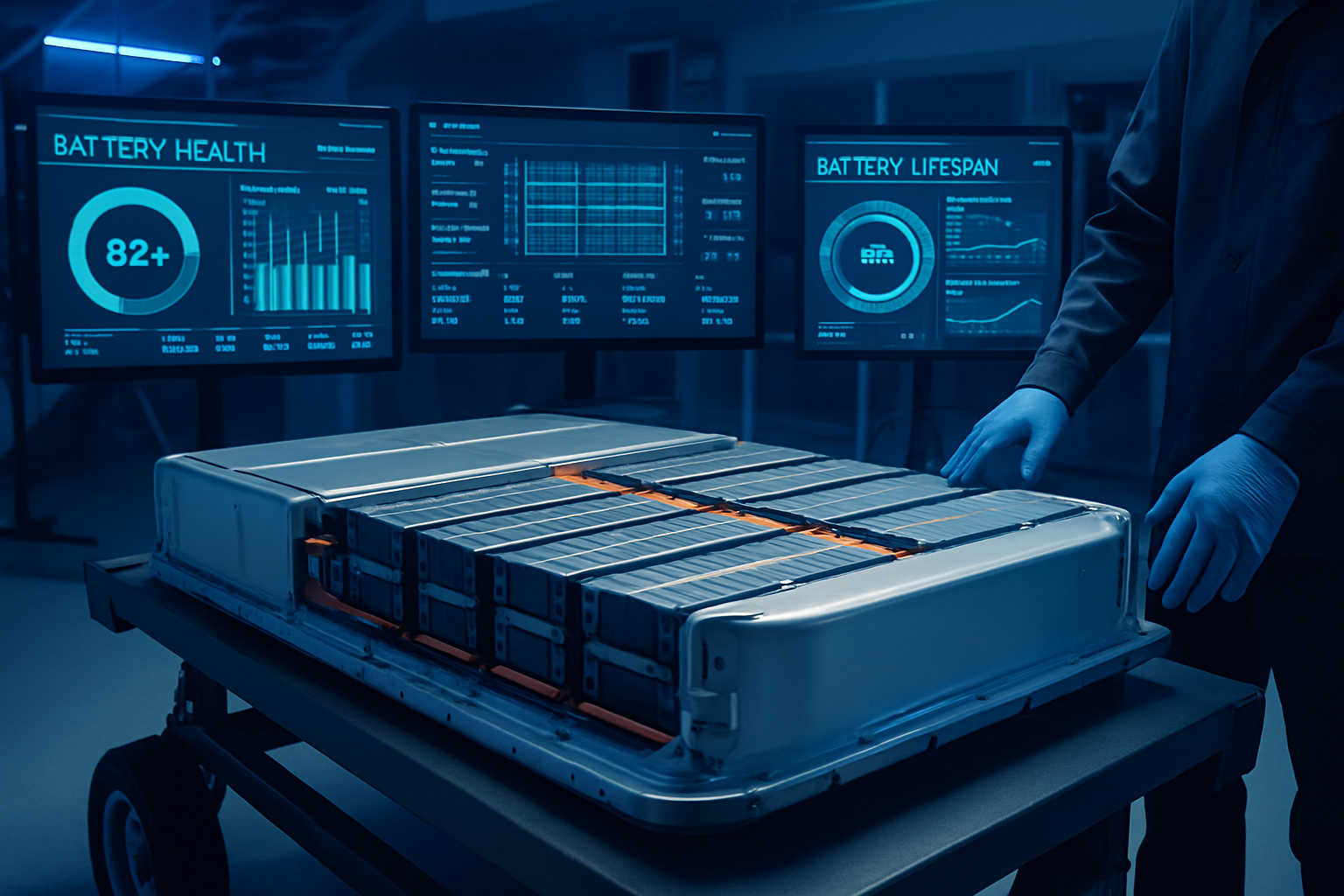
When the modern electric vehicle was still in its infancy, drivers worried that vehicles would need expensive battery replacements within a few years. But comprehensive new research reveals that battery lifespans are significantly exceeding initial expectations, fundamentally changing the economics of electric vehicle ownership.
NPR's investigation into the actual performance data from the earliest generation of electric vehicles on the road provides the most comprehensive picture yet of long-term battery reliability. The findings challenge persistent consumer concerns about EV battery replacement costs and offer crucial insights for the millions considering making the switch to electric mobility.
Early Predictions vs. Reality
In the early days of the modern EV revolution, industry experts and manufacturers were cautiously pessimistic about battery longevity. Early predictions suggested that electric vehicle batteries would need replacement after 100,000 to 150,000 miles, with costs potentially reaching $15,000 to $20,000 for a new battery pack.
These concerns were not unfounded. The lithium-ion battery technology used in the first generation of mass-market electric vehicles like the 2010 Nissan Leaf and 2012 Tesla Model S was still relatively new in automotive applications. Manufacturers had limited real-world data on how batteries would perform under the varied conditions of daily driving over many years.
However, evidence from vehicles now approaching or exceeding a decade of operation suggests these early concerns were overly cautious. Data analysis from thousands of EVs reveals that battery degradation is occurring more slowly than initially projected, with many vehicles retaining 80-90% of their original capacity after eight to ten years of use.
Current Battery Performance Data
The most encouraging findings come from vehicles that have accumulated high mileage over extended periods. Tesla Model S vehicles from 2012-2014, now with over 200,000 miles, typically show battery capacity retention of 85-92%. Similarly, Nissan Leaf vehicles from 2011-2013, despite using different battery chemistry, demonstrate capacity retention of 75-85% after a decade of operation.
This performance data suggests that the practical lifespan of EV batteries may extend well beyond initial manufacturer warranties. Most current EV manufacturers provide 8-year or 100,000-mile battery warranties, but real-world data indicates many batteries will function effectively for 15-20 years or 300,000+ miles.
"The data we're seeing from the oldest EVs on the road is genuinely encouraging. These batteries are proving to be far more durable than anyone predicted in the early days."
— Dr. Sarah Martinez, Automotive Battery Research Institute
Technology Improvements Drive Longevity
Several technological advances have contributed to improved battery longevity. Modern battery management systems (BMS) have become increasingly sophisticated, optimizing charging patterns, temperature control, and cell balancing to minimize degradation. These systems learn from usage patterns and adjust operation to maximize battery life.
Thermal management has also improved dramatically. Early EVs struggled with battery temperature control, particularly in extreme climates. Current vehicles feature liquid cooling systems, pre-conditioning capabilities, and intelligent thermal management that maintains optimal battery temperatures during both operation and charging.
Chemistry improvements represent another crucial factor. While early EVs used relatively simple lithium-ion formulations, modern batteries incorporate advanced cathode materials, improved electrolytes, and sophisticated cell designs that resist degradation. Some manufacturers have introduced silicon nanowire anodes and solid-state electrolyte technologies that promise even greater longevity.
Global Context and Supply Chain Considerations
The improved battery longevity comes at a crucial time for the global EV transition. Current supply chain challenges, including China's dominance in critical materials (60% of global production and 90% of refining capacity for lithium, cobalt, and rare earth elements), make battery longevity increasingly important for sustainable EV adoption.
Memory chip shortages have also affected the automotive industry, with prices increasing sixfold and affecting vehicle control systems. These supply chain pressures make the extended lifespan of existing batteries even more valuable, reducing the need for frequent replacements and easing pressure on critical material supplies.
Recent technological breakthroughs, including BYD's Megawatt Flash Charging system capable of adding 400km of range in five minutes, and Chinese developments in water-based battery technology using organic electrodes, suggest that future EVs may have even longer-lasting, safer, and more environmentally friendly battery systems.
Economic Implications for Consumers
The extended battery life has significant implications for EV economics. Total cost of ownership calculations, which initially assumed battery replacement after 8-10 years, now appear overly conservative. With batteries lasting 15-20 years or more, the long-term economics of EV ownership become even more favorable compared to internal combustion engine vehicles.
This improved longevity also supports a more robust used EV market. Previously, potential used EV buyers worried about imminent battery replacement costs. However, with batteries proving more durable than expected, vehicles with 100,000-150,000 miles may still have years of reliable service ahead, making them attractive options for budget-conscious consumers.
Insurance companies are also adjusting their risk assessments based on improved battery reliability data. Some insurers now offer specialized EV policies that account for lower long-term maintenance costs and reduced fire risks, particularly with newer battery technologies.
Regional Variations and Climate Impact
Climate conditions significantly affect battery longevity, with regional variations in performance becoming apparent as data accumulates. Vehicles in moderate climates generally show better battery retention than those in extreme hot or cold regions, though improvements in thermal management are reducing these differences.
Recent comprehensive testing by Austria's ÖAMTC of 24 electric vehicles in Norwegian conditions reaching -31°C demonstrated that while cold weather does impact range and charging performance, modern EVs remain viable for cold-climate driving with proper thermal management and user habits.
Hot climate performance has also improved, with better cooling systems and charging algorithms that reduce heat buildup during fast charging. States like Arizona and Texas, previously challenging for EV batteries, now show much more favorable long-term performance data.
Charging Infrastructure and Battery Health
The expansion of charging infrastructure has indirect benefits for battery longevity. With more charging options available, drivers can avoid the deep discharge cycles that stress batteries. The availability of workplace charging and improved home charging solutions means many EV owners can maintain optimal charging patterns that extend battery life.
Fast-charging technology improvements, including higher-power systems like BYD's 1,360 kW Megawatt Flash Charging, are designed to minimize battery stress through sophisticated power management and thermal control. These advances mean that even frequent fast charging has less impact on battery longevity than early systems.
Industry Response and Future Outlook
Automakers are responding to the positive battery longevity data by extending warranties and adjusting their service strategies. Tesla recently extended battery warranties on some models, while traditional manufacturers like Toyota are developing their own long-life battery technologies for upcoming EVs like the 2027 Highlander electric SUV.
The improved battery performance is also influencing vehicle-to-grid (V2G) technology deployment. With batteries lasting longer than initially expected, EVs can serve as mobile energy storage systems for homes and the electrical grid, adding additional value to EV ownership beyond transportation.
Research into next-generation battery technologies, including solid-state batteries and advanced lithium-metal systems, promises even greater longevity. Some experimental batteries show potential for 500,000+ mile lifespans, which could make EVs essentially lifetime vehicles for many owners.
Challenges and Considerations
Despite the encouraging data, challenges remain. Battery performance varies significantly based on usage patterns, charging habits, and environmental conditions. Fast charging, while convenient, still causes more degradation than slower charging, though the impact is less severe than initially feared.
The complexity of modern battery management systems means that diagnosis and repair require specialized equipment and training. While batteries themselves are proving durable, the supporting electronics and cooling systems may need maintenance or replacement during the vehicle's lifetime.
Additionally, as EV technology evolves rapidly, older vehicles may become technologically obsolete before their batteries fail. Software updates, charging compatibility, and feature availability may limit the practical lifespan of early EVs even if their batteries remain functional.
Implications for Policy and Planning
The improved battery longevity data has implications for environmental policy and urban planning. With EVs lasting longer than initially projected, the environmental benefits of electric transportation are amplified, as the carbon footprint of battery production is amortized over a longer vehicle lifetime.
Government incentive programs may need adjustment based on the improved economics of EV ownership. Canada's recent announcement of returning to EV consumer incentives as part of a $9.7 billion national auto strategy reflects growing confidence in EV technology and economics.
Municipal planning for charging infrastructure can also be more conservative, as longer battery life means less frequent need for high-power charging and potentially reduced infrastructure stress over time.
Consumer Guidance and Recommendations
For consumers considering EV purchase, the improved battery longevity data suggests that concerns about battery replacement should play a smaller role in decision-making than initially thought. Focus should shift to other factors such as charging infrastructure access, driving patterns, and vehicle features.
However, buyers should still consider battery health when purchasing used EVs. While batteries are lasting longer than expected, vehicles with very high mileage or poor maintenance history may still show significant degradation. Battery health reports and warranty coverage remain important considerations.
Proper charging habits can further extend battery life. Avoiding frequent deep discharges, using moderate charging speeds when possible, and parking in climate-controlled environments when available can all contribute to maximizing battery longevity.
The Road Ahead
As the EV industry matures, the question is shifting from "how long will batteries last?" to "how can we optimize the entire EV ecosystem for maximum sustainability and efficiency?" The answer appears to involve longer-lasting batteries, improved recycling systems, and vehicle designs that account for extended operational lifespans.
The positive battery longevity data represents a fundamental shift in how the industry and consumers think about EV ownership. What was once considered a risky early-adopter technology is now demonstrating the reliability and durability needed for mainstream acceptance.
With continued technological improvements and the accumulation of more long-term performance data, electric vehicles are positioned to become the dominant transportation technology not just for environmental reasons, but for their superior economics and reliability over extended ownership periods.