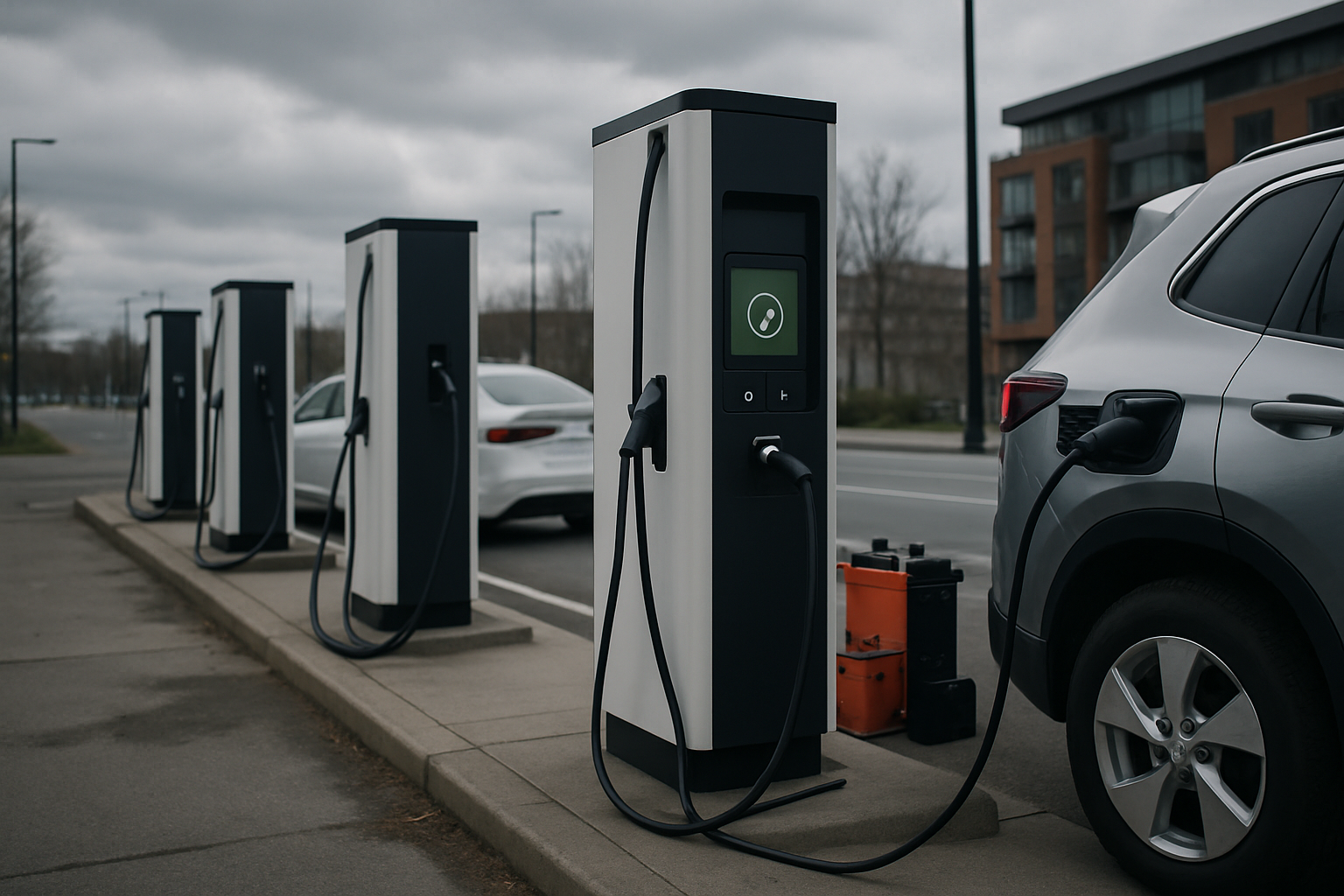
Electric vehicle charging infrastructure across multiple countries is facing a critical utilization crisis, with thousands of newly installed charging stations standing largely unused despite massive public and private investment, according to new reports from Sweden's Energy Agency and developments in Canada and the United States.
Sweden's Energy Agency has warned that tens of thousands of charging stations installed across all municipalities in recent years are severely underutilized, with many locations seeing minimal usage. The agency expressed concerns that charging stations could be forced to close if electric vehicle adoption doesn't accelerate to match the infrastructure investment pace.
Global Pattern of Infrastructure Overbuilding
The Swedish situation reflects broader global challenges where charging infrastructure deployment has outpaced actual EV adoption rates. In just a few years, Sweden installed charging stations in every municipality across the country, but with insufficient electric vehicles to justify the investment levels. This mismatch between supply and demand threatens the economic viability of charging networks.
Meanwhile, Canada is witnessing a contrasting development in electric transportation through BC Ferries' expansion of hybrid vessel operations. The maritime sector's six hybrid vessels, including the Island Discovery commissioned in 2020, are positioned to operate exclusively on batteries once shore charging infrastructure becomes available. This represents a more measured approach to electrification where infrastructure follows demonstrated demand rather than preceding it.
Chinese Innovation Offers Alternative Solutions
While traditional charging infrastructure struggles with utilization rates, Chinese company NIO is implementing an entirely different approach through battery swapping stations. The technology allows drivers to exchange depleted batteries for fully charged ones in minutes, eliminating charging wait times entirely. NIO is expanding this battery swapping network globally, offering a potential solution to charging infrastructure challenges plaguing traditional stations.
Battery swap stations require different economics than charging points, with higher initial investment but potentially better utilization rates since each station can service multiple vehicle battery changes per hour rather than occupying charging bays for extended periods.
Technical Infrastructure Challenges Persist
Beyond utilization issues, technical problems continue to plague existing charging infrastructure. Memory chip shortages have created sixfold price increases in semiconductor components until 2027, affecting the reliability and functionality of charging station control systems. These technical challenges compound the utilization crisis by reducing consumer confidence in charging network reliability.
"The infrastructure was built with optimistic projections that haven't materialized, creating a chicken-and-egg problem where potential EV buyers are deterred by empty charging stations,"
— Energy Infrastructure Analyst
Urban-Rural Disparities Complicate Planning
The charging infrastructure crisis reveals stark urban-rural disparities in EV adoption patterns. Homeowners and rural residents maintain significant advantages through home charging capabilities, while urban apartment dwellers face persistent barriers to EV adoption despite living near more charging infrastructure. This dynamic creates a paradox where areas with the most charging stations often have the lowest utilization rates.
Workplace charging initiatives are emerging as crucial solutions for urban EV adoption, potentially improving utilization rates for strategically located charging infrastructure while addressing the apartment dweller disadvantage.
Economic Pressure Points
The charging infrastructure utilization crisis occurs against a backdrop of economic pressures that should theoretically favor EV adoption. Oil prices surged past $119/barrel following geopolitical tensions affecting 40% of global oil transit, making electric vehicles economically attractive beyond environmental considerations. However, infrastructure investment decisions made during lower fuel price periods now face economic scrutiny as utilization rates fail to meet projections.
Austria has demonstrated more strategic infrastructure development by doubling EV charging capacity with 1,000 additional stations based on demonstrated demand patterns. Estonia leads European renewable electricity integration with 88% renewable power and 90,000 household battery storage systems, creating a more holistic approach to electric mobility infrastructure.
Technology Solutions and Future Outlook
Advanced battery technology developments offer hope for resolving infrastructure challenges. BYD's Megawatt Flash Charging breakthrough enables 400km range in 5 minutes, potentially increasing charging station utilization by dramatically reducing dwell times. Battery longevity studies showing Tesla Model S (2012-2014) vehicles retaining 85-92% capacity after 200,000+ miles support total cost ownership calculations favoring EVs over longer periods.
Vehicle-to-grid technology presents additional opportunities for improving charging infrastructure economics by enabling EVs to serve as distributed energy storage systems. Vehicles can charge during off-peak renewable generation periods and discharge during high demand, creating additional revenue streams for charging infrastructure operators while supporting grid stability.
Strategic Coordination Required
The EV charging infrastructure crisis demonstrates the critical need for better coordination between infrastructure investment, EV adoption incentives, and consumer behavior patterns. Success requires integrating technological advancement with strategic geographic positioning, supply chain resilience, and realistic demand forecasting during the ongoing automotive transformation.
January 2026 marked the 18th consecutive month of temperatures exceeding 1.5°C above pre-industrial levels, emphasizing the urgency of transportation electrification. However, the charging infrastructure utilization crisis shows that climate urgency alone cannot drive sustainable business models for EV infrastructure without careful attention to consumer adoption patterns and economic viability.
The solution likely requires diversified approaches combining traditional charging stations with battery swap technology, strategic infrastructure placement based on demonstrated demand rather than optimistic projections, and comprehensive policy frameworks addressing urban-rural disparities in EV adoption barriers.