Electric vehicle policies across developed nations are facing intense scrutiny as governments grapple with balancing environmental goals against economic equity, with Australia's EV subsidies drawing sharp criticism for disproportionately benefiting wealthy households while France and Italy pursue alternative approaches to sustainable transportation.
A policy that began with modest environmental objectives in Australia is now estimated to cost taxpayers up to 15 times more than the government initially projected, according to analysis by the Sydney Morning Herald. The controversy centers on whether low-income workers are effectively subsidizing electric vehicles for affluent buyers, highlighting a fundamental challenge facing EV adoption policies worldwide.
Australia's EV Policy Under Fire
The Australian government's electric vehicle incentive scheme, originally designed to accelerate clean transport adoption, has become a lightning rod for criticism over its distributional effects. Critics argue that the subsidies primarily benefit high-income households who can afford premium electric vehicles, while working-class taxpayers bear the cost without receiving meaningful benefits.
This controversy emerges against the backdrop of Australia's broader energy challenges, where fuel supply disruptions and rising petrol prices exceeding $3.30 per liter are making electric vehicles increasingly attractive on purely economic grounds. The policy criticism comes at a particularly sensitive time as households face mounting cost-of-living pressures.
France's Social Leasing Innovation
In stark contrast to Australia's approach, France has announced the launch of its "social leasing" program for electric vehicles, targeting modest-income households earning less than €2,200 per month on average. Energy Minister Maud Bregeon detailed that qualified participants will face monthly costs between €100 and €200, making electric mobility accessible to previously excluded demographics.
The French initiative, set to launch in July 2026, aims to provide 50,000 electric vehicles to low and middle-income families as part of a broader strategy to address the energy crisis while maintaining social equity. This approach represents a significant departure from traditional subsidy models that have often benefited higher-income buyers disproportionately.
"We are targeting 50,000 vehicles for modest French families, who earn less than €2,200 per month on average, who will have a remaining charge between €100 and €200 per month."
— Maud Bregeon, French Energy Minister
Italy's Public Transport Revolution
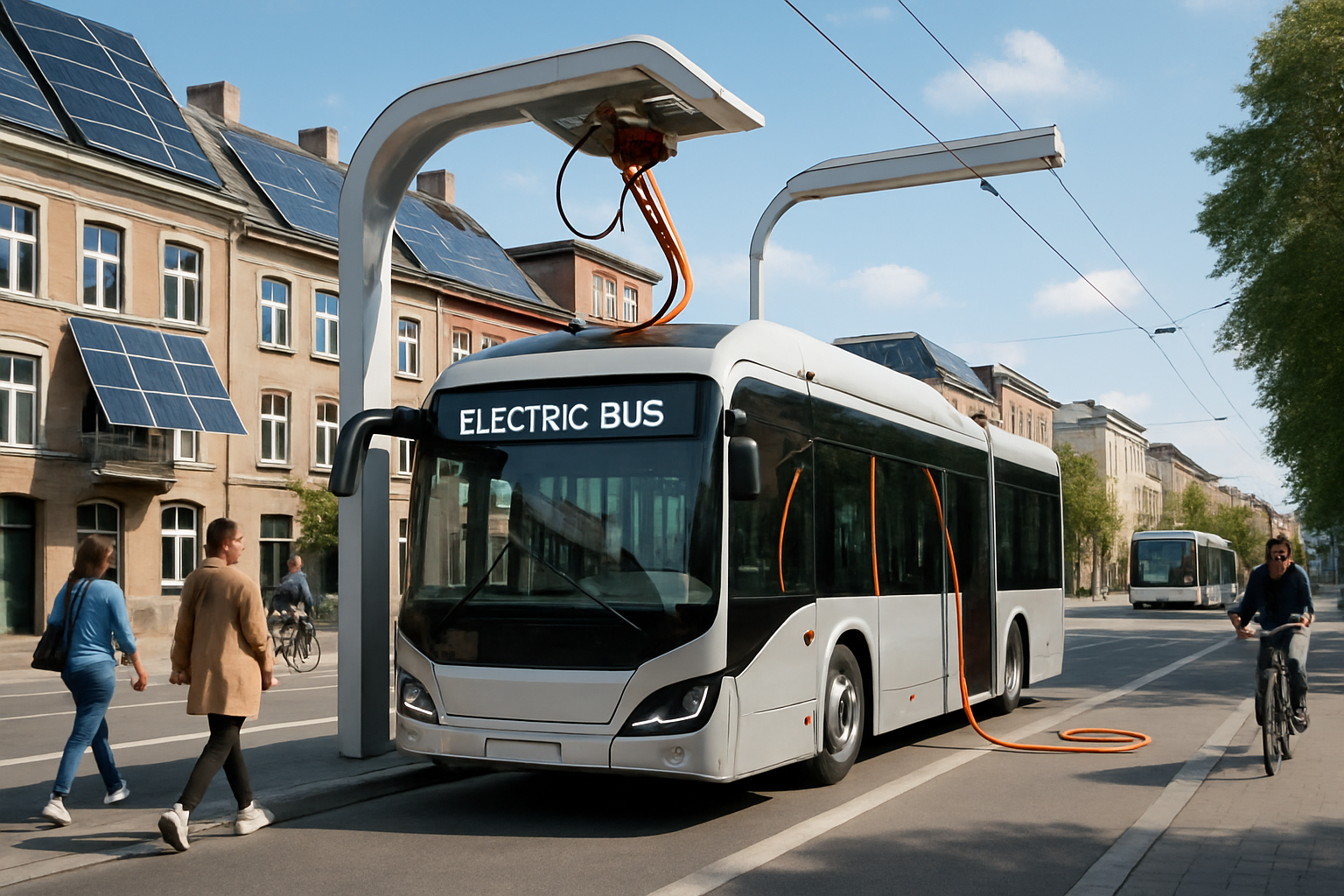
Meanwhile, Italy is pursuing a different strategy entirely, focusing on public transportation electrification as fuel costs soar due to geopolitical tensions. The city of Cremona has achieved complete electrification of its bus fleet, positioning itself as a model for other Italian municipalities facing the dual challenge of rising diesel prices and environmental mandates.
The Italian approach comes as the country faces significant pressure from the ongoing conflict affecting global oil supplies, with the Strait of Hormuz tensions driving fuel prices to unprecedented levels. By investing in electric public transport infrastructure, Italian cities are reducing their exposure to volatile fossil fuel markets while delivering immediate environmental benefits.
Technology Convergence Enabling Transition
The policy debates occur against a backdrop of rapid technological advancement that is fundamentally changing the electric vehicle landscape. Recent breakthroughs include BYD's Megawatt Flash Charging technology, which can deliver 400 kilometers of range in just five minutes, and significant improvements in cold-weather performance with systems operating effectively at temperatures as low as -30°C.
Battery longevity studies are also exceeding initial predictions, with Tesla Model S vehicles from 2012-2014 maintaining 85-92% of their original capacity after 200,000+ miles, while Nissan Leaf vehicles from 2011-2013 show 75-85% capacity retention after a decade of operation. These improvements in durability and performance are supporting more robust used EV markets and improving total cost of ownership calculations.
Infrastructure Investment Acceleration
Supporting the policy shifts is an unprecedented surge in charging infrastructure investment. Austria has doubled its EV charging capacity by adding 1,000 additional stations, while Estonia leads Europe with 88% renewable electricity and the continent's largest household battery storage system serving 90,000 homes.
New Zealand has announced a $50 million investment to double its public charging network through zero-interest loans to ChargeNet and Meridian Energy, deploying 2,574 new charging points nationwide. These infrastructure developments are crucial for addressing urban-rural adoption disparities, where homeowners and rural residents maintain advantages through home charging while apartment dwellers face significant barriers.
Supply Chain Vulnerabilities Persist
Despite technological progress, significant supply chain challenges continue to affect the global EV transition. China maintains control over approximately 60% of critical materials production and 90% of refining capacity for lithium, cobalt, and rare earth elements essential for electric vehicle manufacturing.
Memory chip shortages are also driving semiconductor prices up sixfold, affecting vehicle control systems until new fabrication facilities come online in 2027. The US-EU-Japan Critical Minerals Partnership, involving 55 countries and seven African suppliers, is coordinating efforts to diversify supply chains, but this process requires massive investment and years of development.
Climate Urgency Drives Policy Acceleration
The policy debates unfold against mounting climate pressures, with January 2026 marking the 18th consecutive month of global temperatures exceeding 1.5°C above pre-industrial levels. This sustained warming demonstrates that human-induced climate change is overriding natural climate variability, lending urgency to transportation electrification efforts.
The convergence of climate urgency, technological readiness, and economic pressures from volatile fossil fuel markets is creating conditions for accelerated EV adoption. However, the Australian experience demonstrates that poorly designed policies can undermine public support for the transition by creating perceptions of inequity.
Regional Approaches Reflect Different Priorities
The divergent approaches across Australia, France, and Italy reflect different political economies and policy priorities. Australia's market-oriented approach has achieved rapid adoption among affluent early adopters but faces criticism over equity. France's social leasing model explicitly targets distributional concerns, while Italy's focus on public transport offers universal benefits while reducing individual ownership costs.
These varied approaches are providing real-world testing grounds for different policy models that other nations can learn from. The success or failure of these initiatives will likely influence EV policy design globally as governments seek to balance environmental objectives with political sustainability.
Commercial Vehicle Electrification Accelerating
Beyond passenger vehicles, commercial electrification is advancing rapidly with Tesla announcing large-scale Semi truck production milestones and BMW planning electric 3 Series production in Munich starting August 2026. Fleet operators are natural early adopters due to their focus on total cost of ownership rather than upfront purchase prices.
Vehicle-to-grid technology is also advancing, enabling EVs to serve as mobile energy storage systems that can charge during off-peak hours using renewable energy and discharge during high-demand periods to support grid stability. This functionality provides additional economic value that can help offset higher initial vehicle costs.
Future Policy Considerations
As the electric vehicle transition accelerates, policymakers face complex trade-offs between speed of adoption, equity of access, and fiscal sustainability. The Australian controversy highlights the importance of policy design that considers distributional impacts from the outset, while the French social leasing model demonstrates innovative approaches to ensuring broad-based access to clean transportation.
The Italian focus on public transport offers another pathway that can deliver immediate environmental benefits while serving all income levels. As technological improvements continue to reduce costs and improve performance, the policy challenge shifts from creating initial market incentives to ensuring the benefits of the transition are broadly shared across society.
The global electric vehicle policy landscape in 2026 reflects a critical juncture where environmental necessity meets political economy realities. The approaches taken by Australia, France, and Italy in addressing these challenges will provide valuable lessons for the broader international community as the world navigates one of the most significant transportation transformations in modern history.