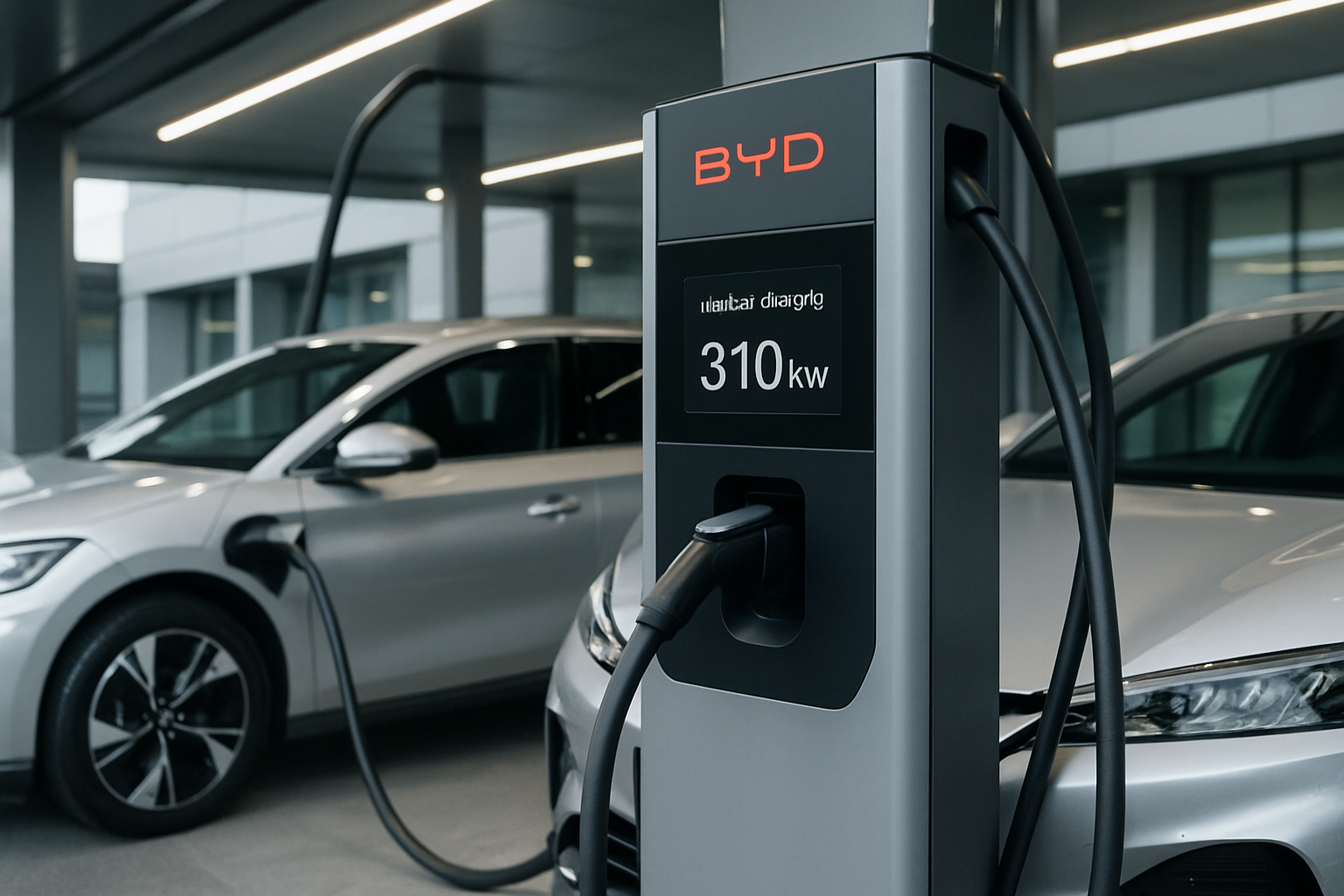
Chinese automotive giant BYD has unveiled revolutionary ultra-fast charging technology that can add 400 kilometers of range to electric vehicles in just five minutes, while China simultaneously achieves record-breaking robot production capabilities and Africa witnesses unprecedented electric mobility expansion through strategic partnerships and substantial funding commitments.
The convergence of these developments signals a transformative moment for global electric vehicle technology, marking February 2026 as a pivotal month in the acceleration of sustainable transportation infrastructure worldwide. From cutting-edge charging solutions to robotic manufacturing capabilities and emerging market adoption, the electric mobility sector is experiencing unprecedented innovation across multiple fronts.
BYD's Megawatt Flash Charging: A Game-Changing Breakthrough
BYD's Shenzhen-based operations have introduced the Megawatt Flash Charging system, achieving a maximum power output of 1,360 kW that enables vehicles to gain two kilometers of range per second of charging. This technological leap represents a fundamental shift in electric vehicle practicality, addressing one of the primary barriers to mass EV adoption: charging time anxiety.
The ultra-fast charging technology operates at speeds comparable to conventional fuel refilling, with the company demonstrating that electric vehicle batteries can be charged from near-empty to 400 kilometers of range in approximately five minutes. This achievement positions BYD at the forefront of solving the "charging time problem" that has historically limited EV adoption among consumers accustomed to quick gasoline refueling.
"For electric automobiles to become as practical as conventional vehicles, their owners must be able to quickly recharge batteries in roughly the same time it takes a regular car to fill up with fuel."
— BYD Technical Documentation
The breakthrough comes at a critical moment when global EV infrastructure faces significant challenges, including supply chain constraints where China maintains 60% of critical materials production and 90% of refining capacity for lithium, cobalt, and rare earth elements essential for battery manufacturing.
China's Robot Production Revolution
Simultaneously, China has achieved unprecedented capabilities in humanoid robot production, training approximately 1,000 robots daily in what represents the world's largest concentrated robotics development program. This massive scale of robot training and production demonstrates China's commitment to maintaining technological leadership across multiple advanced manufacturing sectors.
The robotic production surge encompasses advanced artificial intelligence integration, real-world employment applications, and sophisticated training protocols that position these humanoid machines for practical deployment across various industries. This development coincides with broader Chinese technological initiatives including autonomous driving deregulation and expanded AI training centers.
The scale of robot production reflects China's strategic approach to maintaining dominance in emerging technologies while potentially addressing labor market challenges and supporting manufacturing automation across multiple sectors, including automotive production that could benefit electric vehicle manufacturing capabilities.
African Electric Mobility Expansion
In Uganda, transformative developments in electric mobility are reshaping transportation infrastructure through the "Zuukuka – Make the Smart Move" campaign launched by the United Boda-Boda Riders Cooperative Union in partnership with Spiro, Africa's largest electric mobility company.
The nationwide clean air initiative specifically targets the transition from petrol-powered motorcycles to electric boda bodas in Kampala, addressing growing air pollution concerns while creating new economic opportunities for motorcycle taxi operators. The campaign represents a comprehensive approach to sustainable urban transportation that could serve as a model for other developing nations.
Spiro has secured $50 million in debt financing from African Export-Import Bank, Nithio, and Africa Go Green Fund to accelerate expansion of clean transport networks across the continent. This substantial funding round follows the company's landmark $100 million investment commitment, demonstrating significant investor confidence in African electric mobility markets.
The financing will support battery-swapping infrastructure development, a crucial component for electric vehicle adoption in markets where traditional charging infrastructure may be challenging to implement rapidly. Battery swapping technology allows for quick energy replenishment without requiring extensive charging station networks, making it particularly suitable for motorcycle taxi operations and urban delivery services.
Global Context and Supply Chain Challenges
These developments occur amid broader global challenges in electric vehicle supply chains, with memory chip shortages causing sixfold price increases affecting vehicle control systems. The semiconductor crisis is expected to continue until 2027 as new fabrication facilities come online, creating additional complexity for EV manufacturers worldwide.
The US-EU-Japan Critical Minerals Partnership, involving 55 countries and seven African alternative suppliers, aims to address Chinese supply chain dominance in critical materials. This initiative includes nations such as Angola, Democratic Republic of Congo, Guinea, Kenya, Morocco, Sierra Leone, and Zambia as key alternative suppliers for essential EV battery components.
European nations continue advancing their own EV initiatives, with Austria doubling electric vehicle infrastructure by adding 1,000 additional public charging stations, demonstrating successful expansion models that could be replicated globally. Estonia maintains European leadership with 88% renewable electricity and Europe's largest battery storage facility serving 90,000 households.
Technological Integration and Market Implications
The convergence of ultra-fast charging technology, advanced robotics manufacturing, and expanding African markets represents a fundamental shift in global electric vehicle dynamics. BYD's charging breakthrough addresses consumer concerns about charging time, while Chinese robot production capabilities could revolutionize EV manufacturing efficiency and quality control.
Vehicle-to-grid technology continues developing, allowing electric vehicles to function as mobile energy storage systems supporting electrical grids during peak demand periods. This capability, combined with ultra-fast charging, creates opportunities for integrated transportation-energy ecosystem transformation.
The African market expansion through companies like Spiro demonstrates that electric mobility solutions can be adapted to diverse economic contexts, with battery-swapping infrastructure offering practical alternatives to traditional charging networks in developing economies.
Economic and Environmental Impact
These technological advances arrive as January 2026 marked the 18th consecutive month of global temperatures exceeding 1.5°C above pre-industrial levels, underscoring the urgent need for accelerated clean transportation solutions. The environmental benefits of electric vehicle adoption extend beyond emissions reduction to include improved urban air quality and reduced dependence on fossil fuel imports.
Economic implications span multiple sectors, from job creation in advanced manufacturing and infrastructure development to reduced operational costs for transportation services. The African electric mobility expansion particularly demonstrates how sustainable transportation can create economic opportunities while addressing environmental challenges.
The integration of advanced robotics in manufacturing could reduce production costs and improve quality control, potentially making electric vehicles more affordable for mass market adoption. This cost reduction, combined with ultra-fast charging capabilities, addresses two primary barriers to EV adoption: price and convenience.
Looking Ahead: Infrastructure and Policy Requirements
Successful deployment of these technologies requires coordinated infrastructure development, supportive policy frameworks, and continued international cooperation. Ultra-fast charging networks need substantial electrical grid upgrades and strategic placement to maximize accessibility and convenience for consumers.
The success of African electric mobility initiatives depends on sustained funding, appropriate regulatory environments, and community engagement ensuring that benefits reach target populations. Policy makers must balance innovation encouragement with safety standards and consumer protection requirements.
International cooperation remains essential for addressing supply chain vulnerabilities, technology transfer, and ensuring that electric vehicle benefits reach diverse global markets. The ongoing US-EU-Japan Critical Minerals Partnership demonstrates the importance of coordinated responses to strategic dependencies in critical technologies.
As these developments continue evolving throughout 2026, they establish foundations for a transformed global transportation sector where electric vehicles become truly competitive with conventional alternatives in terms of convenience, cost, and performance. The convergence of charging technology breakthroughs, manufacturing innovation, and expanding market adoption suggests that the electric vehicle revolution may accelerate faster than previously anticipated, with profound implications for energy systems, urban planning, and economic development worldwide.