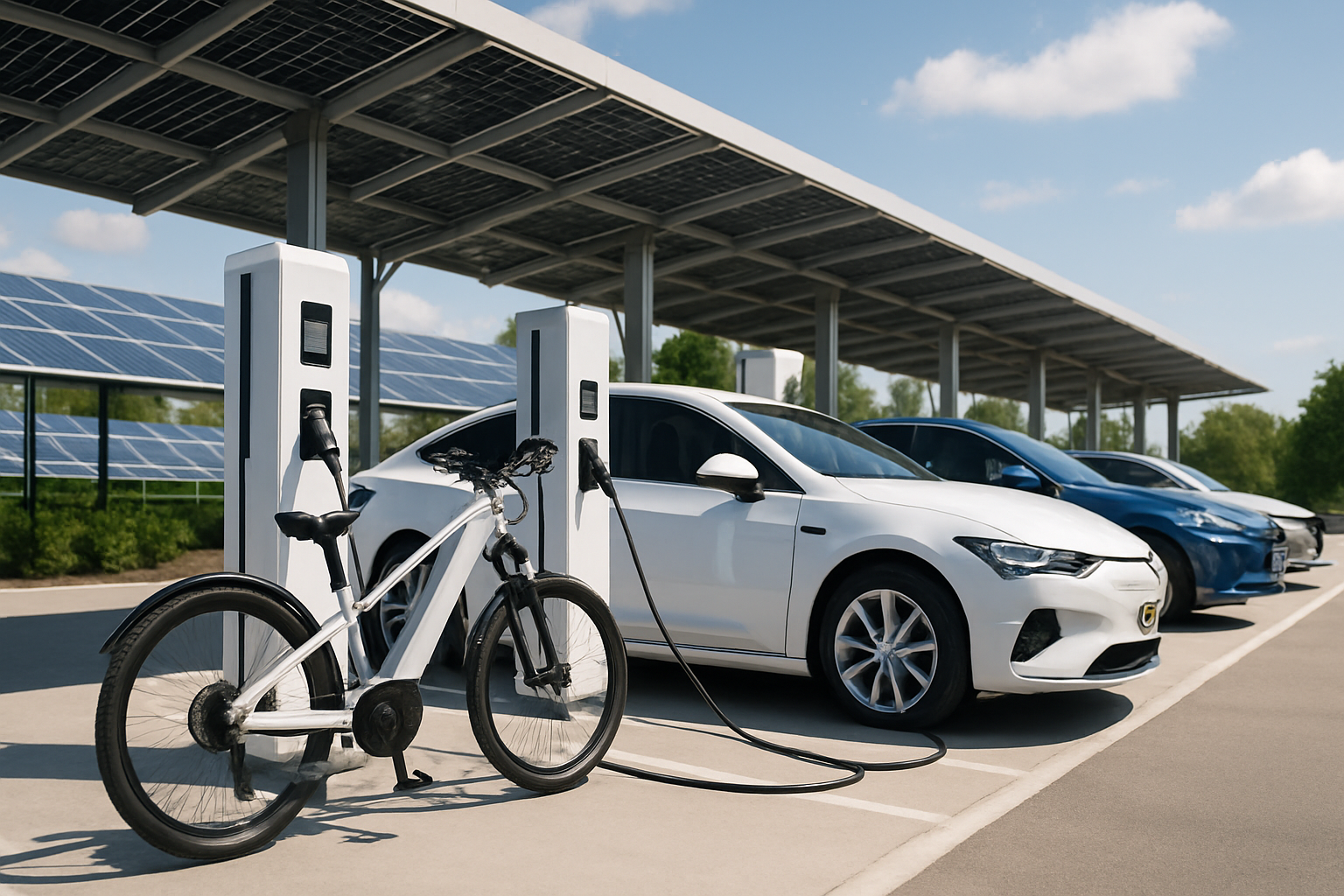
Electric vehicle technology has reached a pivotal moment in March 2026, with groundbreaking developments spanning from affordable government-subsidized e-bikes in Pakistan to revolutionary automotive partnerships promising lightning-fast charging capabilities, marking a transformative shift toward sustainable transportation worldwide.
Two major developments underscore the rapid acceleration of electric mobility adoption: Balochistan's pioneering e-bike subsidy program and Mitsubishi's collaboration with Apple supplier Foxconn on an affordable electric vehicle featuring unprecedented acceleration capabilities.
Revolutionary E-Bike Accessibility in Pakistan
Balochistan Chief Minister Sarfaraz Bugti launched a groundbreaking E-Bike Scheme targeting the province's youth and women, representing a major step toward democratizing electric transportation. The program makes electric mobility accessible through innovative financing that reduces financial barriers to sustainable transport adoption.
Under this initiative, the total cost of each electric bike is 175,000 rupees ($600), but the provincial government provides a substantial 30% subsidy of 52,500 rupees. This reduces the initial investment to just 17,500 rupees ($60) for eligible applicants, with the remaining 105,000 rupees financed through banks across 24 monthly installments of 4,773 rupees ($16).
"This represents a major step toward empowering young people and women while helping them move toward modern, eco-friendly transportation."
— Balochistan Government Statement
The program targets students, young professionals, and women across the province, addressing both environmental concerns and economic empowerment. By making electric vehicles affordable for lower-income demographics, Balochistan is pioneering a model that could influence similar initiatives across South Asia and beyond.
Mitsubishi-Apple Partnership Signals Premium EV Innovation
Simultaneously, high-end electric vehicle development is advancing rapidly through an unexpected partnership between Mitsubishi and iPhone manufacturer Foxconn. According to Lithuanian automotive publication reports, their collaborative electric vehicle promises impressive performance specifications including 0-100 km/h acceleration in just 4 seconds, targeting the affordable premium segment.
The vehicle is currently undergoing testing in Australia, with market debut planned for the second half of 2026. This partnership represents the convergence of traditional automotive expertise with cutting-edge consumer electronics manufacturing capabilities, potentially creating new paradigms for electric vehicle production efficiency and technological integration.
Industry sources suggest this collaboration could leverage Foxconn's expertise in mass production of sophisticated electronic components while utilizing Mitsubishi's automotive engineering and global distribution networks. The timing aligns with accelerating demand for performance electric vehicles that maintain affordability compared to luxury competitors.
Global Infrastructure and Supply Chain Context
These developments occur within a complex global landscape of electric vehicle advancement and challenges. China maintains dominance in critical materials production, controlling approximately 60% of global critical materials production and 90% of refining capacity for lithium, cobalt, and rare earth elements essential for electric vehicle batteries.
Meanwhile, the industry faces significant supply chain pressures, including memory chip shortages that have caused sixfold price increases affecting vehicle control systems. These constraints are expected to persist until 2027 when new semiconductor fabrication facilities come online.
Despite these challenges, infrastructure investment continues expanding globally. Austria recently doubled its electric vehicle charging capacity by adding 1,000 additional public charging stations, while Estonia maintains European leadership with 88% renewable electricity generation and the continent's largest battery storage network serving 90,000 households.
Breakthrough Battery Technology Acceleration
The electric vehicle sector has witnessed remarkable technological breakthroughs in recent months. BYD's Megawatt Flash Charging system achieves unprecedented 1,360 kW charging power, enabling vehicles to gain 400-kilometer range in just 5 minutes. This technology addresses the primary consumer barrier to electric vehicle adoption by achieving charging speeds comparable to gasoline refueling.
Additionally, BYD's Blade Battery 2.0 technology demonstrates operational capability in extreme cold conditions down to -30°C, expanding electric vehicle viability across diverse climate conditions. These advances represent fundamental improvements in battery chemistry and thermal management that could accelerate global adoption patterns.
Long-term reliability studies show Tesla Model S vehicles from 2012-2014 retain 85-92% battery capacity after 200,000+ miles, while Nissan Leaf models from 2011-2013 maintain 75-85% capacity retention after a decade of operation. These findings suggest practical electric vehicle battery lifespans of 15-20 years, significantly exceeding initial manufacturer warranties and improving total cost of ownership calculations.
Regional Adoption Patterns and Government Policies
Electric vehicle adoption shows marked regional variations influenced by infrastructure availability and government policies. Homeowners and rural residents maintain charging advantages through home-based systems, while urban apartment dwellers face infrastructure barriers despite higher interest in electric mobility.
Government intervention continues playing a crucial role in market development. Canada announced the return of electric vehicle consumer incentives under Prime Minister Mark Carney as part of a $9.7 billion national automotive strategy. European automakers including Volkswagen and Stellantis are intensifying calls for Brussels subsidies to support European electric vehicle manufacturing amid Chinese competition.
Vehicle-to-grid technology is advancing rapidly, enabling electric vehicles to function as mobile energy storage systems that charge during off-peak renewable generation periods and discharge electricity during high-demand periods. This bidirectional capability could stabilize electrical grids while providing additional revenue streams for electric vehicle owners.
Climate Urgency and Policy Implications
These technological and policy developments gain urgency from accelerating climate challenges. January 2026 marked the 18th consecutive month of global temperatures exceeding 1.5°C above pre-industrial levels, emphasizing the critical importance of rapid transportation electrification.
China has implemented comprehensive automotive safety regulations, including a ban on hidden door handles effective January 2027, prioritizing functional safety over aesthetic design. This regulation affects major electric vehicle manufacturers including Tesla, BYD, NIO, and XPeng, requiring mechanical release systems that function independently of electronic controls.
Commercial Vehicle and Infrastructure Integration
Commercial electric vehicle deployment is accelerating with Tesla announcing large-scale Semi truck production and various governments committing to charging infrastructure expansion. Indonesia's PT PLN committed to installing 5,000 electric vehicle charging stations nationally, supporting Southeast Asian electric vehicle ecosystem development.
The convergence of automotive and energy sectors creates opportunities for integrated transportation-energy ecosystem transformation. Success requires coordinated development of vehicle production, charging infrastructure, grid integration capabilities, and supply chain security measures.
Future Outlook and Strategic Implications
The electric vehicle industry transformation represents one of the most significant industrial shifts in modern history, requiring coordination across energy systems, infrastructure development, materials supply chains, and regulatory frameworks. The success of programs like Balochistan's e-bike initiative and high-performance partnerships like Mitsubishi-Foxconn demonstrates the breadth of innovation occurring across market segments.
Regional manufacturing strategies are emerging to reduce supply chain vulnerabilities through local sourcing and enhanced flexibility. This trend could create more resilient supply networks while reducing transportation costs and improving responsiveness to local market requirements.
The intersection of affordability initiatives, technological breakthroughs, and infrastructure investment suggests 2026 may represent a tipping point for electric vehicle adoption. However, success depends on sustaining international cooperation, innovative financing mechanisms, and adaptive strategies addressing diverse market conditions during the sustainable mobility transition.