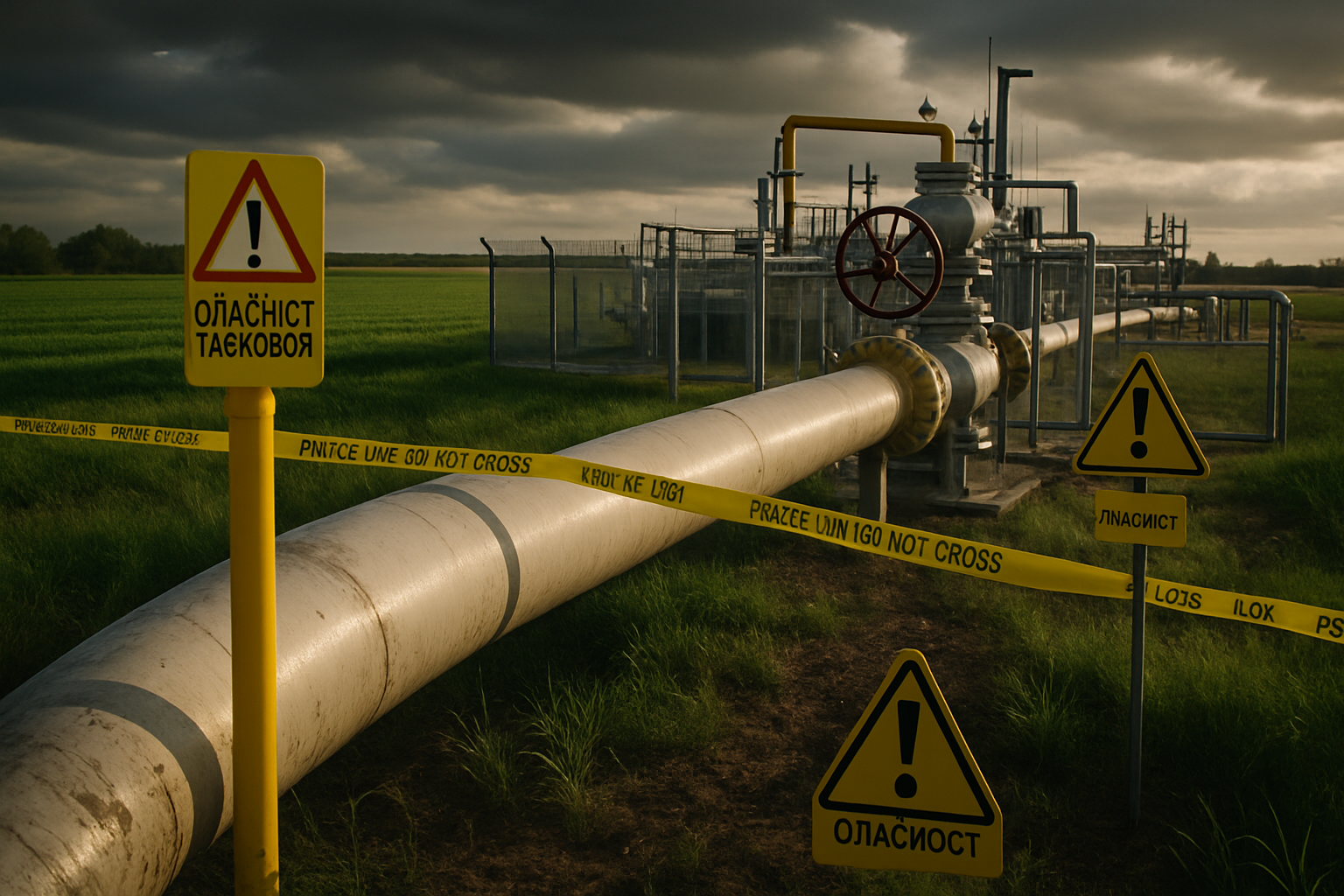
Serbian authorities discovered explosives of "devastating force" near the strategic Balkan Stream gas pipeline close to the Hungarian border, triggering a major diplomatic crisis just days before Hungary's crucial parliamentary elections on April 12, 2026.
Serbian President Aleksandar Vučić announced the discovery of the explosive devices near the village of Velebit, close to the Hungarian border. The pipeline, also known as part of the TurkStream system, carries Russian natural gas from Turkey through Bulgaria and Serbia to Hungary, representing a critical energy lifeline for both nations.
Hungary Points Finger at Ukraine
Hungarian Prime Minister Viktor Orbán quickly appeared to implicate Ukraine in what he characterized as an act of sabotage, despite providing no evidence to support the accusation. Orbán's suggestion comes amid ongoing tensions between Budapest and Kyiv over energy policy and Hungary's blocking of EU aid to Ukraine.
"This discovery raises serious questions about the security of our energy infrastructure,"
— Viktor Orbán, Hungarian Prime Minister
The timing is particularly significant, coming just one week before Hungary's parliamentary elections where Orbán's Fidesz party faces its most serious electoral challenge since 2010. For the first time in over a decade, opposition coalitions led by Péter Magyar's Tisza Party are leading in polls, creating unprecedented pressure on the long-serving prime minister.
Ukraine Denies Involvement, Cites False Flag
Ukraine categorically rejected any connection to the incident, with officials suggesting the discovery could be part of a Russian false flag operation designed to influence Hungarian elections and further strain EU-Ukraine relations.
Ukrainian Foreign Ministry spokesperson Heorhii Tykhyi stated definitively that "Ukraine has nothing to do with this incident" and characterized it as "most likely a Russian operation under a false flag as part of Moscow's large-scale interference in Hungary's elections."
This denial comes against the backdrop of longstanding tensions between Ukraine and Hungary over the Druzhba oil pipeline, which has been offline since late January 2026. Ukraine maintains the pipeline was damaged in Russian drone attacks requiring repairs, while Hungary and Slovakia claim Ukraine deliberately halted transit as "political blackmail."
Electoral Timing Raises Suspicions
The discovery's timing has raised eyebrows among European observers, coming exactly one week before Hungary's April 12 elections. Opposition leaders have dismissed the incident as "election campaign tactical panic-making," suggesting Orbán is exploiting security fears for political gain.
Hungarian opposition figures point to Orbán's history of using external threats to rally domestic support, particularly regarding migration and security issues. The prime minister has consistently used his position as a vocal critic of EU policies and Ukrainian aid as a cornerstone of his sovereignty-focused platform.
Energy Infrastructure Vulnerability Exposed
The incident highlights the vulnerability of Europe's energy infrastructure amid ongoing geopolitical tensions. The Balkan Stream pipeline represents one of the few remaining routes for Russian gas to reach Hungary and Serbia, making it a strategically critical asset.
Serbia has been caught in the middle of competing pressures, maintaining energy ties with Russia while seeking EU integration. The country has relied heavily on Russian energy supplies and has been reluctant to fully align with EU sanctions policies.
Regional Energy Dependencies
- Hungary and Slovakia remain the only EU countries still dependent on Russian oil under special exemptions
- The Balkan Stream pipeline carries approximately 15.75 billion cubic meters of gas annually
- Alternative supply routes would require years of infrastructure development
- Energy security concerns have intensified since the Ukraine conflict began
European Union Response
European officials have called for a thorough investigation while avoiding taking sides in the blame game between Hungary and Ukraine. The incident threatens to further complicate EU unity at a time when the bloc is already dealing with divisions over Ukraine aid and sanctions policy.
Lithuanian Foreign Minister Kestutis Budrys has previously warned that "the EU cannot become Budapest's hostage," reflecting broader concerns about Hungary's use of veto powers to block collective EU policies.
Investigation Continues
Serbian authorities, working in coordination with Hungarian security services, continue their investigation into the explosive devices. The sophistication of the materials found suggests professional planning and significant resources, according to security sources.
The investigation will be crucial in determining not only who was responsible but also the intended target and timing of any potential attack. Serbian law enforcement has enhanced security protocols along the entire pipeline route and increased military patrols in the area.
Broader Implications
This incident occurs against the backdrop of the ongoing Ukraine conflict and heightened tensions over European energy security. Recent months have seen multiple disruptions to energy infrastructure, including the Druzhba oil pipeline crisis that has strained relations between Hungary, Slovakia, and Ukraine.
The discovery also comes as Europe continues to reduce its dependence on Russian energy sources while maintaining some critical supply routes for countries with special exemptions. The incident underscores the complex web of energy dependencies that continue to shape European geopolitics.
"Energy security remains one of Europe's most vulnerable points in an era of hybrid warfare and geopolitical tensions."
— European Security Expert
Political Ramifications
For Orbán, the incident provides an opportunity to reinforce his narrative about external threats to Hungarian sovereignty while potentially deflecting attention from domestic challenges. His government has consistently portrayed itself as defending Hungary against foreign interference and EU overreach.
The opposition, however, views the timing as suspicious and has demanded transparency about the circumstances of the discovery and the government's response. With polls showing a tight race, every development in the final week before elections could prove decisive.
The incident also tests the resilience of European energy infrastructure and the effectiveness of security cooperation between EU members and candidate countries like Serbia. How this crisis is resolved could set important precedents for managing future infrastructure security challenges in an increasingly volatile geopolitical environment.
As investigations continue, the international community watches closely to see whether this incident will further strain already tense relationships or prompt enhanced cooperation on energy security among European nations.