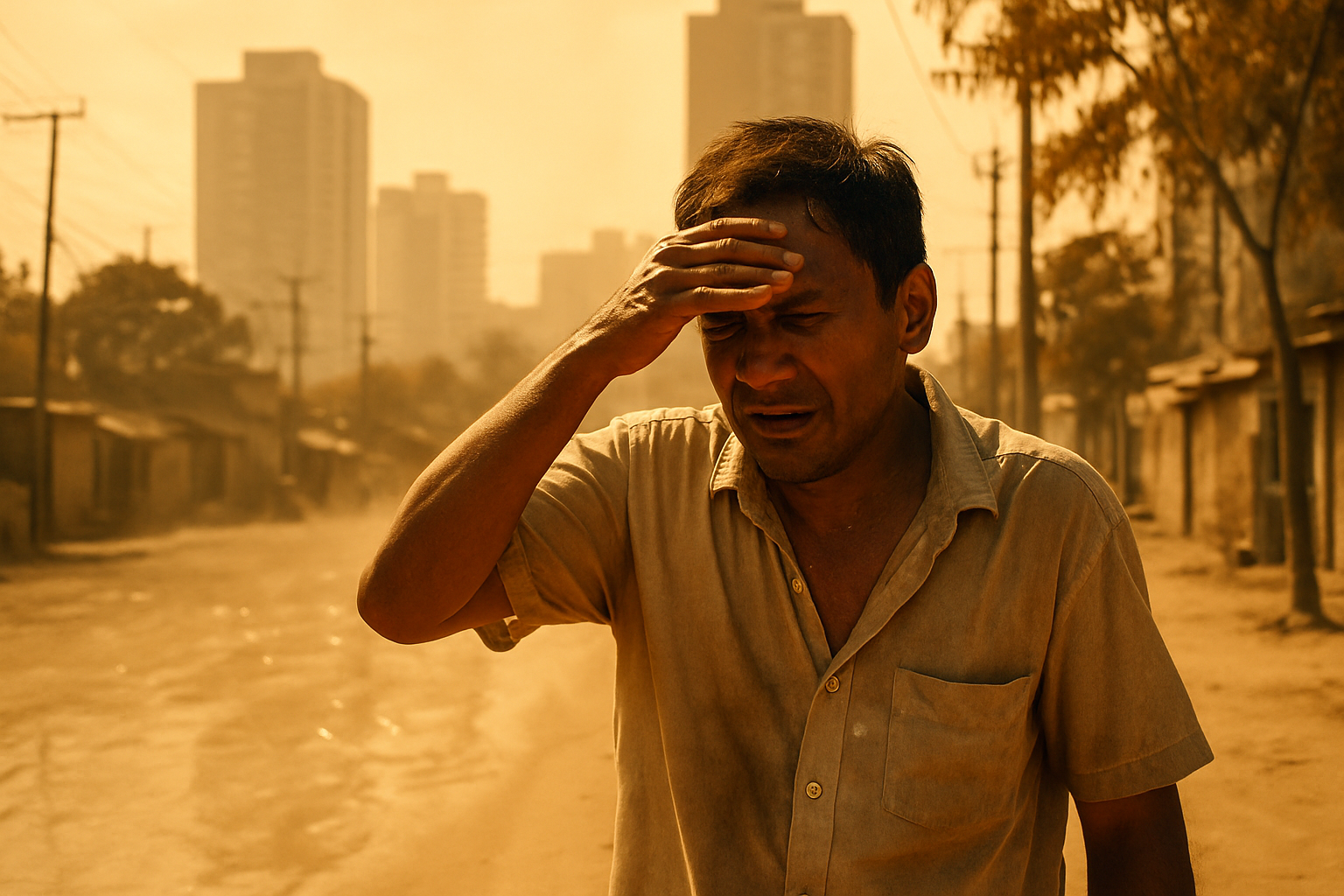
A groundbreaking study led by researchers at The Nature Conservancy has revealed a sobering reality: one-third of the world's population now lives in areas where extreme heat severely limits daily activities, transforming even simple summer tasks into dangerous endeavors that threaten human safety and economic productivity.
The comprehensive research, conducted during the 22nd consecutive month of global temperatures exceeding 1.5°C above pre-industrial levels—the longest sustained extreme warming period in recorded human history—documents how rising temperatures are fundamentally altering the human experience across vast regions of our planet.
The Scope of the Crisis
According to the study's findings, more than 2.5 billion people now face heat conditions that make outdoor work, routine movement, and basic daily activities increasingly hazardous. The research represents a critical milestone in understanding how climate change has moved beyond abstract future projections to become an immediate threat affecting billions of lives.
The Nature Conservancy's analysis demonstrates that extreme heat no longer affects only traditionally hot regions but has expanded to areas previously considered temperate, creating new challenges for populations unprepared for such conditions. This expansion coincides with the planet experiencing its most severe climate crisis in recorded history, with January 2026 confirmed as the hottest month ever documented.
"We are witnessing a fundamental shift in the habitability of our planet. The heat levels that now affect one-third of humanity represent a new normal that requires immediate adaptation strategies."
— Lead Researcher, The Nature Conservancy
Global Context: Unprecedented Warming
The study's release comes amid an alarming pattern of sustained global warming that has shattered previous climate records. The 22nd consecutive month of temperatures exceeding critical thresholds demonstrates how human-induced climate change has fundamentally altered Earth's atmospheric systems beyond natural recovery mechanisms.
Historical climate data reveals that this sustained warming completely overrides natural cooling cycles, including La Niña effects that typically moderate global temperatures. The World Meteorological Organization has indicated a 50-60% probability of El Niño development from July to September 2026, potentially driving unprecedented temperature combinations through the convergence of baseline warming with natural cycle amplification.
This climate volatility paradox enables simultaneous global heat records and devastating regional weather extremes through disrupted atmospheric circulation and polar vortex patterns, creating compound environmental effects that traditional adaptation strategies struggle to address.
Human Impact and Daily Life Disruption
The research documents how extreme heat fundamentally disrupts human activities that have been routine for centuries. Construction workers, farmers, outdoor laborers, and even pedestrians face increasingly dangerous conditions that force dramatic changes to work schedules, daily routines, and lifestyle patterns.
The study identifies several critical thresholds where heat stress makes normal activities unsafe:
- Outdoor work becomes hazardous for extended periods
- Walking and basic transportation require protective measures
- Agricultural activities must shift to cooler hours
- Energy consumption surges for cooling, straining power grids
- Health systems face increased demand for heat-related medical care
These impacts extend beyond individual discomfort to create cascading economic and social consequences affecting entire communities and regions.
Economic and Social Consequences
The economic implications of heat-limited daily life are staggering. Agricultural sectors face mounting losses as extreme weather destroys crops and disrupts supply chains during critical growing seasons. Tourism industries experience extended cancellations and infrastructure damage during peak revenue periods. Traditional work patterns require fundamental restructuring, with many industries forced to adopt protective measures that reduce productivity.
Mental health services report increased demand related to climate anxiety and repeated trauma from extreme weather events. Families face the prospect of losing generational homes and businesses to extinction through repeated climate disruptions. Recovery timelines have fundamentally shifted from weeks to months or years, representing a permanent change in how communities respond to environmental stress.
The research reveals that environmental protection and adaptation now function as essential economic development strategies rather than regulatory burdens. Countries implementing comprehensive heat adaptation measures demonstrate greater economic resilience and attract sustainable investment across multiple sectors.
Global Emergency Response Under Strain
The study's findings coincide with a breakdown in traditional emergency response systems worldwide. Emergency services operate at or beyond capacity limits as simultaneous extreme weather events affect multiple continents concurrently rather than sequentially. Traditional mutual aid mechanisms prove inadequate when multiple regions face simultaneous climate emergencies.
Transportation networks, power grids, and communication systems designed for historical climate patterns repeatedly fail when extreme weather exceeds operational parameters. The European Union's Civil Protection mechanism has been repeatedly activated, with Sweden-Denmark receiving €246 million in assistance—the largest coordinated European climate response on record—yet this proves insufficient for the scale and simultaneity of current challenges.
Infrastructure Adaptation Imperative
The research underscores that traditional infrastructure systems require fundamental reassessment for a "new normal" characterized by extreme weather volatility. Seasonal patterns that guided infrastructure design, agricultural planning, and emergency preparedness for centuries no longer provide reliable frameworks for future planning.
"Building back better" with climate-resilient infrastructure has evolved from an optional enhancement to an essential survival strategy. Current conditions preview what may become routine in the 2030s without comprehensive climate adaptation investment.
Technology and Traditional Knowledge Integration
The most successful heat adaptation responses demonstrate sophisticated integration of cutting-edge technology with traditional ecological knowledge and community-based management systems. Advanced monitoring systems enable real-time heat stress warnings, while traditional cooling techniques and community mutual aid provide practical solutions for extreme conditions.
Satellite monitoring, environmental DNA sampling, and AI-powered analysis work alongside generations of traditional knowledge about managing extreme temperatures. This integration represents a fundamental evolution in environmental protection methodology, moving toward comprehensive frameworks that combine scientific rigor with cultural sensitivity and community ownership.
International Cooperation at Breaking Point
The global nature of extreme heat challenges demands unprecedented international cooperation. Atmospheric systems and ocean currents transport climate effects across continents regardless of political boundaries, making unilateral adaptation efforts insufficient for comprehensive resilience.
Success requires coordinated policy frameworks, shared monitoring systems, collaborative enforcement, and innovative financing mechanisms that recognize ecosystem services and heat adaptation as essential economic infrastructure. The diversity of approaches being developed globally provides resilience against single-solution dependencies, offering multiple adaptation pathways for complex, interconnected challenges.
However, traditional cooperation mechanisms designed for sequential regional disasters struggle with the current reality of simultaneous global climate emergencies. Enhanced multi-sector coordination and increased financial commitments to environmental protection are essential for maintaining planetary sustainability.
Critical Action Window Narrowing
The Nature Conservancy study arrives at what researchers describe as a critical juncture for global climate action. The environmental action window is narrowing rapidly as ecological systems approach critical thresholds that could trigger irreversible changes affecting global food security, climate stability, and human settlements.
Current extreme heat conditions represent the convergence of multiple climate factors that could establish permanent patterns of temperature extremes. Additional weather systems developing in the Atlantic and Pacific regions suggest that crisis conditions may persist for extended periods, potentially establishing this "new normal" of extreme weather frequency and intensity.
"The question is no longer whether transformative action is needed, but whether humanity can organize and implement solutions rapidly enough to maintain planetary habitability during Earth's most environmentally challenging period in recorded history."
— Climate Researcher, International Panel
Pathways Forward
Despite the severity of findings, the research identifies several promising pathways for heat adaptation and resilience building. Successful approaches include:
- Community-based cooling strategies and mutual aid networks
- Workplace adaptations including modified schedules and protective equipment
- Urban planning innovations such as green infrastructure and cool corridors
- Agricultural techniques adapted to extreme heat conditions
- Energy systems designed for peak cooling demands
The study emphasizes that tools, knowledge, and cooperation frameworks exist for comprehensive environmental protection, but success depends on unprecedented speed and coordination through sustained international cooperation and political commitment to environmental protection as essential infrastructure.
Implications for Future Policy
The research provides crucial evidence for policymakers grappling with climate adaptation strategies. The documentation that one-third of the world's population now faces heat-limited daily life represents a threshold that demands immediate, coordinated response rather than gradual adjustment.
The study's findings support arguments for treating extreme heat adaptation as critical infrastructure investment rather than optional enhancement. Countries and regions that implement comprehensive heat protection measures demonstrate greater economic resilience and improved quality of life for their populations.
International climate finance mechanisms must evolve to address the urgent adaptation needs documented in the research. Traditional climate funding approaches prove inadequate for the scale and immediacy of heat adaptation requirements affecting billions of people.
A Defining Moment for Humanity
The Nature Conservancy's landmark study arrives during what may prove to be a defining moment for human civilization's relationship with Earth's climate systems. The documentation that extreme heat now limits daily life for one-third of humanity represents more than a statistical milestone—it marks a fundamental shift in the human experience on our planet.
As we face the 22nd consecutive month of record-breaking temperatures, the research provides both a warning and a roadmap. The challenge of maintaining planetary habitability during unprecedented environmental change requires coordinated global action at maximum urgency, combining immediate adaptation measures with long-term climate resilience building.
The choices made in response to these findings may prove decisive for climate resilience strategies affecting generations to come. The convergence of extreme weather, infrastructure vulnerabilities, and emergency response limitations underscores the urgent need for coordinated international action that treats environmental protection as essential infrastructure for human prosperity and planetary sustainability.
Success in addressing this crisis depends not only on technological innovation and policy reform but on humanity's capacity to organize collective responses to challenges that transcend traditional boundaries and time scales. The one-third of the world's population now affected by heat-limited daily life represents both the severity of our current crisis and the scale of coordinated action required to ensure a habitable future for all.