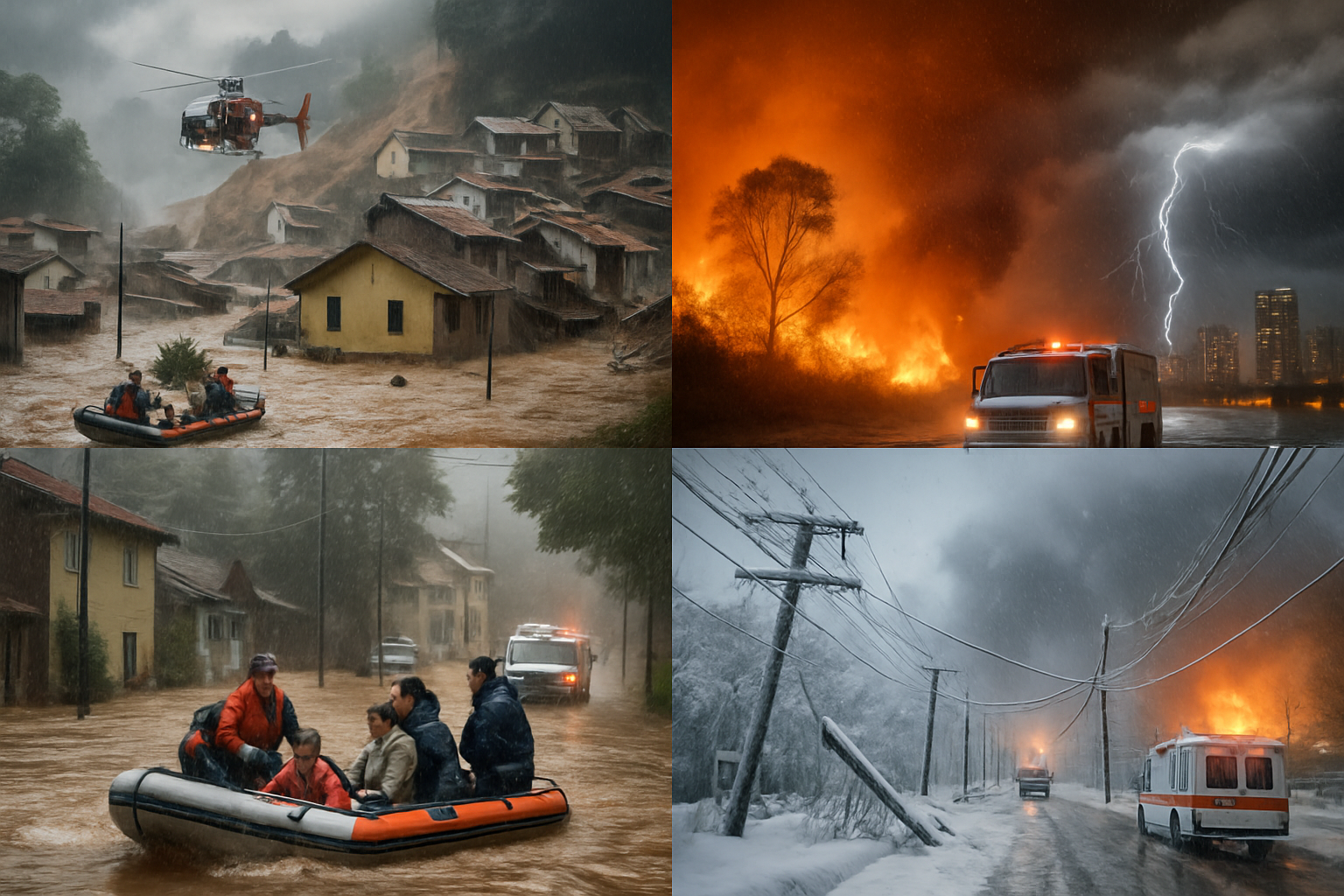
A devastating convergence of extreme weather events is simultaneously striking multiple regions worldwide, with deadly avalanches in Sweden and Austria, severe winter storms paralyzing transportation across Eastern Europe, and dangerous conditions from Peru to the Baltic states overwhelming emergency response capabilities and exposing critical infrastructure vulnerabilities.
The crisis erupted on February 21, 2026, as reports poured in from across the globe of weather-related emergencies that have pushed international response systems to their breaking point. From the Swedish mountain resort of Ramundberget to the alpine regions of Austria, from the snow-covered highways of Romania to the ice roads of Estonia, extreme weather conditions are testing the limits of human adaptation to an increasingly volatile climate.
Avalanche Crisis Strikes Nordic and Alpine Regions
Sweden's Ramundberget ski resort became the focal point of a major rescue operation after a massive avalanche, measuring 75 meters wide, struck the popular winter destination in Härjedalen province. Emergency services, including specialized mountain rescue teams and helicopter units, were immediately deployed to the scene, though it remains unclear whether anyone was caught in the deadly snow slide.
"The avalanche is 75 meters wide," confirmed Mats Lundgren, alarm operator with the rescue services, speaking to Swedish media. The scale of the avalanche has prompted a full-scale emergency response, with uncertainty surrounding potential casualties adding urgency to ongoing search and rescue operations.
The Swedish avalanche crisis reflects a broader pattern of dangerous conditions across the Nordic region, where heavy snowfall and unstable snow conditions have created widespread avalanche risks. Mountain rescue services report being stretched thin as multiple incidents occur simultaneously across different regions.
Meanwhile, Austria is grappling with its own avalanche emergency as multiple deadly slides have claimed at least three lives, including two German nationals and a 71-year-old Dutch skier. Austrian federal forces have been deployed to support local avalanche commissions after Friday's incidents brought the country's winter death toll to alarming levels.
The Austrian meteorological service has maintained a level 4 out of 5 avalanche danger rating across much of the country's alpine regions, with authorities issuing urgent warnings for anyone venturing into mountainous areas during what officials describe as "extremely dangerous" conditions.
Colorado Faces Unprecedented Avalanche Threat
Thousands of miles away, Colorado's mountain regions are experiencing their own avalanche crisis, with the Colorado Avalanche Information Center elevating most of the state's mountainous areas to level 4 danger on the 5-point scale. This represents one of the highest sustained avalanche risk periods the region has experienced in recent years.
"The level 4 rating means very dangerous conditions with a high probability of avalanches," explained Dr. Ethan Greene, director of the Colorado Avalanche Information Center. "Even experienced backcountry users should exercise extreme caution, as avalanches could be triggered by a single person."
The elevated risk has prompted widespread warnings for skiers, snowboarders, and mountaineers planning weekend activities in Colorado's backcountry areas. Emergency services are positioning additional resources in anticipation of potential rescue operations, while ski resorts have implemented enhanced safety protocols for off-piste areas.
Eastern European Winter Paralysis
Romania is emerging from what authorities describe as the "most severe winter episode of 2026," with emergency services managing ongoing interventions across eight counties. The crisis has left tens of thousands of vehicles stranded and thousands of residents without power, highlighting the vulnerability of infrastructure to extreme weather events.
According to the Romanian Department of Emergency Situations, operations are continuing in counties including Brăila, Bucharest, Buzău, Călărași, Giurgiu, Ialomița, Ilfov, and Prahova, where 58 vehicles carrying 106 people were previously blocked by severe snow accumulation. Power outages have affected 23 localities across three counties, demonstrating the cascading effects of extreme weather on energy infrastructure.
The Romanian crisis is part of a broader pattern of severe winter conditions affecting Eastern Europe, where aging infrastructure and limited emergency response resources are being tested by increasingly frequent extreme weather events.
Russia is simultaneously facing its own weather emergency, with reports of massive traffic accidents and gridlock caused by a powerful snow storm affecting multiple regions. Transportation authorities have reported widespread disruptions to both road and rail networks, with emergency services struggling to respond to the volume of weather-related incidents.
Baltic States Infrastructure Under Strain
Estonia has taken the dramatic step of closing all three of its official ice roads due to deteriorating weather conditions, effectively cutting off communities that rely on these seasonal transportation routes. The Estonian Transport Administration announced that if weather conditions improve, the ice roads may be reopened by Sunday or Monday, but current conditions make travel too dangerous.
The closure represents a significant disruption for communities and businesses that depend on these ice roads for transportation of goods and people during the winter months. It also highlights how extreme weather events can quickly render traditional adaptation strategies ineffective.
Latvia is bracing for what meteorological services describe as potentially the strongest winter blizzard of the season, with forecasters predicting widespread heavy snow and dangerous wind conditions throughout much of the country. The Latvian Environment, Geology and Meteorology Center has issued warnings for most of the territory, advising residents to prepare for significant disruptions to transportation and daily activities.
Global Climate Context and Emergency Response Strain
The simultaneous extreme weather events occur against the backdrop of January 2026 being confirmed as the hottest month in recorded history—the 18th consecutive month of global temperatures exceeding 1.5°C above pre-industrial levels. This paradox of global warming coinciding with severe regional winter conditions exemplifies the climate volatility that scientists have long warned would characterize the coming decades.
The crisis is exposing critical weaknesses in emergency response systems that were designed for historical rather than future climate conditions. Traditional mutual aid mechanisms, where neighboring regions provide assistance during disasters, are being overwhelmed as multiple emergencies occur simultaneously across vast geographic areas.
"We're seeing a fundamental shift in how extreme weather affects multiple regions at once," explains Dr. Sarah Mitchell, a climate adaptation specialist at the International Weather Response Institute. "Emergency services that could traditionally count on regional support are now finding that their neighbors are dealing with their own crises simultaneously."
— Dr. Sarah Mitchell, International Weather Response Institute
The strain on emergency services is evident across all affected regions, with rescue personnel, equipment, and resources being stretched to their operational limits. Helicopter rescue operations face repeated delays due to severe weather conditions, while ground-based emergency teams struggle with dangerous travel conditions and overwhelming numbers of incidents.
Infrastructure Vulnerabilities Exposed
The crisis is revealing fundamental vulnerabilities in infrastructure systems across multiple countries. Transportation networks, designed for historical weather patterns, are proving inadequate for the intensity and frequency of current extreme weather events.
Power grids are experiencing widespread failures as heavy snow and ice damage transmission lines, while communication networks face disruptions that complicate emergency response coordination. In Estonia, electricity consumption has reached record levels as residents cope with the coldest winter conditions experienced in 25 years.
The failure of ice roads in Estonia represents a particularly stark example of how climate change is making traditional adaptation strategies unreliable. These routes, which have served communities for generations, are becoming increasingly unsafe due to unpredictable freeze-thaw cycles and extreme weather conditions.
Economic and Social Impacts Mount
The economic consequences of the simultaneous extreme weather events are already mounting, with billions of dollars in damages expected across affected regions. Agricultural sectors face immediate losses from damaged crops and disrupted supply chains, while tourism industries in affected areas are experiencing widespread cancellations and closures.
In Colorado, the ski industry—a crucial economic driver for mountain communities—faces potential losses as dangerous avalanche conditions force closures and cancellations during peak season. European ski resorts are grappling with similar challenges as extreme conditions make mountain recreation too dangerous for visitors.
The transportation disruptions are creating ripple effects throughout regional economies, with goods unable to reach markets and workers unable to reach their jobs. Energy costs are rising as heating demands increase and power systems struggle with weather-related damage and outages.
International Cooperation and Response
The scale and simultaneity of the current weather crisis are testing international cooperation frameworks designed for more localized disasters. Traditional aid mechanisms assume that some regions will be available to assist others during emergencies, but the current situation sees multiple nations dealing with severe weather events at the same time.
European Union emergency response systems, including the Civil Protection Mechanism, are being activated to coordinate assistance across affected member states. However, the unprecedented nature of simultaneous extreme weather across such a broad geographic area is straining these systems beyond their intended capacity.
International weather monitoring and early warning systems are providing crucial advance notice of developing conditions, but the rapid onset and intensity of current weather patterns are challenging forecasting capabilities and emergency preparedness protocols.
Looking Ahead: Climate Adaptation Imperatives
The current crisis represents what climate scientists have long predicted would become the "new normal" as global warming intensifies weather volatility. The simultaneity of extreme events across different climate zones demonstrates how interconnected Earth's weather systems have become under the influence of human-induced climate change.
Emergency management experts emphasize that current response strategies, based on historical weather patterns and traditional mutual aid assumptions, must be fundamentally restructured for an era of permanent climate volatility. This includes developing enhanced emergency response capabilities, building climate-resilient infrastructure, and creating new international cooperation frameworks designed for simultaneous global disasters.
The crisis also highlights the urgent need for what specialists term "transformative adaptation"—moving beyond reactive emergency response to proactive infrastructure design that anticipates rather than responds to extreme weather conditions.
"We're at a watershed moment where we must choose between reactive crisis management and transformative adaptation approaches," warns Professor Elena Rodriguez, director of the Global Climate Resilience Initiative. "The current crisis shows us what happens when extreme weather exceeds our adaptive capacity simultaneously across multiple regions."
— Professor Elena Rodriguez, Global Climate Resilience Initiative
Immediate Outlook and Ongoing Risks
Weather forecasting services across affected regions warn that dangerous conditions are likely to persist for several more days, with additional storm systems developing that could compound current emergencies. Mountain rescue services maintain high alert levels as avalanche risks continue across alpine regions, while transportation authorities advise against non-essential travel in affected areas.
The recovery timeline from current weather impacts is expected to extend well beyond the immediate crisis period, with some infrastructure damage requiring weeks or months to fully repair. This extended recovery period raises concerns about community resilience and the ability to respond to additional extreme weather events that may occur before full recovery is achieved.
Emergency management agencies emphasize that while immediate life-safety concerns remain the priority, the current crisis provides crucial lessons for building enhanced resilience against the increasingly frequent and intense extreme weather events that climate science indicates will characterize the coming decades.
As the global community grapples with this unprecedented convergence of extreme weather events, the crisis serves as a stark reminder of both human vulnerability to natural forces and the urgent imperative for comprehensive climate adaptation strategies that can protect lives and maintain essential services in an era of increasing weather volatility.