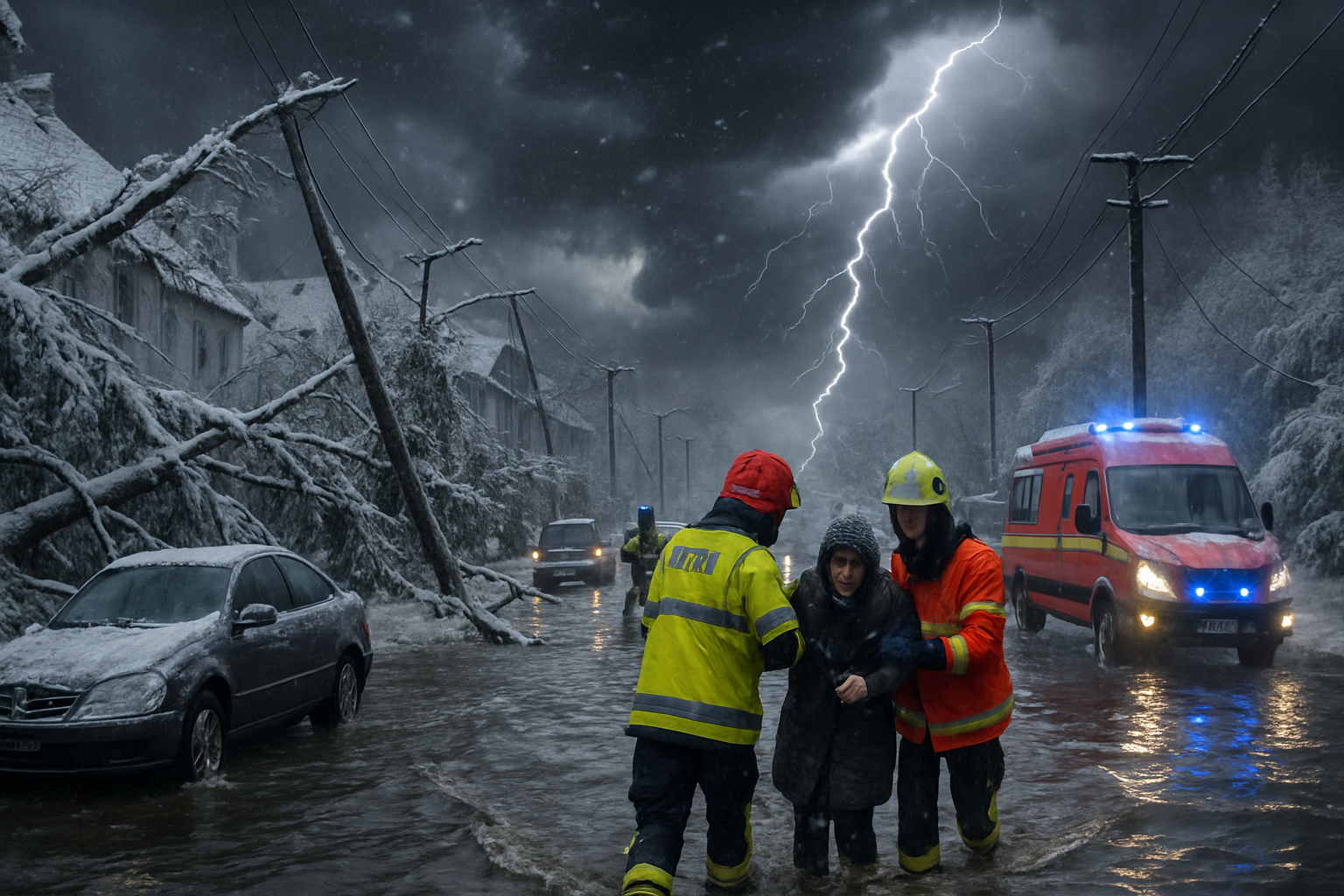
Multiple nations across Europe and beyond are grappling with simultaneous extreme weather emergencies as heavy snow, catastrophic flooding, and dangerous storms overwhelm infrastructure and emergency services, creating one of the most challenging winter crises in recent memory.
The latest wave of severe weather has brought Slovenia to its knees, with northeastern regions experiencing heavy, wet snow that has caused massive power outages affecting 48,000 households in the Maribor area alone. Elektro Maribor CEO Tatjana Vogrinec Burgar described the situation as "extreme," with medium-voltage power lines failing across the region and recovery efforts potentially taking days.
Transportation Networks Under Siege
Across Europe, transportation systems are buckling under the weight of extreme weather conditions. Albania has seen crucial infrastructure damaged by intense rainfall, with the Librazhd-Pogradec highway suffering deep cracks at the notorious "Arrat e Gurrës" location, forcing emergency interventions to prevent potential accidents.
In Austria's Amstetten district, firefighters have responded to 70 emergency calls since Thursday evening due to snow chaos, including 50 incidents in just three hours on Friday morning. The situation has required extensive vehicle recovery operations and emergency responses to accidents on the Westautobahn.
"The situation on the ground is extreme... all our teams are on the ready and in contact with civil protection and firefighters,"
— Tatjana Vogrinec Burgar, CEO of Elektro Maribor
Denmark's meteorological institute has warned drivers about dangerous "smeltesøer" (melt pools) forming on roadways, creating treacherous driving conditions as temperatures fluctuate around freezing point.
Power Grid Failures and Emergency Response
The cascading effects of the extreme weather have exposed critical vulnerabilities in European infrastructure. Slovenia's power outages have disrupted not only electricity supply but also drinking water systems and public transportation networks dependent on electrical power.
Norway has recorded unprecedented winter damage, with one insurance company alone registering 400 vehicle damage claims in a single day—a seasonal record that highlights the severity of current conditions. The figure represents a stark indicator of how extreme weather is translating into immediate, measurable impacts on daily life.
Meanwhile, Finland is dealing with an environmental crisis as rescue services in Kemi have successfully completed a major oil spill cleanup operation, recovering 7,500 liters of fuel oil from the sea using specialized equipment including suction vehicles and oil-absorbing booms.
International Coordination Challenges
The simultaneous nature of these weather emergencies is stretching international aid mechanisms to their limits. While traditional mutual assistance relies on neighboring countries providing support during regional disasters, the current crisis sees multiple nations requiring help simultaneously.
This pattern reflects broader concerns raised by climate scientists about the increasing frequency and intensity of extreme weather events. Historical context from recent memory shows a devastating succession of storms—Kristin, Leonardo, Marta, Nils, and others—have claimed over 30 lives across Portugal, Spain, and France since the beginning of February 2026, requiring the deployment of 26,500 emergency personnel in what Portuguese authorities described as their largest peacetime rescue operation.
Climate Context and Future Implications
The current crisis unfolds against the backdrop of January 2026 being confirmed as the hottest month on record globally—the 18th consecutive month to exceed 1.5°C above pre-industrial levels. This warming trend paradoxically enables both extreme heat records and devastating regional winter storms through disruption of traditional weather patterns.
Scientists warn that current conditions may preview routine circumstances expected in the 2030s without significant climate adaptation investments. The simultaneous occurrence of extreme weather across multiple regions prevents the traditional pattern of regional assistance that has historically helped communities recover from weather disasters.
Economic and Social Impact
The economic implications of the current weather crisis extend far beyond immediate emergency response costs. In Slovenia alone, businesses and households face extended periods without power, disrupting everything from food preservation to medical equipment. Transportation delays and cancellations ripple through supply chains already stressed by previous weather events.
Agricultural sectors across the affected regions face compounding losses, with infrastructure damage hampering both current operations and future growing seasons. Tourism-dependent areas must balance immediate safety concerns with longer-term economic recovery planning.
Infrastructure Adaptation Urgency
The current crisis has exposed critical vulnerabilities in infrastructure designed for historical rather than current climate conditions. Power grids, transportation networks, and emergency services are operating beyond their design parameters, highlighting the urgent need for comprehensive climate adaptation strategies.
Emergency management experts emphasize the importance of "building back better" with climate-resilient infrastructure rather than simply replacing damaged systems with identical versions. This approach requires coordinated planning across multiple sectors and international boundaries.
"We must choose between reactive crisis management and transformative adaptation infrastructure for long-term resilience."
— Climate Adaptation Researchers
Looking Forward: Adaptation and Resilience
As immediate rescue and recovery operations continue across the affected regions, longer-term questions emerge about society's preparedness for an era of increased climate volatility. The current crisis serves as both a test of existing emergency response capabilities and a preview of challenges that may become routine without comprehensive adaptation measures.
International cooperation mechanisms, while strained by simultaneous disasters, have proven essential for coordinating resources and expertise across borders. The European Union's Civil Protection Mechanism and bilateral assistance packages demonstrate both the necessity and effectiveness of continental cooperation in addressing climate-related emergencies.
The human cost of these events extends beyond immediate casualties to include families losing generational homes, businesses facing extinction, and vulnerable populations requiring extended emergency support. Mental health services report increased demand as communities process the trauma of repeated extreme weather events.
Recovery timelines for the current crisis are measured in months and years rather than weeks, emphasizing the long-term nature of climate adaptation challenges. The choice between reactive crisis management and proactive infrastructure transformation becomes increasingly urgent as extreme weather frequency and intensity continue to increase in line with scientific projections.
As additional weather systems develop over the Atlantic, the window for effective climate action continues to narrow while the need for enhanced resilience becomes ever more apparent. The February 2026 weather crisis may well be remembered as a watershed moment that forced a fundamental reconsideration of how societies prepare for and respond to an increasingly volatile climate future.