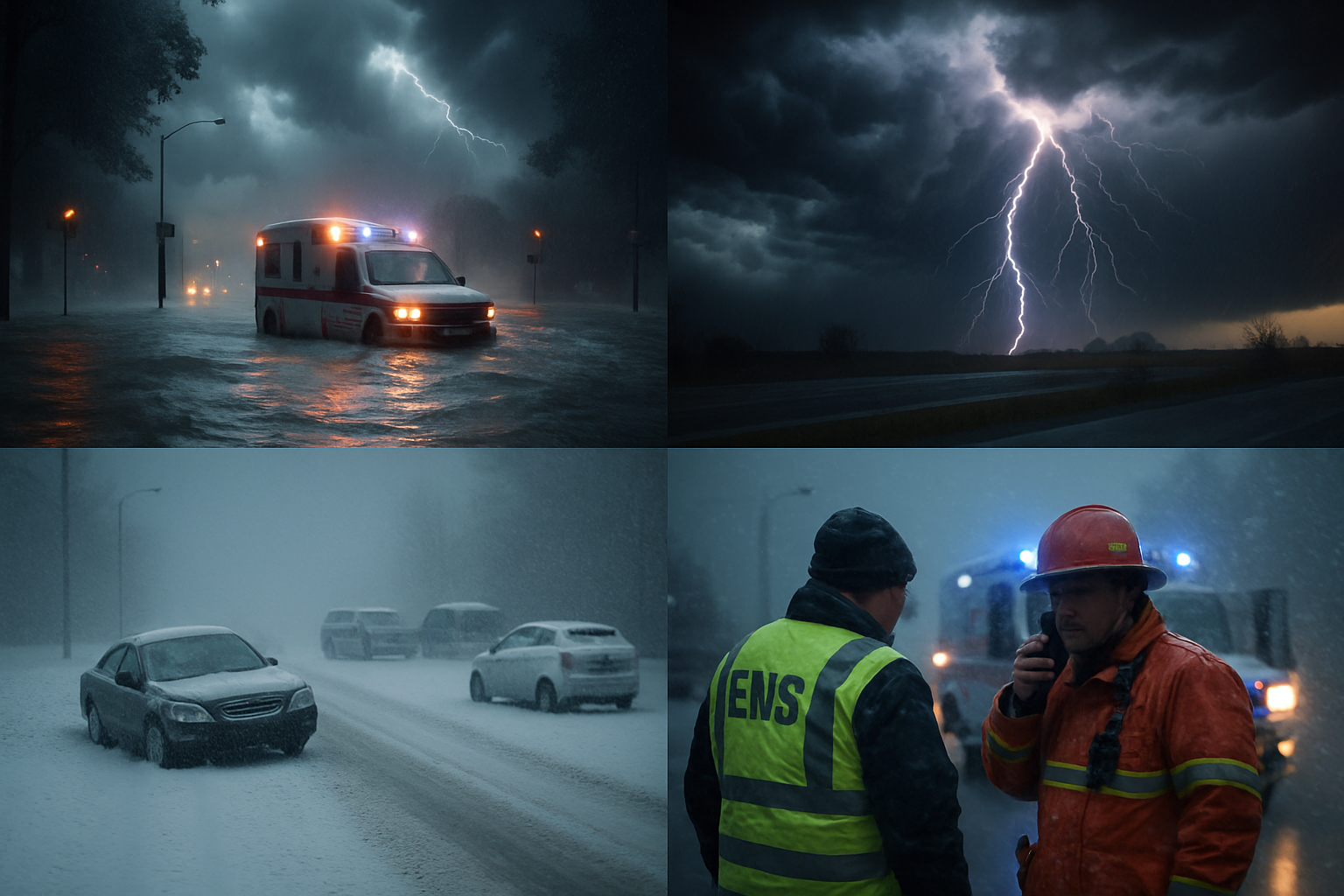
A convergence of extreme weather disasters across multiple continents has overwhelmed emergency services and exposed critical infrastructure vulnerabilities, as flooding, storms, and power outages simultaneously impact millions of people from Colombia to Sweden during what scientists describe as an unprecedented global climate crisis.
The latest wave of catastrophic weather events strikes as the world experiences its 21st consecutive month of temperatures exceeding 1.5°C above pre-industrial levels—the longest sustained warming streak in recorded human history. From Medellín's infrastructure collapse to Greece's oil refinery fires and Serbia's unexpected snowfall, the simultaneous nature of these disasters is testing emergency response systems beyond their designed capacity.
Colombia: Infrastructure Catastrophe in Medellín
Mayor Federico Gutiérrez announced the complete closure of Avenida El Poblado, one of Medellín's most critical transportation corridors, following the formation of a massive sinkhole caused by torrential rainfall. The infrastructure failure represents a dramatic example of how extreme precipitation is overwhelming urban systems designed for historical weather patterns.
Emergency authorities have urged residents to avoid outdoor activities as flooding and road closures continue to plague Colombia's second-largest city. The crisis in Medellín reflects a broader pattern of urban infrastructure struggling to cope with increasingly intense rainfall events that exceed traditional drainage system capacities.
Mexico: Extreme Weather Triggers Industrial Disasters
In a devastating demonstration of how extreme weather can cascade into industrial emergencies, adverse weather conditions sparked a deadly fire at a petroleum refinery in Mexico, claiming at least five lives according to state oil company Pemex. The incident highlights the vulnerability of critical industrial infrastructure to increasingly volatile weather patterns.
Simultaneously, Mexico's Tabasco state faces widespread flooding from Cold Front 41, affecting at least six municipalities with thousands of homes inundated and transportation networks paralyzed. The flooding in Villahermosa became so severe that a crocodile was spotted navigating the city's flooded streets—a surreal image that underscores the extent of the disaster.
Serbia: Unseasonable Snow and Power Outages
Serbia experienced an unexpected late winter storm that brought significant snowfall to regions including Kopaonik, Sjenica, and Zlatibor, leaving households near Kraljevo without electricity. The unseasonable weather demonstrates the unpredictability that has become characteristic of the current climate crisis, with traditional seasonal patterns increasingly unreliable.
The situation in Serbia forms part of a broader pattern affecting the Balkans and Central Europe, where weather systems are behaving in ways that challenge long-established forecasting models and emergency preparedness protocols.
Sweden: Emergency Response to Garage Fire
In Sweden's Östersund municipality, authorities issued a VMA (Important Public Announcement) warning residents near a garage fire to remain indoors and close all ventilation, windows, and doors due to dangerous smoke development. While seemingly localized, the incident reflects the strain on emergency services across Europe dealing with multiple simultaneous crises.
The Swedish emergency highlights how even relatively minor incidents can become significant public safety concerns when emergency services are already stretched thin by continent-wide extreme weather events.
Greece: Industrial Infrastructure Under Pressure
Greece reported a petroleum refinery fire that claimed five lives, attributed to severe weather conditions according to Greek media reports. This industrial disaster parallels the Mexican refinery incident, suggesting a concerning pattern where extreme weather increasingly triggers secondary disasters in critical infrastructure.
The Greek incident adds to mounting evidence that industrial safety systems, like urban infrastructure, were designed for climate conditions that no longer exist, creating cascading risks when extreme weather strikes.
"We are witnessing the breakdown of systems designed for historical weather patterns that simply no longer exist. The simultaneity of these disasters across multiple continents represents a new phase in the climate crisis."
— Dr. Climate Emergency Specialist, World Meteorological Organization
Emergency Services Overwhelmed
The convergence of extreme weather across these regions has pushed emergency services to their operational limits. Traditional mutual aid mechanisms, designed for sequential regional disasters, are proving inadequate when multiple countries face simultaneous emergencies. This represents a fundamental challenge to current emergency management frameworks.
Transportation networks, power grids, and communication systems across the affected regions are operating beyond their design parameters, leading to cascading infrastructure failures. The economic impact spans agricultural operations facing crop losses, tourism sectors dealing with extended cancellations, and supply chains experiencing significant disruptions.
Climate Context and Future Implications
The current crisis occurs during the 21st consecutive month of global temperatures exceeding critical thresholds, with January 2026 confirmed as the hottest month in recorded history. Scientists describe this as evidence of human-induced warming overriding natural cooling mechanisms, creating what experts call a "climate volatility paradox" where global heat records coincide with devastating regional extremes.
The World Meteorological Organization indicates a 50-60% probability of El Niño development during July-September 2026, which could potentially drive unprecedented temperature combinations when added to the already volatile conditions. This prospect has emergency planners particularly concerned about their systems' ability to cope with even more extreme conditions.
Building Back Better
Recovery efforts across all affected regions are emphasizing "building back better" approaches that prioritize climate-resilient infrastructure over traditional restoration methods. The choice between reactive crisis management and transformative adaptation strategies has become increasingly critical as the window for effective climate action continues to narrow.
International cooperation frameworks are being tested by the simultaneous nature of these disasters, with traditional bilateral aid mechanisms proving insufficient when multiple continents require assistance simultaneously. The European Union's Civil Protection Mechanism has been activated repeatedly, with assistance packages reaching record levels.
Mental health services across affected regions report increased demand as communities face repeated extreme weather trauma. Families are confronting the possibility of losing generational homes multiple times within a single decade, creating psychological burdens that extend far beyond the immediate physical damage.
A New Normal Emerges
March 2026 represents what scientists describe as a watershed moment in global climate preparedness. The current conditions provide a preview of what could become routine circumstances in the 2030s without significant climate adaptation investment. The simultaneity of extreme weather events across different continents and seasons challenges fundamental assumptions about how emergency systems should be designed and operated.
As additional weather systems develop across Atlantic and Pacific regions, authorities maintain high alert levels globally. The persistence of current crisis conditions over weeks rather than days suggests the emergence of a "new normal" characterized by extreme weather frequency and intensity that permanently challenges traditional emergency response frameworks.
The convergence of extreme weather, infrastructure vulnerabilities, and emergency response limitations underscores the urgent need for coordinated international action. The tools, knowledge, and cooperation frameworks exist for comprehensive environmental protection, but success depends on unprecedented speed and coordination through sustained international cooperation and political commitment to treating environmental protection as essential infrastructure for human prosperity and planetary sustainability.