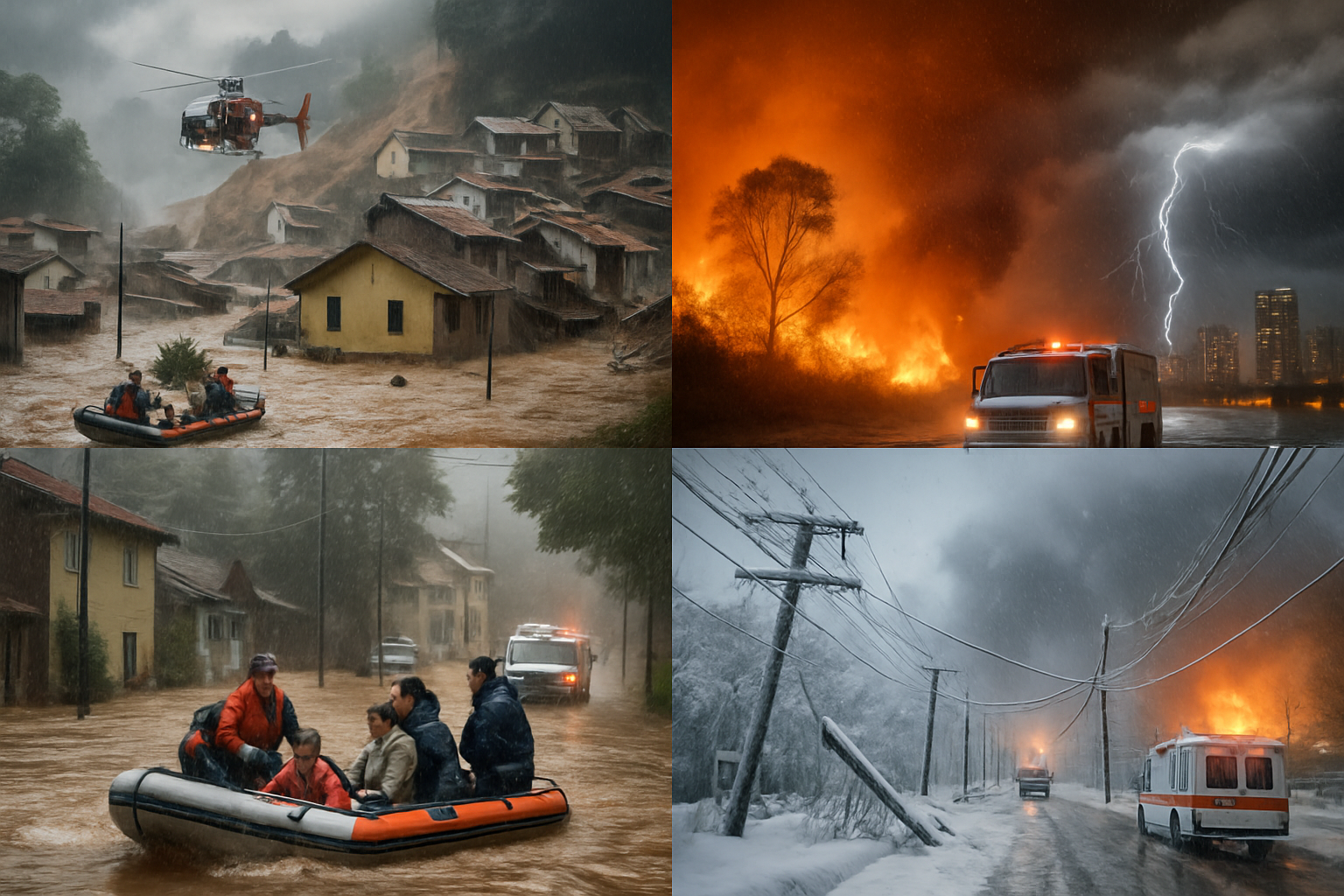
A catastrophic convergence of extreme weather events is devastating communities across four continents, with Morocco evacuating over 150,000 residents from flooding, deadly storms battering Spain, and avalanche fatalities mounting in the Italian Alps, overwhelming international emergency response systems and highlighting the accelerating climate crisis.
The unprecedented scale of simultaneous weather disasters has pushed global emergency services to their operational limits, with Morocco alone reporting at least four deaths, including a two-year-old child, as torrential rains triggered massive flooding across the North African nation. Near the coastal city of Kenitra, approximately 40,000 people have been relocated to emergency tent camps, while more than 150,000 residents have fled their homes within a single week.
Morocco's Humanitarian Crisis Deepens
Morocco's northwestern regions face their worst flooding in decades, with the Loukkos River system overwhelmed by relentless precipitation. The flooding has created one of the largest emergency evacuations in recent Moroccan history, straining the nation's disaster response capabilities.
German media reports indicate that the evacuation operation encompasses roughly half of the affected population in flood-prone areas, with emergency camps established throughout the affected zones. Local authorities report at least one person remains missing as search and rescue operations continue amid dangerous conditions.
The crisis has exposed critical infrastructure vulnerabilities, with transportation networks severely disrupted and essential services compromised across wide areas of the country.
European Storm Systems Intensify
Meanwhile, Spain continues battling the aftermath of successive Atlantic storms that have transformed the Iberian Peninsula into a disaster zone. The weather emergency extends across multiple Spanish provinces, with authorities maintaining high alert levels as additional storm systems approach from the Atlantic.
Denmark's meteorological service has issued warnings about a deadly storm system affecting both Spain and Portugal, marking the continuation of what experts describe as an unprecedented sequence of extreme weather events across the European continent.
The European weather crisis represents the third consecutive major storm system to impact the region within two weeks, testing continental emergency response frameworks to their breaking point.
Alpine Tragedy Unfolds
In a separate but related development highlighting the global nature of the current weather emergency, two Finnish nationals died in an avalanche in the French Alps, adding to the mounting international casualty toll. Earlier reports confirmed that two other individuals perished in an avalanche in northern Italy, bringing the week's avalanche death toll to at least four.
Alpine rescue services report that avalanche conditions remain extremely dangerous across the region, with at least 20 fatalities recorded during the current ski season alone. The combination of unstable snow conditions and extreme weather patterns has created treacherous mountain environments that challenge even experienced rescue operations.
Infrastructure and Emergency Response Under Strain
The simultaneous nature of these crises has exposed critical gaps in international emergency response coordination. Emergency services across affected regions report operating at or beyond normal capacity, with resources stretched thin across multiple concurrent disasters.
Transportation networks have suffered widespread disruption, with airports, railways, and highways affected across the impacted regions. The cascading effects of infrastructure damage have complicated rescue efforts and humanitarian aid distribution, creating additional challenges for already overwhelmed emergency services.
Communication networks in several affected areas have experienced significant outages, hampering coordination efforts between local authorities and international aid organizations.
Climate Context and Rising Concerns
These disasters occur against the backdrop of January 2026 being recorded as the hottest month in global history, marking the 18th of the past 19 months to exceed 1.5°C above pre-industrial levels. Climate scientists note that this extreme warming trend is overriding natural climate variability, contributing to increasingly volatile weather patterns worldwide.
The frequency and intensity of these simultaneous extreme weather events align with long-standing scientific predictions about climate change impacts, but the concentrated nature of the current crisis has surprised even experienced meteorologists and emergency management professionals.
International climate researchers emphasize that the current pattern of multiple concurrent extreme weather events represents a new phase in climate change impacts, requiring fundamental adaptations to emergency response systems and infrastructure resilience planning.
Economic and Social Implications
The economic toll of these concurrent disasters is mounting rapidly, with agricultural sectors, tourism industries, and critical infrastructure suffering billions in damages across affected regions. Insurance companies report unprecedented claim volumes, while governments scramble to mobilize emergency funding for disaster response and recovery efforts.
Educational systems have been severely disrupted, with schools closed across wide areas and thousands of students displaced from their communities. Healthcare systems in affected regions face mounting pressure from weather-related injuries and illnesses, while also dealing with infrastructure damage to medical facilities.
The social impact extends beyond immediate physical harm, with entire communities displaced and traditional economic activities suspended for extended periods. Recovery timelines are expected to extend well into 2026, with some areas requiring months or years for full restoration.
International Response and Coordination
The European Union has activated its Civil Protection Mechanism to coordinate international assistance, while several countries have announced significant aid packages totaling hundreds of millions of euros. Sweden and Denmark have jointly committed €246 million in emergency assistance, highlighting the regional nature of the crisis response.
International aid organizations report unprecedented demand for emergency resources, with multiple simultaneous operations straining global humanitarian supply chains. The coordination challenges of managing multiple concurrent international disasters have revealed gaps in existing emergency response frameworks.
Military units from several nations have been deployed for search and rescue operations, representing some of the largest peacetime military mobilizations for weather-related emergencies in recent history.
Looking Forward: Adaptation and Resilience
As immediate rescue and relief operations continue, attention is turning to long-term adaptation strategies and infrastructure resilience improvements. The current crisis provides a stark preview of future climate challenges, emphasizing the urgent need for enhanced preparedness and response capabilities.
Emergency management experts stress that traditional disaster response models must evolve to address the new reality of multiple simultaneous extreme weather events. This includes developing redundant systems, improving international coordination mechanisms, and building adaptive capacity into critical infrastructure.
The recovery phase will provide opportunities to "build back better" with climate-resilient infrastructure and improved early warning systems. However, the scale of reconstruction needed across multiple affected regions will require unprecedented international cooperation and financial commitment.
As these disasters continue to unfold, they serve as a sobering reminder of the accelerating pace of climate change and the urgent need for both mitigation and adaptation measures to protect vulnerable communities worldwide. The international community's response to this crisis will likely shape future approaches to managing the increasing frequency and intensity of extreme weather events in the coming decades.