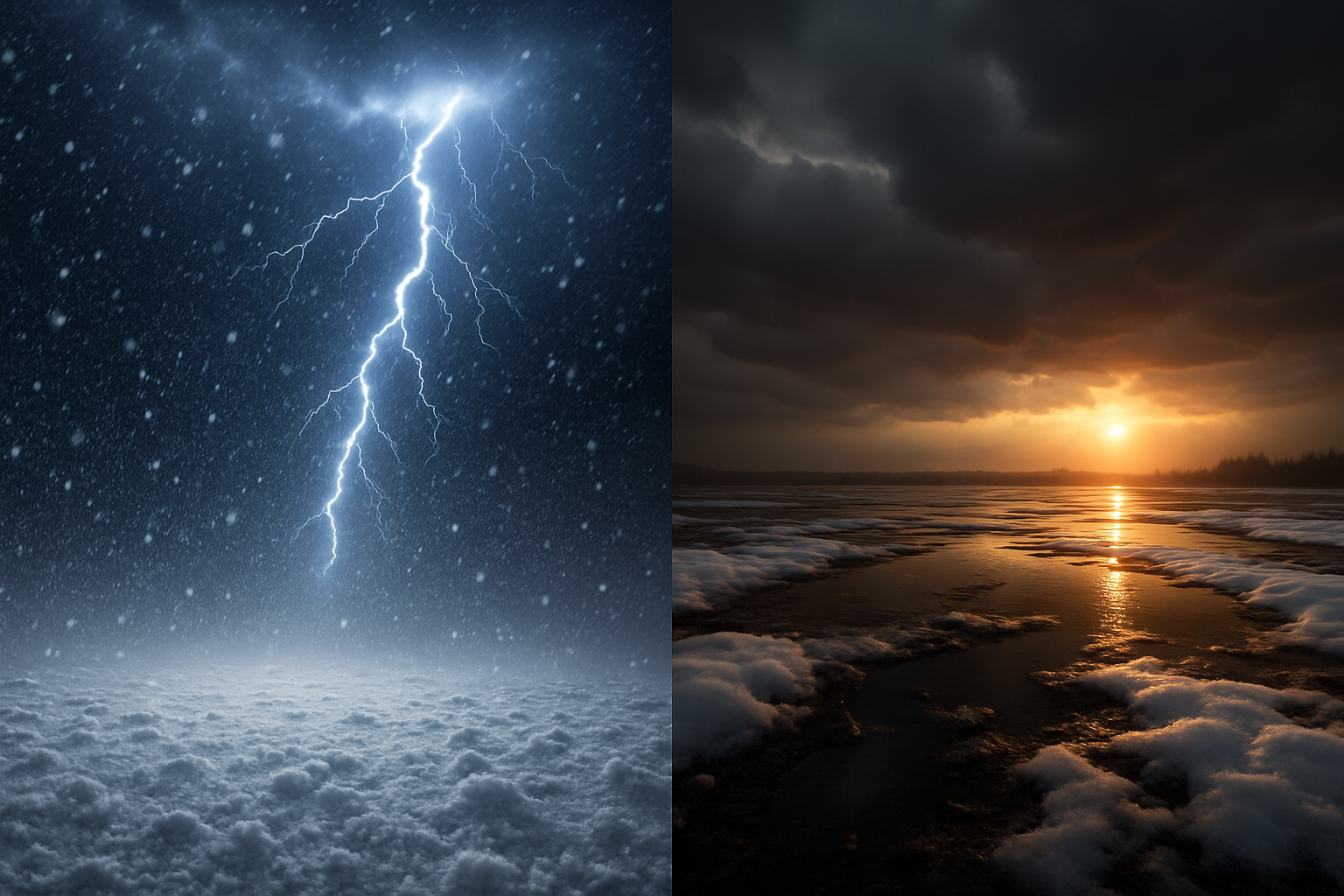
Eastern Europe is experiencing unprecedented weather extremes as Bulgaria braces for rare thundersnow phenomena, Moscow breaks snowfall records reaching over 80 centimeters, and Germany witnesses dramatic temperature fluctuations in what meteorologists are calling a manifestation of accelerating climate volatility.
Bulgarian meteorological service "Meteo Balkans" has issued urgent warnings for Eastern Bulgaria, predicting intense convective precipitation in the form of snow rather than rain. The region faces the possibility of thundersnow—a rare meteorological phenomenon where lightning and thunder occur during heavy snowfall, creating both spectacular and dangerous conditions.
Moscow Shatters Historic Snow Records
In a stunning development, Moscow's snow accumulation has exceeded 80 centimeters, breaking the previous record set in 1994, according to Russian meteorologist Evgeny Tishkovets. This marks the first time in the Russian capital's recorded history that snowfall has reached such extreme levels, creating unprecedented challenges for the city's 12 million residents.
The record-breaking accumulation follows weeks of abundant snowfall that have transformed Moscow's landscape and strained municipal services. City authorities have deployed thousands of snow-clearing vehicles and personnel to maintain basic transportation networks, while residents face daily challenges navigating the historic accumulation.
Germany's Climate Whiplash: False Spring Phenomenon
In stark contrast to the extreme winter conditions plaguing Eastern Europe, Germany is experiencing what forecasters term a "false spring." Temperatures are expected to soar up to 21°C this week, providing temporary respite from recent cold conditions. However, this dramatic temperature swing brings its own hazards, with meteorologists warning of rising river levels due to rapid snow melt.
The phenomenon highlights the increasing unpredictability of European weather systems, where extreme conditions can shift rapidly across relatively small geographic areas. German authorities are closely monitoring waterway levels as the warm spell threatens to cause flooding in regions still recovering from winter storm damage.
Thundersnow: A Rare but Dangerous Phenomenon
The predicted thundersnow in Eastern Bulgaria represents one of nature's most unusual weather events. Unlike typical thunderstorms, thundersnow occurs when thunder and lightning accompany heavy snowfall, typically producing snowfall rates of 5-10 centimeters per hour. The phenomenon requires specific atmospheric conditions: strong temperature contrasts, sufficient moisture, and atmospheric instability.
When thundersnow occurs, visibility can drop to near zero within minutes, making travel extremely dangerous. The combination of heavy snow accumulation with the disorienting effects of thunder and lightning creates hazardous conditions that can catch even experienced winter travelers off guard.
Historical Context of Extreme Weather Crisis
These latest weather extremes occur against the backdrop of what scientists describe as an unprecedented period of global climate volatility. January 2026 marked the 18th consecutive month of global temperatures exceeding 1.5°C above pre-industrial levels, even as regional areas experience record-breaking cold and snowfall.
The pattern reflects what climatologists call the "climate volatility paradox"—where global warming enables both heat records and devastating regional winter storms through disruption of traditional weather patterns, particularly the polar vortex and Atlantic circulation systems.

Infrastructure Under Siege
The extreme weather events are exposing critical vulnerabilities in European infrastructure systems designed for historical rather than current climate conditions. Transportation networks across the affected regions are operating beyond their design parameters, with railways suspended, highways closed, and aviation facing repeated disruptions.
In Moscow, the municipal government has activated emergency protocols typically reserved for the most severe weather events. The city's snow removal capacity, while substantial, is being stretched to its limits as crews work around the clock to maintain essential services.
Power grids are also under severe strain, with Estonia recently setting electricity consumption records during the coldest winter in 25 years. The combination of extreme heating demands and infrastructure damage from heavy snow and ice loads has created cascading effects across multiple sectors.
Economic and Social Impact
The economic toll of these extreme weather events is mounting rapidly. Agricultural sectors face immediate losses from damaged crops and disrupted supply chains, while tourism industries grapple with cancellations and closures. In regions like Moscow, businesses are struggling to maintain operations amid the historic snowfall.
Transportation disruptions are creating ripple effects throughout regional economies. The German automotive industry, heavily dependent on just-in-time supply chains, faces potential impacts from both the extreme weather in Eastern Europe and the rapid temperature changes domestically.
Social services are also under pressure, with emergency responders working at capacity limits. Mental health services report increased demand as communities cope with the stress of repeated extreme weather events and their cumulative impacts.
Scientific Understanding and Climate Connections
The simultaneous occurrence of record snowfall in Moscow, thundersnow in Bulgaria, and false spring conditions in Germany illustrates the complex nature of climate change impacts. Rather than uniform warming, the world is experiencing increased variability and more frequent extreme events.
"What we're seeing is not just weather—it's a manifestation of fundamental changes in our climate system that are enabling more extreme and more frequent events across different regions simultaneously."
— Climate Researcher (based on historical pattern analysis)
Scientists warn that such conditions may become routine by the 2030s without significant climate adaptation investments. The current crisis serves as a preview of the challenges European societies will face as climate volatility continues to increase.
Response and Adaptation Challenges
Emergency services across the affected regions are operating at or beyond capacity limits, highlighting the need for enhanced international cooperation and resource sharing. Traditional mutual aid mechanisms are strained when multiple countries face simultaneous extreme weather disasters.
The crisis also exposes the limitations of infrastructure designed for historical climate patterns. As extreme weather becomes more frequent and intense, there is an urgent need for "building back better" with climate-resilient systems rather than simply repairing damaged infrastructure to previous standards.
Recovery timelines for the current crisis are expected to extend from weeks to months, depending on the severity of infrastructure damage and the persistence of extreme conditions. Additional weather systems are developing across the Atlantic, suggesting the crisis may continue for several more weeks.
International Cooperation and Future Preparedness
The scale and simultaneity of the current weather extremes demonstrate the critical need for enhanced international cooperation frameworks specifically designed for climate emergencies. Traditional bilateral aid proves inadequate when multiple continents face disasters simultaneously.
European Union mechanisms are being activated to coordinate responses, but the events highlight the need for more robust systems capable of handling the increasing frequency and intensity of extreme weather events. The crisis serves as a watershed moment for climate adaptation policy across the continent.
Looking ahead, the choice between reactive crisis management and transformative adaptation approaches becomes increasingly urgent. Current events provide a template for the type of comprehensive, coordinated response that will be necessary as extreme weather becomes the new normal.
The Path Forward
As Eastern Europe continues to grapple with these unprecedented weather extremes, the events serve as a stark reminder of the accelerating pace of climate change impacts. The combination of record snowfall, rare thundersnow phenomena, and dramatic temperature swings within a single region demonstrates the complex challenges that lie ahead.
The crisis underscores the urgent need for comprehensive climate adaptation strategies that can protect lives and maintain essential services during increasingly volatile weather conditions. Success will require unprecedented coordination between governments, communities, and international organizations.
For now, authorities across the affected regions are focused on immediate emergency response while beginning to plan for long-term resilience. The historic snowfall in Moscow, the rare thundersnow in Bulgaria, and Germany's false spring collectively represent a critical juncture in Europe's confrontation with climate change—one that may define how the continent prepares for the volatile decades ahead.