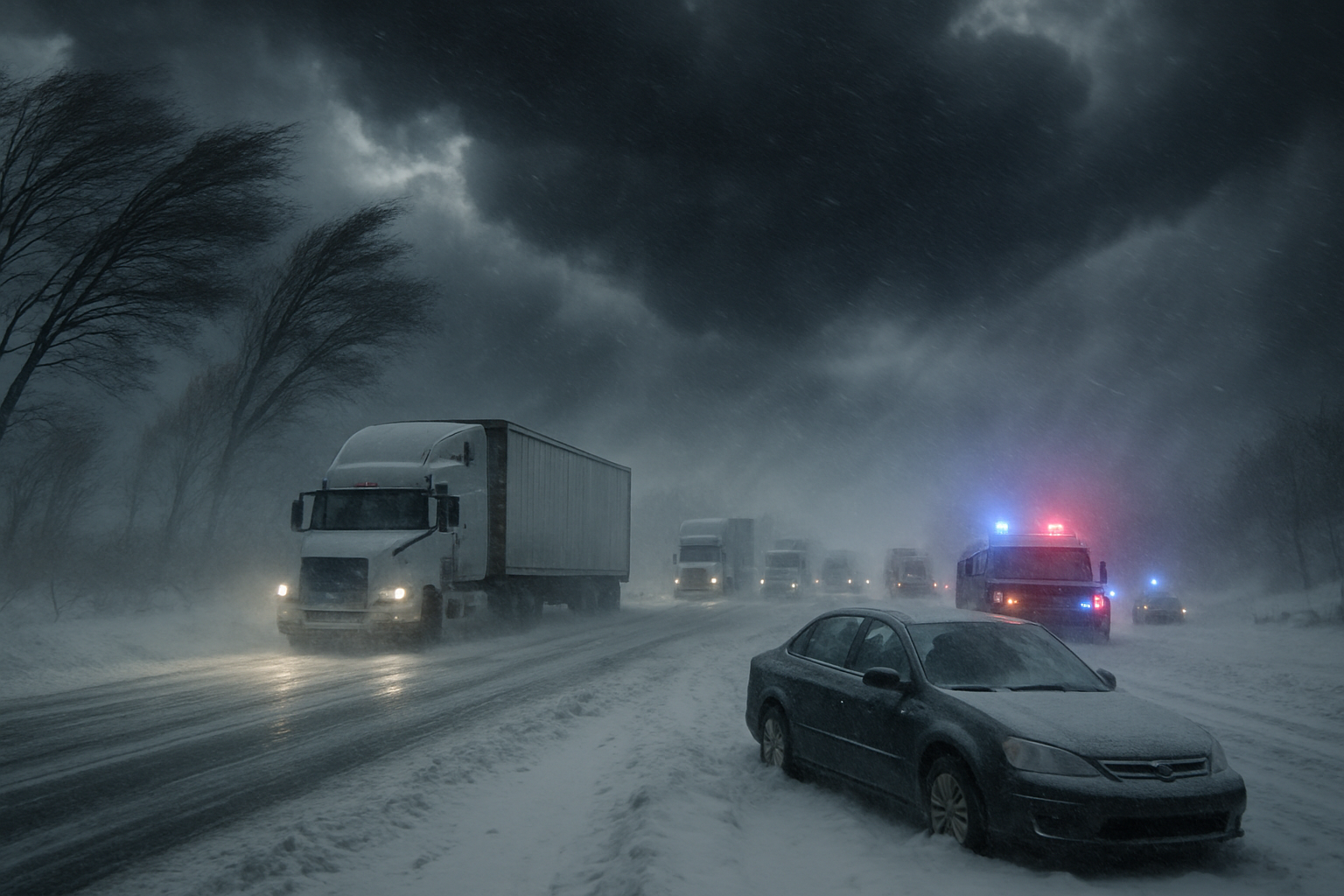
Extreme weather conditions are battering multiple European countries this week, with heavy snowfall, dangerous winds exceeding 100 km/h, and widespread infrastructure disruptions forcing authorities to suspend transportation services and issue emergency warnings across the region.
From the snow-covered mountains of Bosnia and Herzegovina to the wind-lashed coastlines of Algeria and the frozen landscapes of Slovakia, a complex weather system is testing emergency response capabilities and exposing vulnerabilities in infrastructure designed for historical rather than current climate patterns.
Bosnia and Herzegovina Battles Heavy Snowfall
The Unsko-sanski canton in Bosnia and Herzegovina is experiencing severe winter conditions, with Bihać recording 30 centimeters of snow accumulation. Educational authorities have suspended classes throughout the USK region as dangerous conditions make travel treacherous.
Cazin has been left without electrical power, highlighting the cascade effects of extreme weather on critical infrastructure. Local meteorologists warn that the unstable weather pattern will continue through the weekend, bringing additional snow to mountainous areas and sleet to central regions.
"For the weekend days, we expect unstable weather with precipitation, snow in the mountains. In central and higher areas, sleet. In the rest of the country, in Bosnia - rain," warned Dženan Zulum, climatologist at the Federal Hydrometeorological Institute.
— Dženan Zulum, Federal Hydrometeorological Institute
Morning temperatures have plummeted across the region, with Bjelašnica recording -6°C and multiple cities experiencing freezing conditions. The atmospheric pressure in Sarajevo has dropped significantly below normal levels, indicating continued weather instability.
Croatia Suspends Education and Transportation
Zagreb authorities made the unprecedented decision to cancel classes in all primary and secondary schools due to hurricane-force winds with gusts reaching 140 km/h. The decision, made jointly by the City of Zagreb and the Ministry of Science, Education and Youth, prioritizes student safety during dangerous travel conditions.
While kindergartens remain open, authorities recommend that children stay home when possible. Emergency childcare will be available in schools for families who cannot make alternative arrangements.
Algeria Faces Triple Weather Threat
Algeria's meteorological services have issued urgent warnings for a dangerous "triple threat" affecting multiple provinces. Thunderstorms producing over 30mm of rainfall are expected across 14 provinces including Blida, Boumerdès, Tizi Ouzou, and Béjaïa, beginning at 3 PM and continuing until 6 AM Saturday.
Simultaneously, the country faces heavy mountain snowfall above 1,100 meters with accumulations reaching 20 centimeters, and powerful winds exceeding 100 km/h that are stirring up dust storms posing respiratory hazards. The affected regions include In Salah, Tamanrasset, Bordj Baji Mokhtar, and In Guezzam.
Romania Issues Yellow Weather Alerts
Romania's National Meteorological Administration (ANM) has issued yellow alerts for torrential rains and snowfall affecting more than half the country, with warnings extending through Monday. The alerts cover widespread areas and include warnings for strong winds that could cause additional disruption.
The meteorological service emphasizes that the combination of heavy precipitation and wind poses significant risks to both transportation and infrastructure across affected regions.
Slovakia Braces for Powerful Winds
Slovak meteorological services have issued first and second-degree warnings for multiple districts as powerful winds are expected to impact the country on Friday. Mountain regions face particularly severe conditions, with even stronger winds forecast for higher elevations.
The weather system affecting Slovakia is part of the broader European pattern bringing dangerous conditions across national borders, requiring coordinated emergency response efforts.
Infrastructure and Transportation Crisis
The extreme weather has exposed critical vulnerabilities in European infrastructure systems. Transportation networks are experiencing widespread disruptions, with highway closures, cancelled flights, and suspended railway services reported across affected regions.
Power outages have cascaded through multiple countries, affecting essential services and highlighting the interconnected nature of modern infrastructure systems. Emergency services are operating at capacity limits, demonstrating the strain that simultaneous weather events place on response capabilities.
Climate Context and Broader Implications
This severe weather episode occurs during what climate scientists have identified as an unprecedented period of global warming, with January 2026 marking the 18th consecutive month of temperatures exceeding 1.5°C above pre-industrial levels. The current conditions demonstrate the "climate volatility paradox," where sustained global warming enables both heat records and devastating regional winter storms through disrupted atmospheric circulation patterns.
The simultaneity of extreme weather across multiple European countries challenges traditional emergency response frameworks designed for sequential rather than concurrent disasters. Recovery timelines are expected to extend from weeks to months, requiring comprehensive infrastructure adaptation strategies.
Emergency Response and Coordination
Emergency services across the affected regions are coordinating responses through established European frameworks, though the scale and simultaneity of current events test these systems' limits. The crisis highlights the urgent need for enhanced climate adaptation infrastructure designed for future rather than historical weather patterns.
Authorities emphasize that the current conditions may persist for several days, with additional weather systems developing that could compound existing challenges. The situation provides a critical test case for European climate resilience and international cooperation mechanisms.
As recovery efforts begin in some areas while others brace for continued severe conditions, the week's events underscore the reality of climate change as a present-day challenge requiring immediate and transformative adaptation strategies across all sectors of European society.