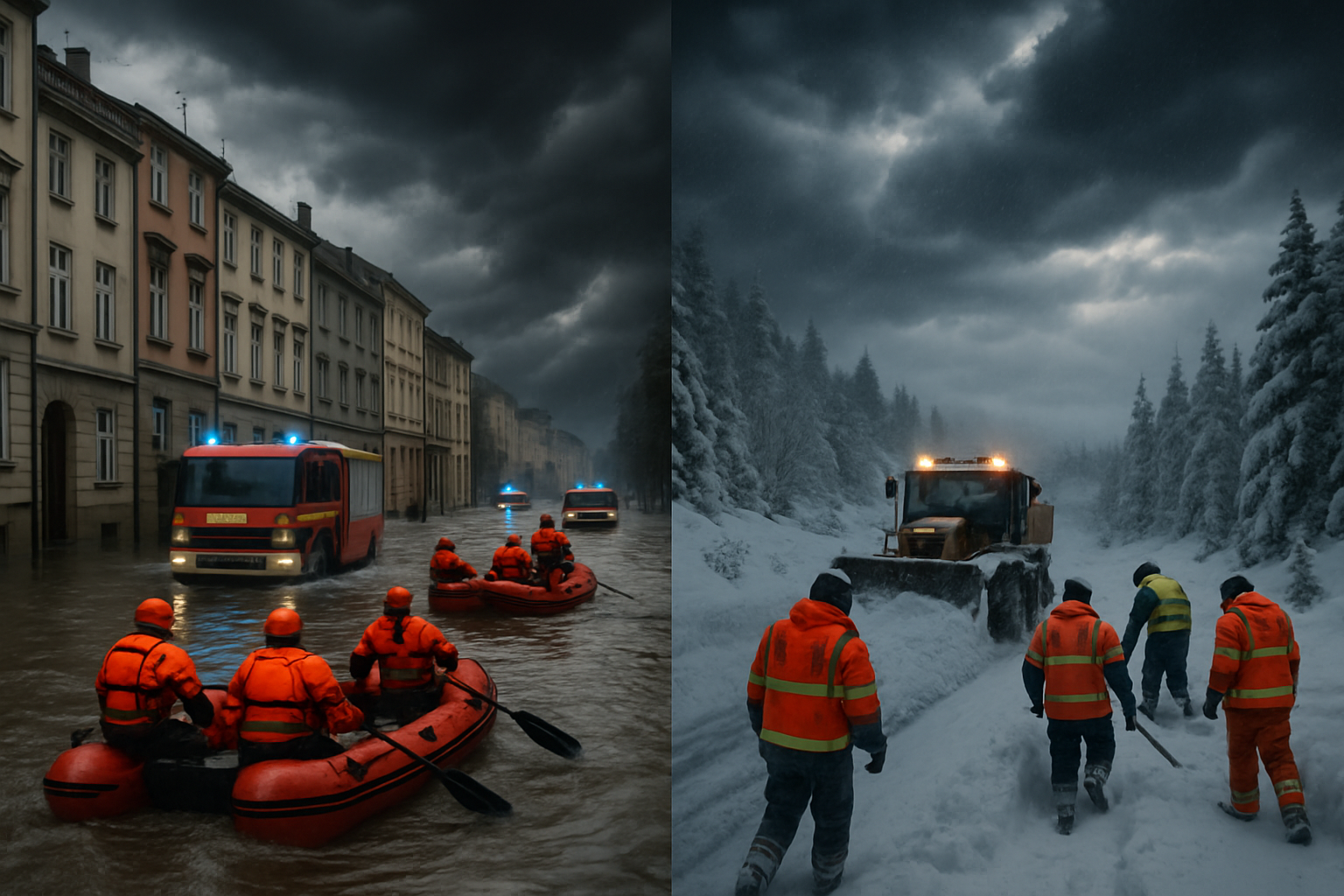
A catastrophic weather emergency is unfolding across multiple continents as New Zealand's Banks Peninsula remains cut off from the mainland due to extreme flooding, while Bulgaria grapples with heavy snowfall and Greece faces critical dam overflow situations, marking another chapter in February 2026's unprecedented global climate crisis.
The latest meteorological data reveals the scope of the emergency: New Zealand's MetService reports that Banks Peninsula has experienced ten times its monthly rainfall in just 48 hours, leaving the region completely isolated as State Highway 75 - the main arterial route between Christchurch and Akaroa - remains blocked by landslides and flooding.
New Zealand's Banks Peninsula Crisis
The deluge has transformed New Zealand's picturesque Banks Peninsula into an island of crisis, with residents describing unprecedented conditions that have severed all land connections to the mainland. The extreme rainfall has triggered massive landslides and caused extensive flooding that has made State Highway 75 impassable.
Christchurch Mayor Phil Mauger is heading back to the affected area today to assess the ongoing damage and coordinate relief efforts. In a concerning development, traditional communication networks have failed, leading authorities to explore satellite internet solutions including Starlink to reconnect isolated communities in areas like Little River.
The impact extends far beyond transportation disruption. Local communities have been left without reliable communication links, creating additional challenges for emergency responders trying to coordinate relief efforts and assess the full extent of the damage across the peninsula's remote settlements.
European Weather Emergencies Escalate
Simultaneously, Europe faces its own severe weather challenges as Bulgaria reports significant snow accumulation across Central and Northern regions. According to Meteo Balkans, snow coverage has reached approximately 15 centimeters in less than four hours in Central Northern Bulgaria, creating hazardous conditions for transportation and daily life.
The Bulgarian situation has been further complicated by freezing rain in the Ruse region, creating dangerous ice conditions on roadways and increasing the risk of accidents. Weather services are forecasting intensification of snowfall across Northeastern Bulgaria, threatening to worsen an already challenging situation.
Greece Battles Dam Overflow Emergency
Greece is confronting its own weather-related crisis as authorities have activated emergency alert systems in Aitoloakarnania due to controlled overflow at the Stratos dam in Kastraki. The situation has necessitated immediate emergency response measures as water management authorities work to prevent catastrophic flooding downstream.
In Western Greece and Epirus, severe weather conditions have spawned multiple emergencies including flooding, road damage, and property destruction. Numerous villages have been isolated by the extreme conditions, while several areas have been placed under states of emergency as authorities struggle to maintain essential services.
The Patras coastal area has experienced significant flooding, adding to the regional crisis that has left communities struggling to cope with infrastructure damage and disrupted transportation networks.
Historical Context and Climate Patterns
These simultaneous weather emergencies occur against the backdrop of February 2026's broader climate crisis, which has seen unprecedented weather events across multiple continents. Historical memory reveals this pattern fits within a larger sequence of extreme weather events that have challenged emergency response systems globally.
Previous incidents this month have already strained international cooperation mechanisms, with European nations deploying emergency assistance packages totaling hundreds of millions of euros to support affected regions. The recurring nature of these extreme events has prompted scientists to warn that current conditions may represent a preview of routine circumstances expected in the 2030s without significant climate adaptation measures.
Infrastructure Vulnerabilities Exposed
The current crisis highlights critical vulnerabilities in infrastructure systems that were designed for historical rather than current climate conditions. Transportation networks, power grids, and communication systems across all affected regions are operating at or beyond their design parameters.
In New Zealand, the isolation of Banks Peninsula demonstrates how single points of failure in transportation infrastructure can leave entire communities cut off from essential services. The situation has forced authorities to explore alternative communication methods, including satellite internet technology, to maintain contact with isolated areas.
European infrastructure is similarly strained, with snow removal operations in Bulgaria working around the clock to maintain road access, while Greek authorities balance dam management to prevent catastrophic flooding while managing water overflow safely.
Emergency Response and International Cooperation
Emergency services across all affected regions are operating at capacity limits, with traditional mutual aid mechanisms complicated by the simultaneous nature of the disasters. Local authorities are coordinating with national governments to ensure adequate resource allocation and response coordination.
The scale of the simultaneous emergencies has prompted discussions about enhanced international cooperation frameworks specifically designed for multi-regional climate disasters. Traditional emergency response systems, designed for sequential regional emergencies, are being tested by the reality of simultaneous global weather crises.
Economic and Social Impact
The economic implications extend across multiple sectors in all affected regions. Tourism infrastructure has suffered extensive damage, with concerns about summer reopening capabilities in several areas. Agricultural operations face significant losses from both flooding and snow damage, potentially affecting local food supplies and economic stability.
Transportation disruption has cascading effects on supply chains, with businesses questioning their ability to maintain normal operations. The human impact includes families losing homes, businesses facing potential closure, and vulnerable populations requiring extended emergency support.
Climate Adaptation Urgency
These simultaneous weather emergencies underscore the urgent need for comprehensive climate adaptation strategies. Current infrastructure and emergency response systems, designed for historical climate patterns, are proving inadequate for the increasing frequency and intensity of extreme weather events.
Scientists emphasize that these conditions represent a preview of what may become routine circumstances in the 2030s without significant climate action and infrastructure adaptation. The choice facing governments is between reactive crisis management and transformative infrastructure adaptation for long-term resilience.
Recovery timelines are expected to extend from months to years in some areas, with authorities emphasizing the need to "build back better" with climate-resilient infrastructure rather than simply rebuilding to previous standards. This approach requires fundamental reconsideration of infrastructure design parameters and emergency response capabilities.
Looking Forward
As emergency services continue their response efforts across New Zealand and Europe, the broader implications of these simultaneous disasters are becoming clear. The traditional model of regional disaster response, which assumes neighboring areas can provide assistance, is being challenged by the reality of global simultaneous weather emergencies.
The current crisis provides a template for understanding how future extreme weather events may unfold, with multiple regions affected simultaneously rather than sequentially. This reality demands enhanced emergency capacity, improved early warning systems, and stronger international cooperation frameworks.
The resilience demonstrated by affected communities, from New Zealand's Banks Peninsula to Bulgaria's snow-affected regions and Greece's flood-threatened areas, offers hope for adaptation. However, the scale and frequency of these events emphasize that reactive responses alone are insufficient for the climate volatility era that appears to be emerging.