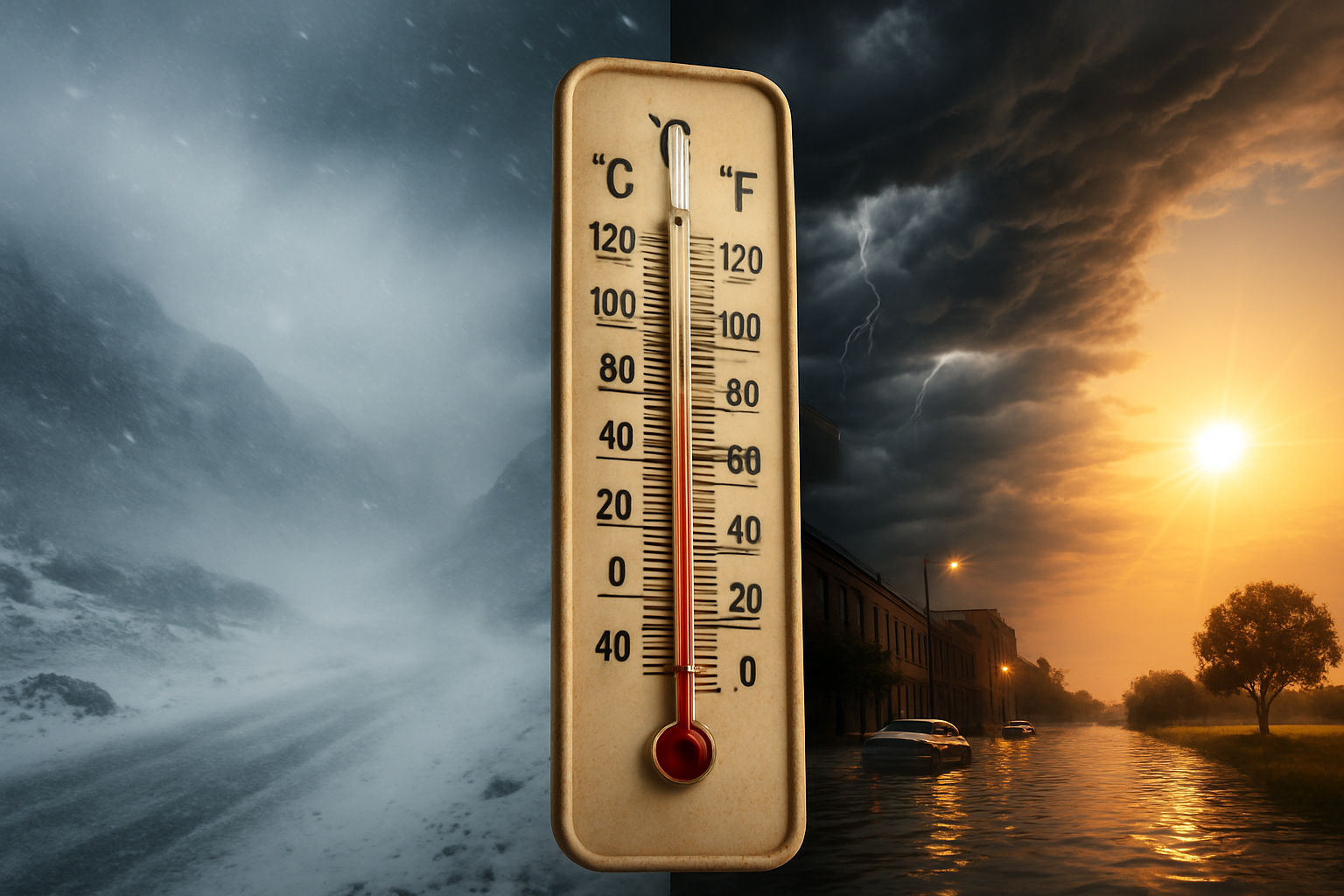
A devastating convergence of extreme weather events across Algeria, Latvia, and Portugal has exposed critical vulnerabilities in global emergency response systems as the world experiences its 20th consecutive month of temperatures exceeding 1.5°C above pre-industrial levels.
Algeria's meteorological services issued urgent warnings for thunderstorms capable of producing over 50mm of rainfall across 14 provinces, accompanied by heavy mountain snowfall reaching 20cm in western and central highlands above 1,100 meters. The severe weather system threatens provinces including Blida, Boumerdès, Tizi Ouzou, and Béjaïa with dangerous winds exceeding 100 km/h and dust storm conditions posing respiratory health risks.
Latvia Sets Temperature Records Amid Global Warming Streak
In a stark demonstration of the climate volatility paradox, Latvia recorded its highest March 9th temperature since records began, reaching +14.7°C in Kolka according to the Latvian Environment, Geology and Meteorology Centre (LVĢMC). This unprecedented warmth comes as the country simultaneously braces for potential flooding from rapid snow melt affecting agricultural communities near rivers and floodplains.
"The dramatic temperature swings we're witnessing represent a fundamental shift in our climate system," explained Dr. Sarah Mitchell, a climatologist at the International Weather Monitoring Institute. "We're seeing warming trends override traditional seasonal patterns in ways that challenge our basic understanding of regional weather systems."
Portugal Under Yellow Snow Warnings
Portuguese meteorological authorities placed ten continental districts under yellow snow warnings, with Viana do Castelo, Porto, Aveiro, Coimbra, and Braga among the most affected regions. The unusual March snowfall comes as the country continues recovering from the devastating February storm succession that required the deployment of 26,500 emergency personnel in the nation's largest peacetime rescue operation.
The current weather emergency builds upon February's catastrophic Atlantic storm sequence—Kristin, Leonardo, Marta, Nils, and Pedro—which claimed over 30 lives across Portugal, Spain, and France, necessitating the largest coordinated European weather response in recorded history with Sweden and Denmark providing €246 million in assistance.
Global Climate Context: An Unprecedented Milestone
January 2026 marked the 19th consecutive month of global temperatures exceeding the critical 1.5°C threshold above pre-industrial levels, representing the longest sustained extreme warming period in recorded human history. Climate scientists confirm this unprecedented streak demonstrates how human-induced climate change now fundamentally overrides natural cooling mechanisms, including La Niña effects.
The World Meteorological Organization has indicated a 50-60% probability of El Niño development during July-September 2026, which could drive global temperatures into uncharted territory by combining baseline warming with natural cycle amplification.
Infrastructure Vulnerabilities Exposed
The simultaneous weather emergencies across three countries have exposed critical infrastructure vulnerabilities as transportation networks, power grids, and communication systems operate beyond their historical design parameters. Emergency services report reaching capacity limits globally, with traditional mutual aid mechanisms strained when multiple regions face disasters simultaneously.
Dr. Elena Vasquez, Director of the European Climate Adaptation Network, warned: "We're witnessing the breakdown of emergency response systems designed for sequential rather than concurrent disasters. The infrastructure built for 20th-century weather patterns cannot cope with 21st-century climate volatility."
Economic and Social Devastation Mounting
Agricultural sectors across the affected regions face mounting losses as extreme weather destroys crops and disrupts supply chains during critical growing seasons. The tourism industry confronts extended cancellations and infrastructure damage, while transportation disruptions create cascading effects throughout regional economies.
Communities report families losing generational homes, businesses facing extinction, and vulnerable populations requiring extended emergency support. Mental health services experience increased demand as residents cope with repeated extreme weather trauma that characterizes the new climate reality.
The Path Forward: Transformative Adaptation Required
Climate scientists emphasize that current conditions provide a preview of routine circumstances expected in the 2030s without significant climate adaptation investment. The choice between reactive crisis management and transformative infrastructure adaptation becomes increasingly critical as extreme weather frequency and intensity exceed current response capabilities.
"March 2026 represents a watershed moment for global climate preparedness," stated Professor Michael Harrison from the Climate Resilience Institute. "We must shift from treating extreme weather as exceptional events to designing systems for permanent climate volatility."
The crisis underscores the urgent need for "building back better" climate-resilient infrastructure, enhanced international cooperation mechanisms, and comprehensive adaptation strategies that address both immediate emergency response and long-term resilience building.
International Cooperation Under Strain
The simultaneous nature of current weather emergencies demonstrates the limitations of traditional disaster response frameworks. When multiple continents face extreme weather simultaneously, the historical model of regional assistance becomes inadequate, requiring fundamental restructuring of international cooperation mechanisms.
European Union Civil Protection mechanisms have been activated repeatedly, while emergency services across affected regions operate at capacity limits. The crisis provides a template for managing permanent climate volatility as extreme weather increasingly affects multiple regions simultaneously, demanding global rather than regional solutions.
As additional Atlantic weather systems develop and authorities maintain high alert levels globally, the March 2026 crisis may establish a "new normal" of extreme weather frequency that challenges traditional emergency response frameworks on a permanent basis. The window for effective climate action continues narrowing while adaptation costs escalate rapidly, making the coming months potentially decisive for determining global climate resilience strategies for decades ahead.