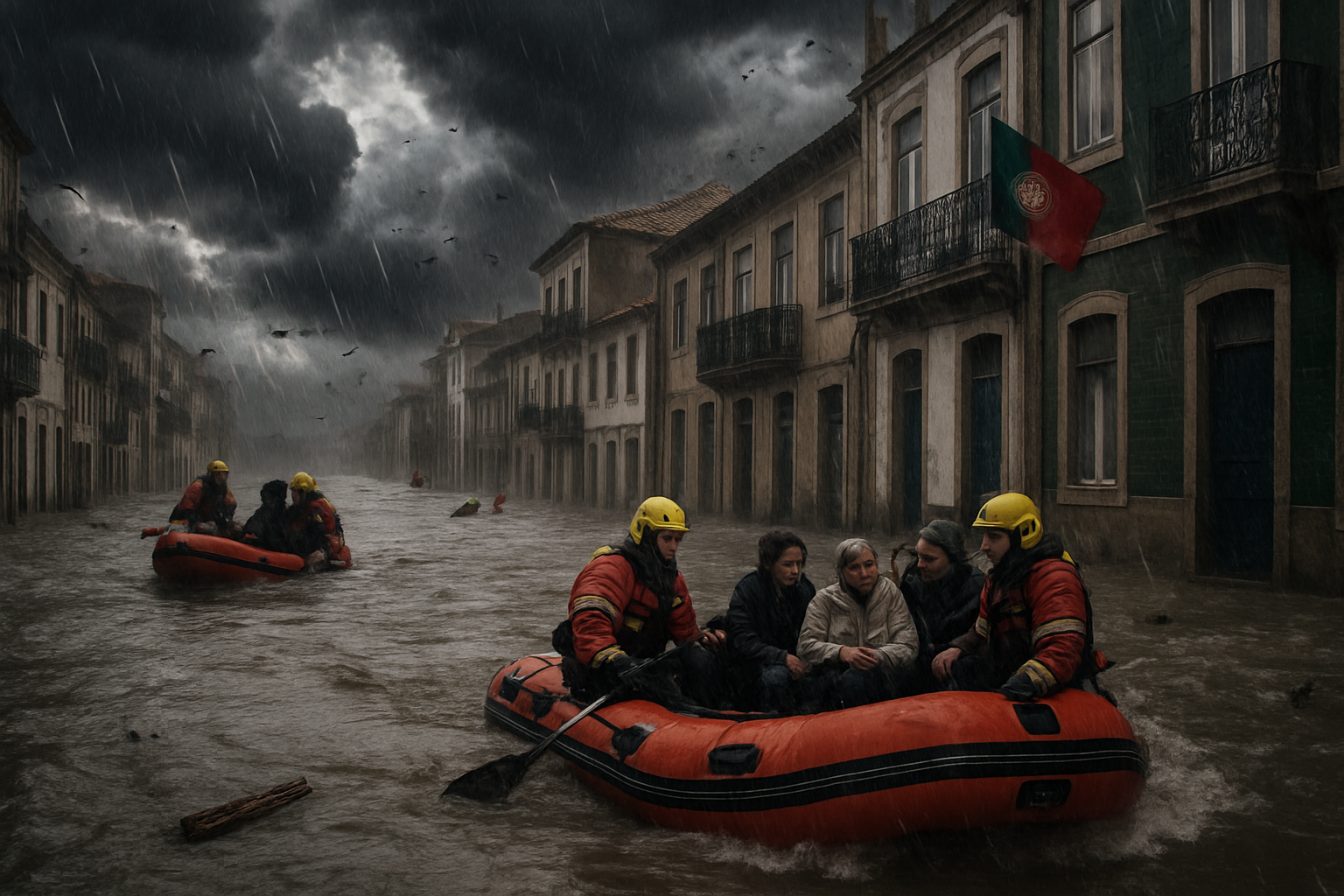
A relentless wave of extreme weather continues to batter Europe on February 6, 2026, as countries from Portugal to Denmark grapple with catastrophic flooding, treacherous ice conditions, and temperature extremes that have already claimed dozens of lives and displaced thousands.
The latest developments show Portugal extending its calamity status through February 15 as the Douro River overflows its banks in Porto and Vila Nova de Gaia, while Denmark implements emergency protocols with nationwide school closures due to "extremely treacherous" black ice conditions.
Portugal Battles Historic Flooding
Portugal faces its most severe flooding crisis in decades, with authorities recording over 1,800 weather incidents since February 1. The deployment of 1,975 military personnel and 30 naval vessels represents the largest peacetime rescue operation in the country's recent history.
In Cartaxo, 26 people have been evacuated from riverside areas, particularly in the Valada parish and communities along the Tagus River. The flooding has been so severe that mayor João Heitor described conditions as exceeding the catastrophic 1963 flood levels in nearby Alcácer do Sal.
"We are experiencing conditions not seen since 1963. The water levels have surprised even our most experienced emergency responders."
— Municipal Official, Alcácer do Sal
The crisis has forced the suspension of railway services between Castanheira do Ribatejo and Alverca, affecting thousands of Lisbon commuters. Despite the infrastructure chaos, Portuguese electoral authorities have confirmed that the presidential runoff election scheduled for February 8 will proceed as planned, though some local councils have delayed municipal elections.
Denmark Faces Transportation Paralysis
Dangerous black ice conditions have forced Danish authorities to take unprecedented measures, with all Aarhus city buses canceled and police advising against any unnecessary travel. The extreme conditions stem from drivers using inadequate winter tires, leading to numerous accidents and potential fines of 1,000 kroner per unsuitable tire.
The crisis has exposed vulnerabilities in winter preparedness across Scandinavia, with similar ice warnings now expanded across neighboring regions. Emergency services report being stretched to their operational limits as they respond to weather-related incidents across the continent.
Continuing Crisis Across the Continent
The current extreme weather represents a continuation of the devastating Storm Leonardo that struck earlier this month, forcing evacuations of over 8,000 people across Spain's Andalusia region and causing unprecedented rainfall totals. Grazalema recorded 1,500 liters per square meter in just 36 hours - exceeding Madrid's entire annual precipitation.
Northern European countries continue to battle Arctic conditions, with Estonia experiencing its coldest winter in 25 years and electricity consumption hitting record levels at 1,723 megawatts. Sweden has recorded consecutive "ice days" - the first time in two years that all weather stations remained below freezing for 24 straight hours.
Infrastructure Under Extreme Stress
Transportation networks across the continent remain in crisis. Berlin Brandenburg Airport has been closed for multiple days due to black ice conditions that overnight de-icing efforts cannot overcome. Polish railways experience partial paralysis with trains literally frozen to tracks in Lower Silesia, requiring specialized equipment for liberation.
The UK's Environment Agency has issued numerous flood warnings as river levels continue to rise with relentless rainfall. Helen Willetts from the weather service explains that the saturated ground can no longer absorb additional precipitation, creating ideal conditions for flash flooding.
Human Cost Mounting
The extreme weather has already claimed over 140 lives across the Northern Hemisphere since late January, part of a broader pattern of climate volatility that includes the deadliest winter storms in recent memory. Emergency services report increased incidents of carbon monoxide poisoning as people rely heavily on heating systems during prolonged cold spells.
Albania reported unstable atmospheric conditions continuing to affect the country, with intermittent rainfall and low-intensity precipitation expected to persist through the weekend, adding to an already saturated landscape.
Climate Context and Future Concerns
The extreme weather events occur during what has been confirmed as the hottest January in recorded history, with 18 of the past 19 months exceeding 1.5°C above pre-industrial levels. This paradox of simultaneous global heat records and regional Arctic conditions demonstrates the increasing complexity and volatility of Earth's climate system.
Meteorologists warn that additional Atlantic cold fronts are developing, suggesting the crisis may persist well into February. The convergence of extreme weather patterns across multiple regions is testing European emergency response systems and climate adaptation frameworks to their limits.
"We are witnessing climate volatility override natural cooling cycles. This presents unprecedented challenges for emergency planning and infrastructure resilience."
— Climate Scientist
International Response and Recovery
The European Union has activated its Civil Protection Mechanism, with Sweden and Denmark announcing a €246 million emergency assistance package. International cooperation has intensified as countries share resources and expertise to address the multi-national crisis.
Recovery efforts are expected to extend for months, with billions in damages anticipated across agriculture, tourism, and critical infrastructure. The crisis provides a sobering template for future climate-related emergencies as extreme weather events become more frequent and severe.
As Europe continues to battle these dangerous conditions, authorities emphasize the critical importance of avoiding unnecessary travel and maintaining vigilance for rapidly changing weather conditions. The crisis underscores the urgent need for enhanced climate adaptation infrastructure and emergency preparedness systems across the continent.