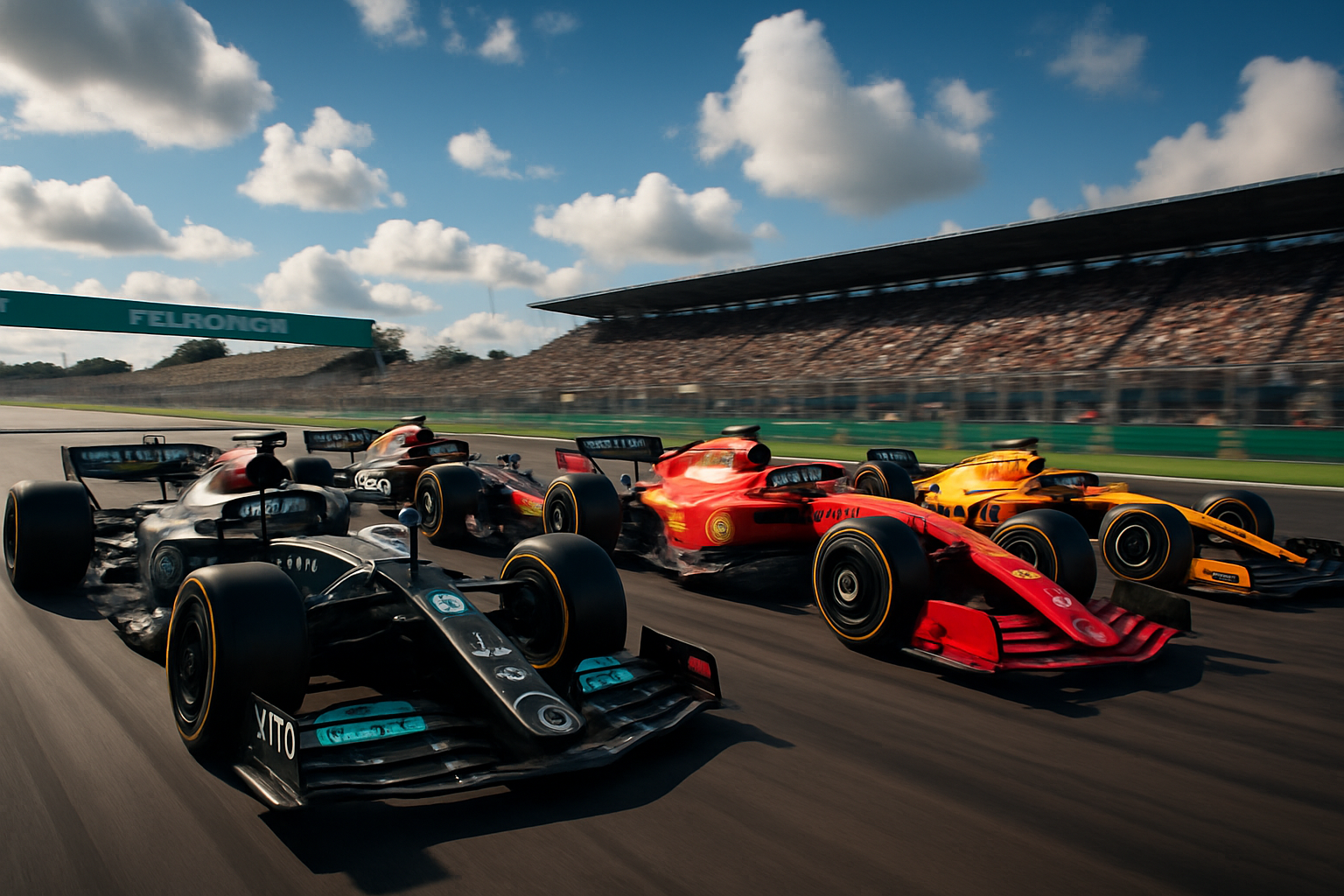
Formula 1 stands on the precipice of its most revolutionary season in decades as teams and drivers prepare for the 2026 championship, with sweeping technical regulations, intense physical training programs, and the return of familiar faces creating an atmosphere of unprecedented anticipation ahead of the Australian Grand Prix season opener.
The sport enters 2026 amid what industry insiders describe as the most significant regulatory overhaul in Formula 1 history, with simultaneous changes to both chassis and power unit regulations—a convergence that hasn't occurred in over two decades. This technical revolution, combined with global disruptions affecting team logistics and driver preparations, has created a perfect storm of complexity that even the most established teams acknowledge as their greatest challenge yet.
Technical Revolution: The Biggest Changes Since Hybrid Era
The FIA has implemented what many consider the most comprehensive regulatory transformation since the introduction of hybrid power units in 2014. For the first time in decades, both chassis aerodynamics and power unit specifications have been completely overhauled simultaneously, creating unprecedented challenges for every team on the grid.
Pre-season testing in Bahrain revealed the extent of these changes, with Charles Leclerc setting the fastest time of 1:31.992 during the February testing sessions, nearly a full second ahead of McLaren's Lando Norris and over a second quicker than Max Verstappen. However, as Ferrari team principal Frédéric Vasseur cautioned after the sessions, testing times provide no guarantees for season performance.
"This is a massive challenge even for the biggest teams. We're essentially starting from scratch with both the chassis and power unit regulations changing together for the first time in decades."
— Industry Source, speaking on condition of anonymity
The regulatory changes extend beyond pure performance, with the FIA introducing revolutionary VAR (Video Assistant Referee) technology—a first in motorsport history. This comprehensive tracking system will provide enhanced race officiating capabilities through multiple camera angles and advanced data analysis, potentially reducing controversial stewarding decisions while adding transparency to the sport.
Global Disruptions Challenge Team Operations
The 2026 season preparations have been complicated by unprecedented global aviation disruptions, particularly affecting Middle Eastern airline hubs that many teams rely on for international travel. The closure of Dubai International Airport and widespread flight cancellations across the region have forced F1 organizations to develop alternative logistics strategies.
Teams have implemented enhanced contingency planning, including alternative routing strategies, increased fuel loading protocols, and even maritime transport exploration for equipment. The crisis has exposed the sport's over-reliance on Middle Eastern aviation hubs for Europe-Asia connections, accelerating discussions about route diversification for future seasons.
Formula 1 has arranged chartered flights to ensure all personnel reach Melbourne for the season opener, but the disruptions underscore the complex logistical challenges facing a truly global sport in an increasingly uncertain geopolitical landscape.
Ferrari's Renaissance Under Hamilton Era
The most captivating storyline entering 2026 centers on Lewis Hamilton's move to Ferrari and the partnership with Charles Leclerc. At 41, the seven-time world champion begins his 20th Formula 1 season with renewed determination, declaring he has "no holding back" in his pursuit of an eighth title.
Ferrari's strong showing in pre-season testing, with Leclerc posting the fastest times, has raised championship expectations. The Italian team demonstrated what sources describe as "impossible to copy" innovations, particularly in wing design, which have drawn FIA attention for their revolutionary drag reduction solutions.
The Hamilton-Leclerc partnership represents one of the strongest driver lineups on the grid, combining Hamilton's unmatched experience with Leclerc's proven speed and racecraft. Their chemistry during winter preparations suggests Ferrari may finally have the combination needed to challenge for both championships after years of near-misses.
Driver Physical Preparations: "The Worst Day of the Year"
The physical demands of modern Formula 1 have reached new heights, with drivers describing their intense training regimens as preparation for what Mexican media calls "the worst day of the year." The combination of extreme G-forces, cockpit temperatures, and mental concentration required over race distances has pushed athletic preparation to unprecedented levels.
Sergio 'Checo' Pérez, returning to F1 with Cadillac after his hiatus, exemplifies the extreme preparation required. Training programs now include specialized neck strengthening exercises to cope with increased aerodynamic loads, cardiovascular conditioning for extreme heat endurance, and mental conditioning to handle the new technical complexities.
The physical challenges are compounded by the new regulations, which have altered car handling characteristics significantly. As New Zealand's Liam Lawson noted about his Racing Bulls machine, the new cars are "much more sensitive" than their predecessors, requiring drivers to completely relearn their approach to racecraft.
"Just days out from the season opener in Melbourne, I'm still learning the new car and have no idea how competitive we'll be. These machines are much more sensitive than anything we've driven before."
— Liam Lawson, Racing Bulls Driver
New Faces and Returning Heroes
The 2026 grid features an intriguing blend of established stars and emerging talent. Pérez's return with the new Cadillac team marks a significant moment for American involvement in Formula 1, while Hamilton's Ferrari debut represents one of the most anticipated driver moves in recent memory.
Young drivers like Lawson face the challenge of adapting to both new regulations and the pressure of performing on motorsport's biggest stage. The learning curve is steeper than ever, with limited testing time and the complexity of the new technical regulations leaving even experienced drivers uncertain about their competitive positions.
The expanded grid and new technical challenges have created an environment where traditional hierarchies may be disrupted, offering opportunities for smaller teams to make significant leaps forward while established powers work to maintain their advantages.
Australian Grand Prix: The Ultimate Test
The Australian Grand Prix in Melbourne serves as the proving ground where months of preparation meet reality. Albert Park has undergone improvements including larger bridges and enhanced spectator amenities, setting the stage for what promises to be one of the most unpredictable season openers in Formula 1 history.
Teams acknowledge that the true competitive order won't be known until qualifying and race day, when the combination of new regulations, untested strategies, and driver adaptations will finally be put to the ultimate test. The significance of strong early-season performance has been amplified by the technical reset, making every point crucial in what could be an exceptionally tight championship battle.
Weather forecasting for the race weekend suggests favorable conditions, but teams are preparing for all scenarios as they seek to validate months of development work and establish early momentum in what promises to be a season-long battle for supremacy.
Looking Ahead: A Season of Possibilities
The 2026 Formula 1 season represents more than just another championship fight—it marks a fundamental reset that could reshape the competitive landscape for years to come. The combination of technical innovation, global challenges, and human drama has created the conditions for a truly historic season.
As teams make final preparations for Melbourne, the anticipation extends beyond traditional Formula 1 audiences. The sport's ability to adapt to global disruptions while maintaining competitive integrity serves as a template for how international sports can navigate complex modern challenges.
With the lights set to go out in Australia, Formula 1 2026 stands ready to begin what could be remembered as one of the most transformative seasons in the sport's storied history. The technical revolution, combined with renewed rivalries and emerging talents, promises a championship battle that will captivate audiences worldwide and potentially redefine what modern motorsport can achieve.