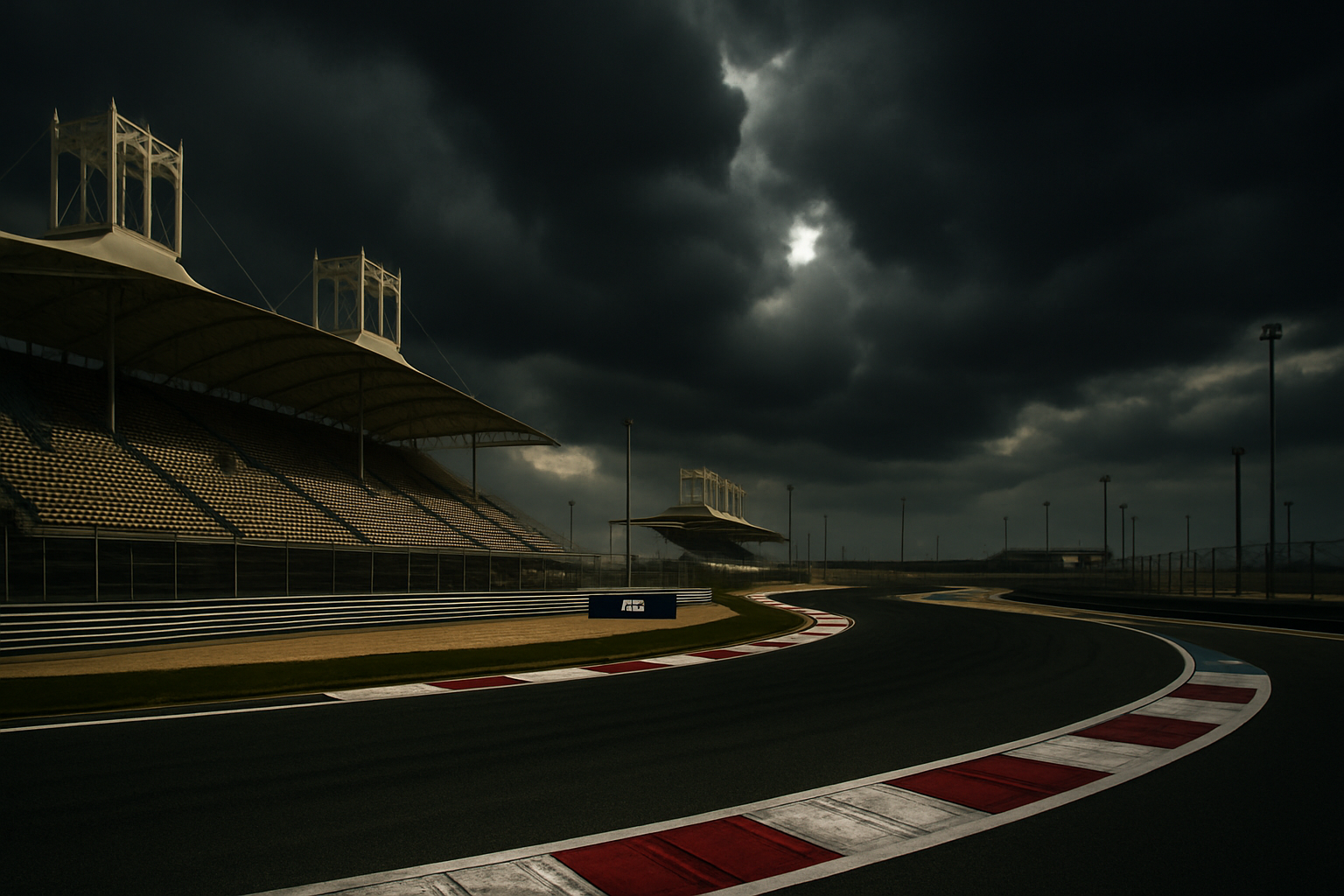
Formula 1 has officially cancelled the Bahrain Grand Prix (April 12) and Saudi Arabian Grand Prix (April 19) due to unprecedented Middle East warfare escalation, marking the first race cancellations due to regional conflict in F1's modern history.
The decision follows Iran Supreme Leader Khamenei's death on March 1 in the US-Israeli Operation Epic Fury and subsequent Iranian Operation True Promise 4 retaliation targeting Gulf allies. Both race venues have been directly affected by the conflict, with Iranian forces attacking Bahrain and Saudi territories as part of systematic retaliation strikes.
Impact on the 2026 Championship
The cancellations occur during F1's most challenging season in decades, featuring simultaneous chassis and power unit regulation changes for the first time in over 20 years. The races will not be replaced on the 2026 calendar, reducing championship rounds during what was expected to be the sport's most revolutionary technical season.
George Russell currently leads the championship after his victory at the Australian Grand Prix for Mercedes, partnered with 19-year-old Kimi Antonelli. The technical overhaul has created unprecedented challenges, with drivers describing the new cars as "much more sensitive" and requiring complete adaptation of driving approaches.
Security Concerns and Aviation Crisis
The decision comes amid a global aviation crisis that has seen over 18,000 flights cancelled worldwide, with eight Middle Eastern countries simultaneously closing their airspace. Dubai International Airport, the world's busiest, has been completely shut down due to missile damage, forcing F1 teams to develop unprecedented contingency plans.
"F1 teams have been forced to develop unprecedented contingency plans including alternative routing, enhanced fuel loading, and maritime transport exploration."
— Industry Source
Iranian forces have targeted both race locations directly: the Bahrain International Circuit area has come under attack as Iranian forces struck facilities housing the US Navy's Fifth Fleet, while Saudi Arabia has intercepted multiple missiles and drones targeting its territory, including attempts to strike the Shaiba oil field near potential F1 logistics routes.
Technical Revolution Amid Crisis
The 2026 season represents the most significant regulatory overhaul in F1 history, with the FIA also introducing VAR (Video Assistant Referee) technology for the first time in motorsport history. The comprehensive tracking system enables enhanced race officiating through multiple camera angles and advanced data analysis.
Ferrari showed strong pace during pre-season testing, with Charles Leclerc posting the fastest time (1:31.992) in Bahrain testing, nearly a second ahead of McLaren's Lando Norris and Red Bull's Max Verstappen. Lewis Hamilton's move to Ferrari at age 41 for his 20th F1 season has created one of the strongest driver lineups on the grid.
Economic and Logistical Implications
The cancellations represent significant financial losses for Formula 1, promoters, and the broader racing ecosystem. Revenue from hosting fees, tourism, and broadcast rights will be substantially impacted, while the shortened championship calendar affects competitive integrity and team development programs.
Oil prices have surged past $80 per barrel with the closure of the Strait of Hormuz, through which 40% of global oil transits. This energy crisis compounds the logistical challenges facing F1 teams, who rely heavily on complex international supply chains and transportation networks.
Historical Precedent and Global Context
These are the first F1 race cancellations due to warfare in the sport's modern era, demonstrating Formula 1's vulnerability to geopolitical instability. The Middle East has become increasingly important to the F1 calendar, with Bahrain hosting races since 2004 and Saudi Arabia integral to the championship as a key venue.
The crisis occurs within the broader context of what UN Secretary-General António Guterres has called "the most dangerous international crisis since the Cold War." The nuclear governance breakdown, with the New START treaty having expired, and nuclear risks at their "highest in decades," creates an unprecedented backdrop for international sporting events.
Looking Forward
The cancellations set a precedent for how international sporting events respond to geopolitical crises and may influence future decisions about race locations in politically sensitive regions. Formula 1 faces the challenge of balancing its global expansion ambitions with the realities of an increasingly volatile geopolitical environment.
The sport's most revolutionary technical season now faces the additional challenge of a disrupted calendar, with teams and drivers adapting to both unprecedented car characteristics and the broader global crisis affecting international logistics and travel.
As the situation continues to evolve, Formula 1's response to this crisis will likely shape the sport's approach to risk management and international expansion for years to come, highlighting the interconnected nature of global sports and international stability in the 21st century.