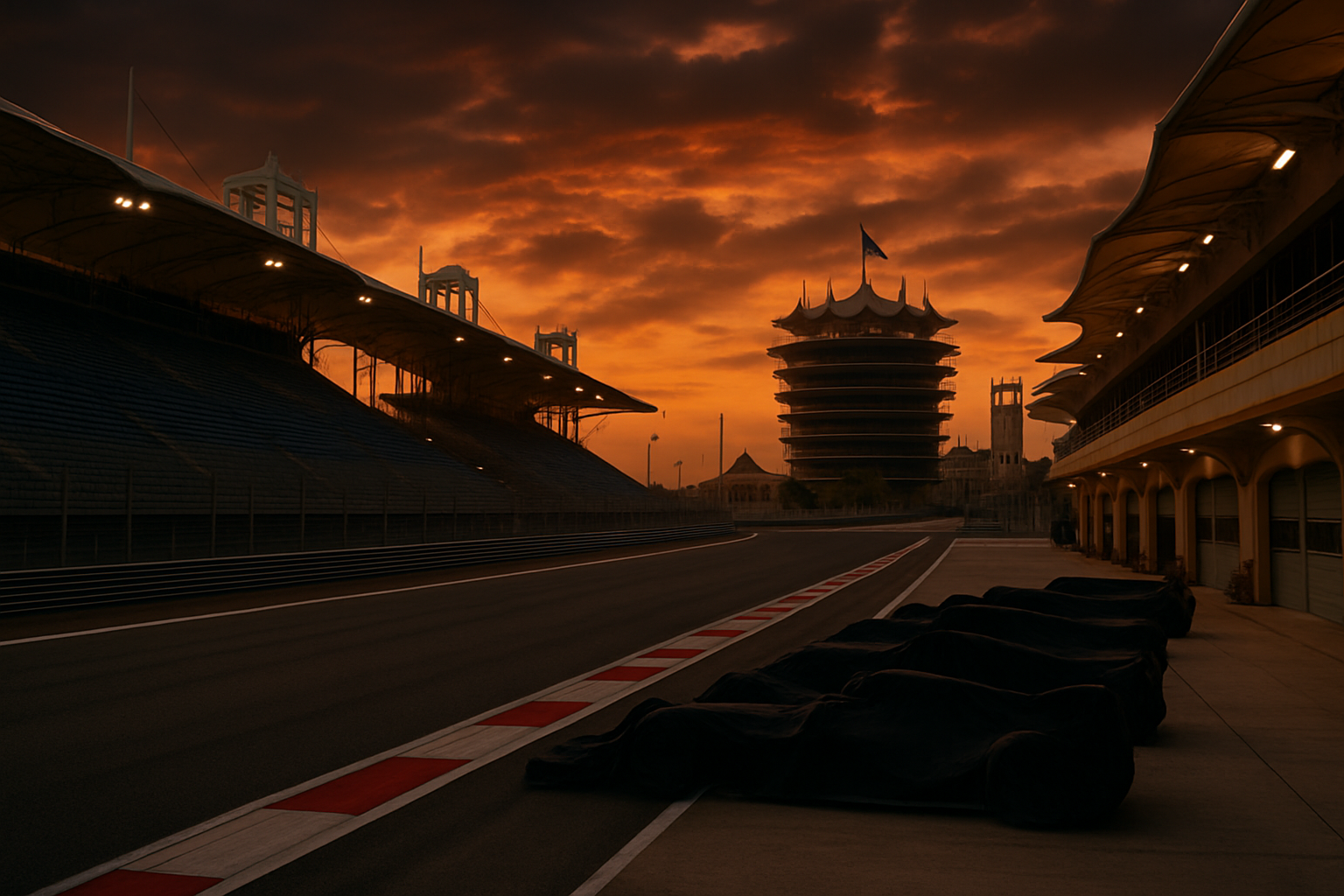
The Fédération Internationale de l'Automobile (FIA) has officially cancelled the Bahrain and Saudi Arabian Grand Prix races scheduled for April 2026, citing unprecedented security concerns arising from the escalating conflict in the Middle East following Iran's ongoing war with Israel and the United States.
The cancellations represent the first Formula 1 race cancellations due to active warfare in the sport's modern history, fundamentally altering the championship calendar during what was intended to be F1's most revolutionary technical season.
Security Concerns Drive Historic Decision
The FIA's decision comes after comprehensive security assessments revealed that both Bahrain and Saudi Arabia have been directly targeted by Iranian forces as part of "Operation True Promise 4," Iran's systematic retaliation campaign following the death of Supreme Leader Ali Khamenei on March 1, 2026.
The Bahrain International Circuit, home to the sport since 2004, has been in the direct line of fire as Iranian forces struck Fifth Fleet facilities in the kingdom. Saudi Arabia has similarly faced repeated missile and drone attacks, with the kingdom's air defense systems intercepting numerous projectiles targeting its territory.
"The safety of our drivers, teams, officials, and fans remains our absolute priority. Given the unprecedented security situation in the region, we cannot in good conscience proceed with events in Bahrain and Saudi Arabia."
— FIA Statement
The races, originally scheduled for April 12 and April 19 respectively, will not be replaced on the 2026 calendar, reducing the championship from 24 to 22 rounds during F1's most significant regulatory overhaul in decades.
Impact on Revolutionary 2026 Season
The cancellations come at a particularly challenging time for Formula 1, as the 2026 season represents the most comprehensive technical revolution in the sport's history. For the first time in over two decades, both chassis and power unit regulations are changing simultaneously, while the FIA has introduced VAR (Video Assistant Referee) technology to enhance race officiating.
George Russell currently leads the championship following his victory at the Australian Grand Prix for Mercedes, partnering with rookie sensation Kimi Antonelli. The shortened calendar threatens to disrupt the competitive balance during this critical transitional season.
Lewis Hamilton's highly anticipated Ferrari debut at age 41 has already been complicated by the global aviation crisis, with teams forced to develop unprecedented contingency plans for logistics and travel. The seven-time world champion's move to the Italian team was intended to be one of the season's major storylines.
Global Aviation Crisis Compounds Challenges
The race cancellations occur against the backdrop of the most severe aviation disruption since the COVID-19 pandemic. Over 18,000 flights have been cancelled worldwide as eight Middle Eastern countries simultaneously closed their airspace, including Iran, Iraq, Israel, UAE, Qatar, Syria, Kuwait, and Bahrain.
Dubai International Airport, the world's busiest with over 86 million passengers annually, remains completely shut down after sustaining missile damage during Iranian retaliatory strikes. This has created cascading effects throughout the global aviation network, particularly impacting F1's complex logistics operations.

Formula 1 teams have been forced to explore alternative routing strategies, enhanced fuel loading for longer flights, and even maritime transport options. The crisis exposes the sport's vulnerability to geopolitical instability, particularly its reliance on Middle Eastern aviation hubs for global connectivity.
Energy Crisis and Economic Implications
The broader regional conflict has created significant economic pressures affecting Formula 1's operations. Oil prices have surged past $80 per barrel following Iran's closure of the Strait of Hormuz, which handles 40% of global oil transit. Natural gas prices have increased by 24% in Europe and 78% in the United States.
These energy market disruptions directly impact F1's sustainability initiatives and cost structures, while the shortened calendar affects broadcasting revenue and promotional partnerships. The economic ramifications extend beyond the immediate race cancellations to the sport's broader financial ecosystem.
Historical Context and Precedent
While Formula 1 has previously cancelled races due to natural disasters, civil unrest, and the COVID-19 pandemic, the Bahrain and Saudi Arabian cancellations mark the first time in the sport's modern era that races have been cancelled specifically due to active international warfare.
The Middle East has become increasingly important to Formula 1's global strategy, with Bahrain serving as a cornerstone venue since 2004 and Saudi Arabia joining the calendar as part of the sport's expansion into new markets. The loss of these races represents more than just a scheduling challenge—it signals the vulnerability of international sporting events to geopolitical crises.
Regional Coalition Impact
The cancellations occur as the unprecedented regional coalition of Saudi Arabia, UAE, Qatar, and Egypt—which had been supporting diplomatic solutions to the Iran crisis—faces severe strain. Iranian retaliation has directly targeted coalition member territories, with casualties reported across the Gulf states.
Saudi Arabia has described Iranian attacks as "blatant and cowardly," while Egypt has condemned strikes on "sisterly Arab countries" and warned of potential "comprehensive chaos" spreading across the region. This deteriorating security environment made hosting international sporting events impossible.
Nuclear Diplomacy Collapse Background
The current crisis emerged from the complete breakdown of nuclear negotiations between Iran and the United States, despite achieving what diplomats called "broad agreement on guiding principles"—the most significant progress since the 2018 JCPOA collapse.
Iran's exclusion of ballistic missiles and regional proxies as "red lines" proved incompatible with US demands for a comprehensive agreement addressing missiles, armed groups, and human rights issues. Iran continues enriching uranium to 60% purity, approaching the 90% threshold needed for weapons-grade material.
Timeline of Escalation
- February 21: Trump issues 10-day ultimatum to Iran
- February 28: Nuclear talks collapse despite progress in Geneva
- March 1: Supreme Leader Khamenei killed in Operation Epic Fury
- March 1-14: Iranian retaliation campaign targets regional allies
- March 14: FIA announces race cancellations
Industry Response and Adaptations
The Formula 1 industry has been forced to rapidly adapt to the new security environment. Teams are implementing enhanced risk assessment procedures, diversifying logistics routes, and developing contingency plans for potential future disruptions.
The Azerbaijan Grand Prix in Baku continues as planned despite regional tensions, with organizers implementing additional security measures. However, the precedent set by the Bahrain and Saudi Arabian cancellations raises questions about the long-term viability of the sport's Middle Eastern expansion strategy.
"This crisis demonstrates the need for Formula 1 to reassess its geographical risk management strategies. We cannot allow geopolitical instability to repeatedly disrupt the championship."
— Anonymous Team Principal
Championship Implications
The reduced 22-race calendar creates new strategic challenges for teams and drivers. Points distributions and development programs must be recalibrated, while the loss of two Middle Eastern venues affects the global character of the championship.
For drivers like George Russell, who leads the standings, the shortened season intensifies pressure for consistent performance. The cancellations also impact rookie development programs and the extensive testing protocols required for the new 2026 regulations.
Looking Forward: Uncertain Future
As the Middle East crisis continues to evolve, Formula 1 faces an uncertain future regarding its regional presence. The sport's expansion into new markets has been a key growth strategy, but the current situation highlights the risks of dependence on geopolitically sensitive regions.
The FIA and Formula 1 management are reportedly reviewing their global calendar strategy, with discussions about contingency venues and enhanced risk assessment protocols. The sport's ability to maintain its international character while ensuring participant safety will be crucial for future development.
The cancellations also raise broader questions about international sporting events' vulnerability to geopolitical crises. As the template-setting crisis continues to unfold, the decisions made in the coming weeks will likely influence how global sports respond to regional conflicts for years to come.
Broader Implications for International Sport
The Formula 1 cancellations represent part of a broader disruption to international sporting events. The EuroLeague has been forced to relocate Israeli basketball teams, while the AFC has suspended Gulf region matches. These unprecedented disruptions demonstrate how quickly regional conflicts can become global sporting challenges.
The crisis serves as a template-setting moment for how international sports organizations respond to geopolitical instability. The decisions made by the FIA and other governing bodies will likely influence policy frameworks for decades, establishing new precedents for balancing competitive integrity with participant safety.
As the most dangerous international crisis since the Cold War continues to unfold, Formula 1's response exemplifies the challenges facing global sports in an increasingly interconnected yet politically volatile world. The sport's ability to navigate these complexities while maintaining its worldwide appeal will define its future in the 21st century.