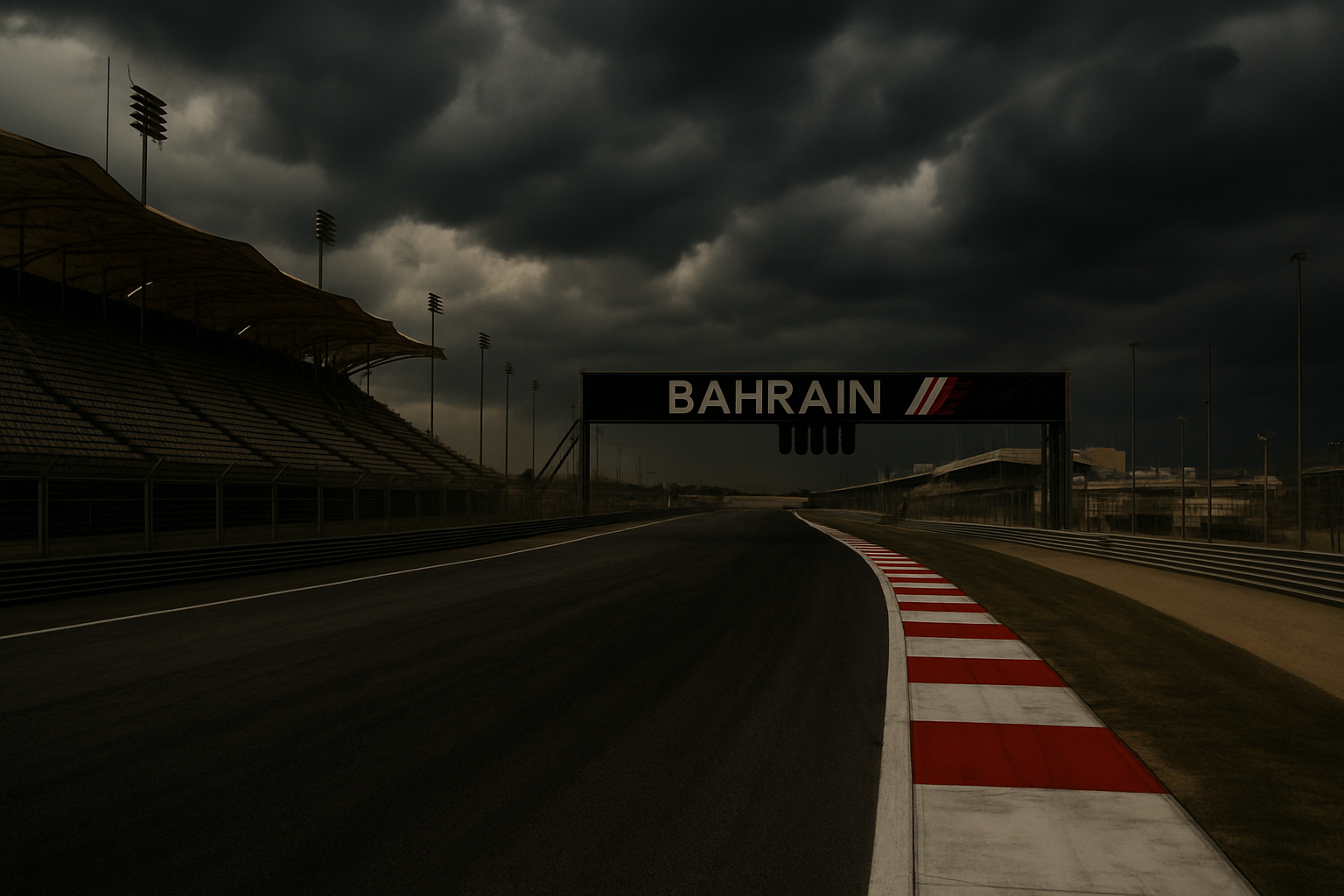
The Fédération Internationale de l'Automobile (FIA) has officially cancelled the Bahrain Grand Prix and Saudi Arabian Grand Prix scheduled for April 12 and 19 respectively, citing the ongoing security situation in the Middle East. This marks the first time Formula 1 races have been cancelled due to regional warfare in the sport's modern history.
The announcement, made Saturday evening during the Chinese Grand Prix weekend, reduces the 2026 championship calendar from 24 to 22 rounds during what was already F1's most revolutionary technical season. The decision follows weeks of escalating conflict in the region that began with the death of Iran's Supreme Leader Ali Khamenei on March 1 during Operation Epic Fury, triggering a massive regional war.
Security Concerns Drive Historic Decision
The FIA's decision comes after extensive security evaluations as the Middle East crisis has directly impacted both race venues. Iranian forces attacked Bahrain as part of Operation True Promise 4, specifically targeting US Fifth Fleet facilities on the island. Saudi Arabia has intercepted multiple missile and drone attacks targeting its territory, including attempts to strike energy infrastructure.
Formula 1 confirmed that the races will not be replaced on the calendar next month, stating that alternatives were considered but ultimately deemed unfeasible given the security situation. The cancellations also affect supporting Formula 2, Formula 3, and F1 Academy events that were scheduled to accompany the main races.
"Due to the ongoing situation in the Middle East, the Bahrain and Saudi Arabian Grands Prix will not take place in April. Although alternatives were considered, there will be no replacement rounds next month."
— FIA Official Statement
Crisis Context: From Diplomacy to War
The current crisis emerged from the complete collapse of US-Iran nuclear negotiations in late February, despite achieving what was described as "broad agreement on guiding principles" - the most significant diplomatic progress since the JCPOA collapse in 2018. However, fundamental disagreements over Iran's ballistic missile program and regional proxy relationships proved insurmountable.
The situation escalated dramatically on March 1 when coordinated US-Israeli strikes, dubbed Operation Epic Fury, resulted in the confirmed death of Iran's Supreme Leader Ali Khamenei, ending his 37-year rule. This triggered massive Iranian retaliation under Operation True Promise 4, with the Islamic Revolutionary Guard Corps declaring "no red lines remain."
Regional Impact and Aviation Crisis
The conflict has created the most severe aviation crisis since COVID-19, with over 18,000 flights cancelled worldwide. Eight Middle Eastern countries have simultaneously closed their airspace, including Iran, Iraq, Israel, UAE, Qatar, Syria, Kuwait, and Bahrain. Dubai International Airport, the world's busiest, remains completely shut down due to missile damage.
This aviation paralysis has made it impossible for F1 teams, personnel, and equipment to reach the Gulf region safely. The sport's complex logistical requirements, involving hundreds of team members and tons of equipment, cannot be accommodated under current security conditions.
Energy Market Disruption
The conflict has triggered a global energy crisis with oil prices surging past $80 per barrel after Iran declared the Strait of Hormuz "unsafe," affecting 40% of global oil transit. Natural gas prices have increased 24% in Europe and 78% in the US. Qatar has halted LNG production, while major shipping companies Maersk and MSC have suspended operations in the Persian Gulf, leaving over 150 tankers stranded.
These energy market disruptions have significant implications for F1, affecting everything from team transportation costs to the sustainability initiatives the sport has heavily promoted. The crisis exposes F1's vulnerability to geopolitical instability in regions where it has expanded its calendar presence.
Historic First for Modern F1
The cancellations represent an unprecedented situation for Formula 1. While races have been cancelled due to natural disasters, technical issues, or the COVID-19 pandemic, this marks the first time events have been called off due to active warfare affecting the host regions.
Bahrain has hosted F1 since 2004 and serves as the traditional season opener, while Saudi Arabia joined the calendar in 2021 as part of F1's expansion into new markets. Both venues have become integral to the championship, making their absence particularly significant.
Technical Revolution Amid Crisis
The 2026 season represents the most comprehensive regulatory overhaul in F1 history, with simultaneous changes to chassis and power unit regulations for the first time in over 20 years. The sport has also introduced VAR (Video Assistant Referee) technology, marking the first use of such systems in motorsport.
These technical changes were already creating unprecedented challenges for teams, and the race cancellations add another layer of complexity to what was meant to be F1's most revolutionary season. Teams had prepared extensively for the unique challenges of the 2026 regulations, making the calendar disruption particularly costly.
Economic and Commercial Impact
The race cancellations represent significant financial losses for Formula 1, race promoters, and the broader motorsport ecosystem. Hosting fees, tourism revenue, and broadcast rights income will all be affected. The shortened calendar also impacts competitive integrity and team development programs that rely on a full season of data collection.
Major sponsors and commercial partners face disruption to their marketing campaigns and activation plans, which were built around the full 24-race calendar. The uncertainty also affects future planning, as the security situation remains volatile with no clear resolution timeline.
Broader Implications for International Sport
The F1 cancellations set a significant precedent for how international sporting events respond to geopolitical crises. The decision demonstrates the sport's prioritization of safety over commercial interests, but also highlights the vulnerability of global entertainment industries to regional conflicts.
This situation provides a template for how other major sporting organizations might respond to similar crises in an increasingly volatile geopolitical environment. The FIA's response will likely influence decision-making frameworks for decades to come.
Looking Ahead
The immediate focus now shifts to the remaining races on the calendar and whether the conflict will affect other events in the region. The ongoing crisis, described by UN Secretary-General António Guterres as "the greatest test of multilateral cooperation and crisis management in the modern era," shows no signs of immediate resolution.
F1 teams are now adapting their 2026 programs to accommodate the shortened calendar while monitoring the situation for potential future impacts. The sport's expansion strategy into geopolitically sensitive regions faces renewed scrutiny as the full implications of this historic disruption become clear.
As the Middle East crisis continues to unfold, Formula 1 joins the growing list of industries forced to confront the reality that in an interconnected world, regional conflicts can instantly become global challenges affecting everything from energy markets to entertainment schedules.