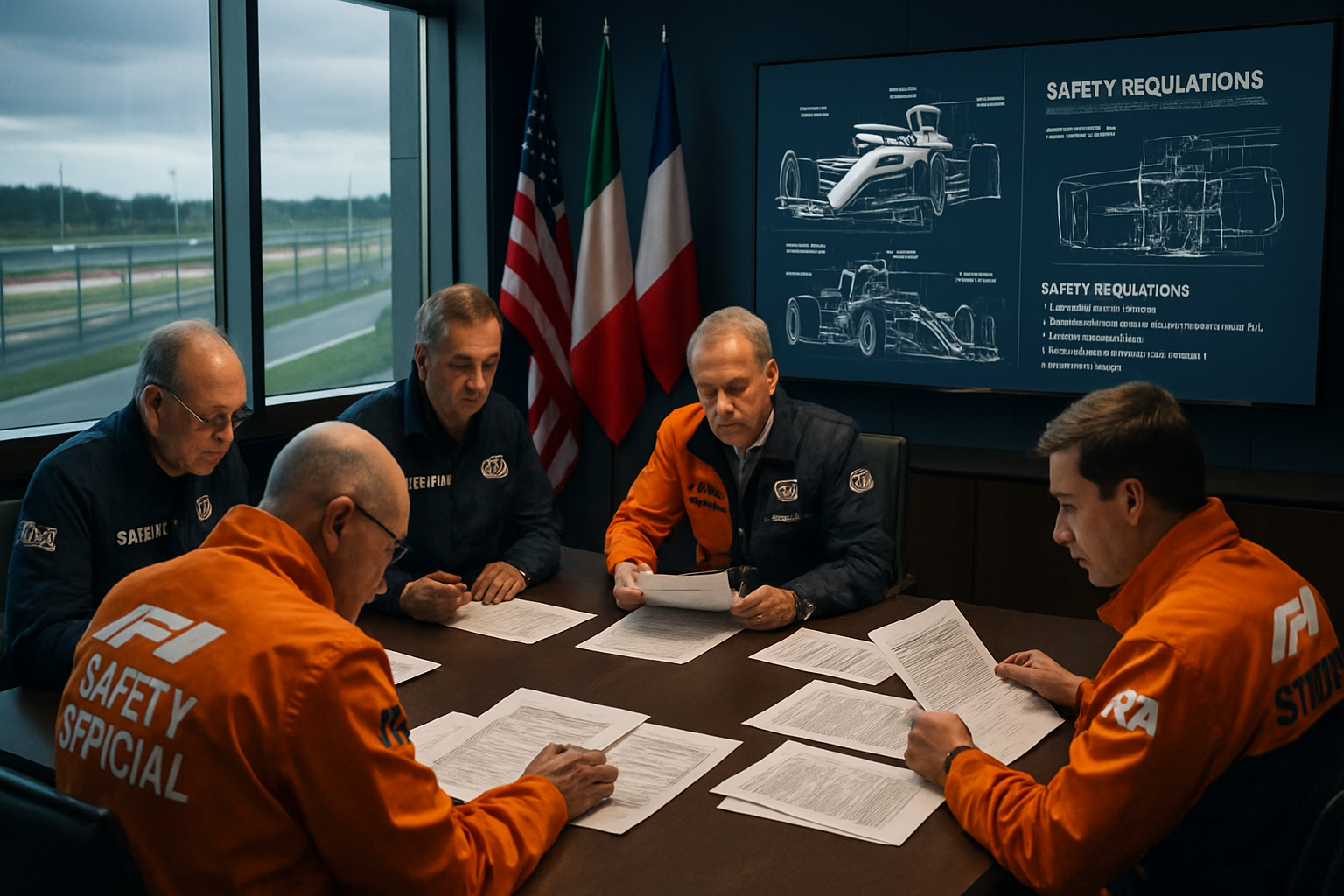
The FIA (Fédération Internationale de l'Automobile) has announced major safety rule changes for Formula 1, responding to sustained criticism from drivers and a series of concerning crashes that have marked the 2026 season. The new regulations, agreed unanimously by all stakeholders during intensive meetings, will receive official ratification next Monday.
The announcement comes during Formula 1's most revolutionary season in decades, with simultaneous chassis and power unit regulation changes creating unprecedented challenges for both drivers and teams. The safety modifications represent concrete measures aimed at improving both qualifying performance enhancement and race safety standards.
Driver Concerns Drive Regulatory Response
The rule changes follow sustained criticism from Formula 1 pilots regarding safety vulnerabilities in the 2026 technical regulations. The concerns gained particular urgency after several high-profile incidents throughout the early part of the season.
Most notably, the Aston Martin team faced an unprecedented safety crisis during pre-season preparation, with drivers Fernando Alonso and Lance Stroll at risk of "permanent nerve damage" from severe car vibrations caused by incompatibility between Honda engine characteristics and the new chassis specifications. The vibration levels exceeded acceptable safety thresholds for race distances, potentially causing lasting neurological damage.
"We just hope to finish the race."
— Fernando Alonso, describing the unprecedented safety concerns
This extraordinary admission from a two-time world champion highlighted the severity of safety issues that emerged only under race conditions, despite extensive pre-season testing protocols.
Revolutionary Season Creates New Challenges
The 2026 Formula 1 season represents the sport's most comprehensive regulatory overhaul in over two decades, with chassis and power unit regulations changing simultaneously for the first time. This technical revolution, combined with the introduction of VAR (Video Assistant Referee) technology to motorsport, has created cars described as "much more sensitive" requiring complete driver adaptation.
The regulatory reset has disrupted traditional competitive hierarchies, with Mercedes demonstrating superior adaptation through drivers George Russell and Kimi Antonelli, while established powerhouses like Red Bull have struggled with the new technical requirements.
Several concerning incidents have occurred during this transition period, including formation lap crashes, qualifying accidents, and the systematic safety issues that prompted today's regulatory response.
Comprehensive Safety Measures
The new safety regulations address multiple areas of concern that have emerged during the 2026 season. While specific details await Monday's official ratification, the measures focus on two primary areas: enhancing qualifying session safety protocols and improving race-day protection standards.
The regulations specifically target vibration thresholds and neurological risk assessment - direct responses to the Aston Martin crisis that exposed how chronic safety risks differ from traditional acute crash protection measures. Enhanced protocols for vibration monitoring, mandatory health assessments, and closer power unit-chassis integration requirements during regulatory transitions are expected to be key components.
Industry sources suggest the new rules will also address the challenges smaller constructors face during major technical transitions, with enhanced testing protocols designed to identify gradual-onset safety risks that only emerge under competitive conditions.
Global Context and Timing
The safety rule changes come during a season already marked by unprecedented global challenges. Formula 1 has successfully navigated the cancellation of the Bahrain and Saudi Arabian Grand Prix due to Middle East conflicts, the worst aviation crisis since COVID-19, and complex logistical challenges that have tested the sport's operational resilience.
Despite these external pressures, the FIA's focus on safety demonstrates the sport's commitment to driver welfare over commercial considerations. The timing is particularly significant as it occurs during the most technically challenging season in F1 history, when teams are already struggling to adapt to revolutionary changes.
Industry Response and Implementation
The unanimous agreement from all stakeholders - teams, drivers, and officials - signals broad recognition that safety concerns required immediate attention. This level of consensus is rare in Formula 1's often contentious regulatory environment.
The changes will be implemented across the remaining rounds of the 2026 championship, which has been reduced to 22 races following the Middle East cancellations. Teams will need to adapt quickly to the new requirements while continuing to develop their understanding of the revolutionary technical regulations.
The implementation comes as Mercedes leads both championships with Russell holding the drivers' championship and teenager Kimi Antonelli making history as the second-youngest F1 winner ever following his Chinese Grand Prix victory.
Setting Precedents for Motorsport Safety
The FIA's response represents a watershed moment for motorsport safety, prioritizing driver welfare over competitive and commercial objectives. The focus on addressing chronic health risks - such as vibration-induced neurological damage - versus traditional acute crash protection marks an evolution in safety thinking.
The regulatory changes establish precedents for addressing safety challenges during technical evolution periods, when new risks emerge that weren't anticipated during the development phase. This proactive approach contrasts with historically reactive safety measures implemented after serious accidents.
The success of these measures will influence not only Formula 1 but potentially other motorsport series facing similar challenges during periods of rapid technological change.
Looking Forward
The safety rule changes represent Formula 1's commitment to maintaining the highest safety standards during its most revolutionary era. As teams continue adapting to the 2026 technical regulations, these enhanced safety measures provide additional protection for drivers navigating unprecedented challenges.
With the official ratification expected Monday, teams will have clear guidelines for implementing the new safety protocols across the remaining races of what promises to be the most unpredictable Formula 1 season in recent memory.
The FIA's swift response to driver concerns demonstrates that even during periods of rapid change and external challenges, safety remains the paramount concern in Formula 1's ongoing evolution as the pinnacle of motorsport.