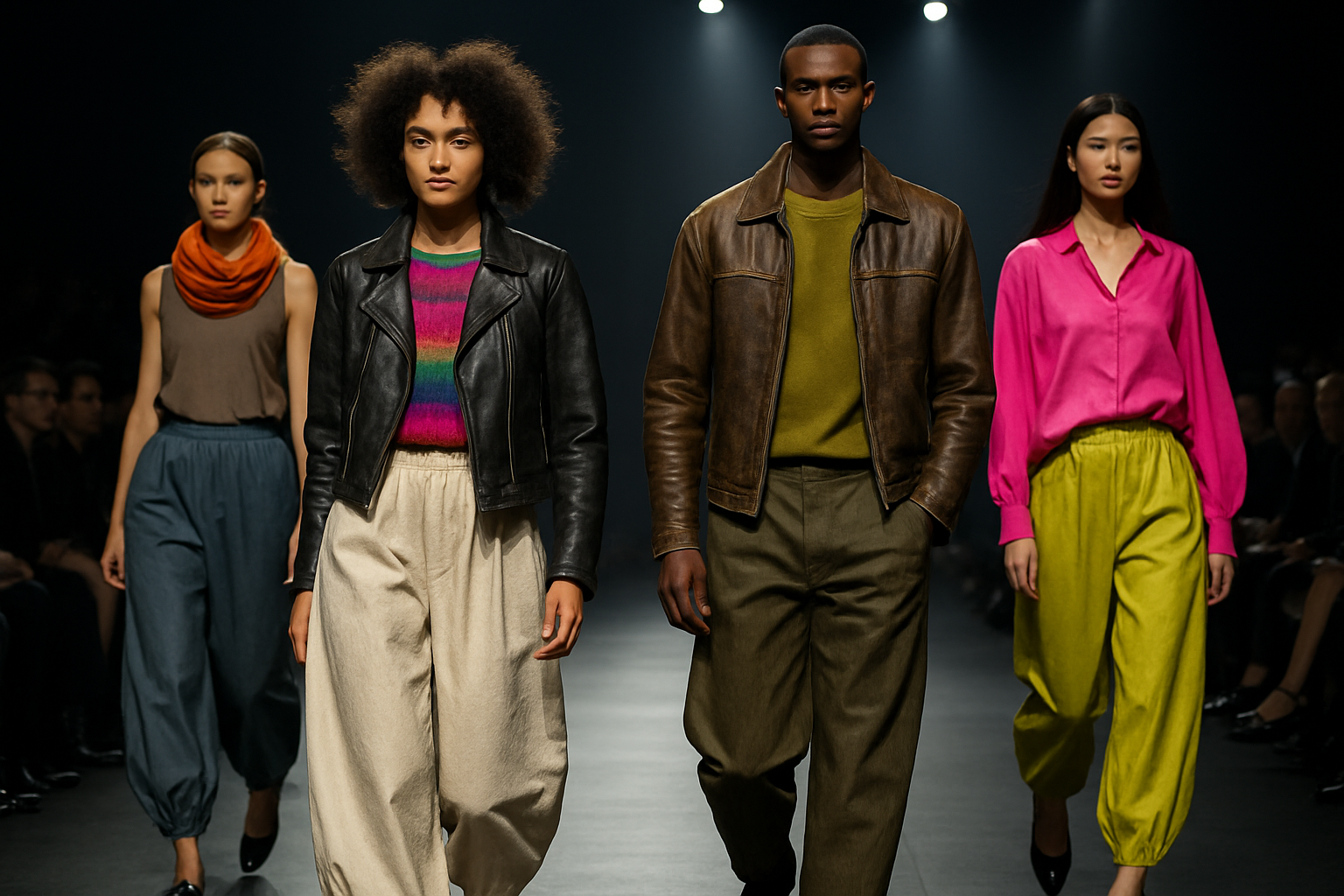
The fashion industry stands at a revolutionary crossroads as 2026 unveils ten transformative trends that promise to redefine style consciousness, from sustainable balloon pants and statement roses to weathered leather jackets that tell stories of authentic wear.
As documented by Austrian fashion analysts, these emerging trends reflect a fundamental shift in fashion psychology—moving away from fast fashion's disposable mentality toward thoughtful curation, environmental responsibility, and bold personal expression that challenges conventional style boundaries.
The Sustainability Revolution Drives Fashion Forward
The most significant transformation sweeping global fashion in 2026 centers on environmental consciousness, building upon the massive sustainable fashion innovations documented throughout the "Fashion Renaissance of 2026." According to recent industry analysis, this movement extends far beyond simple eco-friendly materials to encompass revolutionary approaches to design, manufacturing, and consumption patterns.
Leading this charge are breakthrough mycelium leather alternatives developed using fungi-derived materials, creating 100% biodegradable products identical to traditional leather for shoes, handbags, furniture, and accessories. Major brands are rapidly shifting toward mushroom-based materials, eliminating animal products and petroleum synthetics while maintaining luxury quality and aesthetic standards that modern consumers demand.
Ireland's "Saol Arís" (Life Again) collection demonstrates viable circular economy principles through sustainable textile technicians transforming preloved textiles into fashionable womenswear. This approach gives discarded materials renewed commercial purpose through thoughtful, high-quality design that challenges the traditional linear fashion model of make-use-dispose.
Balloon Pants: The Comfort Revolution
Perhaps no single garment better represents 2026's fashion ethos than the balloon pant—a silhouette that prioritizes comfort without sacrificing style sophistication. These voluminous trousers reflect the post-pandemic mindset where clothing must serve multiple functions: professional presentation, physical comfort, and emotional well-being.
Fashion weeks across Paris, Milan, and emerging destinations like Monaco have showcased balloon pants in premium fabrics ranging from sustainable hemp blends to recycled ocean plastics. The silhouette's versatility allows for dramatic styling variations—paired with fitted tops for balanced proportions or layered with oversized sweaters for maximalist approaches that challenge traditional tailoring conventions.
The Rose as Fashion Statement
The decorative rose emerges as 2026's most unexpected accessories trend, transcending traditional corsage applications to become a powerful symbol of romantic optimism and authentic beauty. This trend reflects broader cultural movements toward nature-inspired design and emotional wellness following years of global uncertainty.
Contemporary interpretations include fabric roses integrated into structured blazers, metallic rose brooches adorning minimalist dresses, and fresh flower accessories for special occasions. The trend bridges generational gaps—appealing to younger consumers seeking Instagram-worthy details while resonating with older demographics appreciating classical feminine elegance.
Weathered Leather: Authenticity Through Imperfection
Contrary to fashion's traditional preference for pristine materials, 2026 celebrates leather jackets with visible wear patterns, scuffs, and aging that tells authentic stories. This trend, highlighted in Austrian fashion analysis, represents rejection of artificial perfection in favor of genuine life experiences reflected through clothing.
Premium brands are developing sophisticated techniques to create authentic-looking wear patterns without compromising leather quality. Vintage and upcycled leather pieces command premium prices as consumers increasingly value uniqueness over uniformity. The weathered leather trend extends beyond jackets to include boots, bags, and accessories that embrace rather than hide their histories.
Bold Color Choices Transform Wardrobes
Building on Pantone's 2026 Color of the Year "Cloud Dancer," fashion embraces unexpected color combinations that challenge conventional taste boundaries. The luxury watch industry's sophisticated approach to white and off-white demonstrates how seemingly simple colors can create complex, textural sophistication when applied thoughtfully.
However, 2026 fashion extends beyond minimalist palettes to include vibrant color blocking, neon accents integrated into professional wear, and rainbow gradients that celebrate diversity and optimism. Caribbean designers like Petra Kai Baptiste have influenced global color consciousness through their "Art of the Pause" philosophy, emphasizing thoughtful color selection over trend-following.
Technology Meets Tradition
The most successful fashion innovations of 2026 demonstrate sophisticated synthesis of cutting-edge technology with traditional craftsmanship. Digital platforms revolutionize fashion through AI curation systems that help consumers discover authentic personal style, virtual try-on capabilities that reduce return rates, and blockchain authentication that combats counterfeits while supporting sustainable luxury markets.
However, these technological advances enhance rather than replace human creativity and cultural wisdom. Nordic designers exemplify this balance, integrating advanced materials science with centuries-old textile techniques to create pieces that honor heritage while embracing innovation.
The Global South's Fashion Leadership
Perhaps most significantly, 2026 marks the emergence of Global South countries as fashion innovators rather than mere manufacturing centers. Saint Lucian designer Petra Baptiste's breakthrough success at Paris Fashion Week, Venezuelan Amanda Dudamel's recognition at Lebanese designer Elie Saab's presentations, and Caribbean cultural soft power expansion onto international luxury platforms demonstrate fundamental shifts in fashion geography.
These designers bring unique perspectives on sustainability, community engagement, and cultural authenticity that Western fashion houses are rapidly adopting. Their success demonstrates that environmental protection and cultural preservation can serve as economic development strategies while achieving international recognition and commercial viability.
The Death of Fast Fashion Psychology
Research across European markets shows two-thirds of Germans now purchase second-hand items, representing unprecedented billion-euro growth in sustainable fashion sectors driven by environmental consciousness beyond cost savings. This shift particularly resonates among younger demographics who view second-hand shopping as both financially smart and environmentally responsible.
The "swag gap" phenomenon identified by Austrian researchers—where significant fashion consciousness disparities between romantic partners create relationship tensions—illustrates fashion's psychological evolution. Modern consumers increasingly view clothing choices as expressions of values rather than simple aesthetic preferences, creating new social dynamics that extend beyond individual decision-making.
International Collaboration and Cultural Bridge-Building
Milan Fashion Week's transformation under Maria Grazia Chiuri's "Less me, more us!" philosophy at Fendi exemplifies fashion's shift toward collective consciousness over individual artistic vision. This collaborative approach emphasizes working with artisans from various cultural backgrounds, creating fashion that celebrates diversity while maintaining commercial viability.
Similar collaborative methodologies appear across fashion capitals, with designers increasingly recognizing that authentic cultural exchange creates stronger, more meaningful fashion than superficial appropriation or isolated individual creativity.
Economic Implications of the Fashion Renaissance
The economic impact of 2026's fashion transformation extends far beyond retail sales to encompass cultural tourism, creative industry employment, international diplomatic relationships, and educational partnerships. Countries implementing comprehensive sustainable fashion policies demonstrate superior economic resilience and attract sustainable investment in creative sectors.
The memory chip shortage that drove semiconductor prices sixfold until 2027 has paradoxically accelerated fashion innovation by forcing designers to focus on timeless quality rather than technology-dependent smart clothing. This constraint has strengthened rather than weakened the industry's creative output.
Looking Forward: Fashion's Sustainable Future
The fashion trends emerging in 2026 establish precedents for 21st-century style that balances innovation with tradition, commercial success with environmental responsibility, and global reach with local authenticity. Success in this new landscape requires sophisticated frameworks that serve diverse regional conditions while maintaining market stability and accessibility across all income levels.
The convergence of environmental urgency—with January 2026 marking the 18th consecutive month of temperatures exceeding 1.5°C pre-industrial levels—technological innovation, and changing consumer preferences creates unprecedented transformation opportunities. However, success depends on sustained commitment from designers, manufacturers, consumers, and policymakers to comprehensive industry change.
As fashion weeks continue evolving toward sustainable practices, carbon footprint reduction, and local designer promotion, the industry demonstrates that environmental responsibility can be maintained while preserving the creativity, cultural relevance, and economic viability that define fashion's essential role in human self-expression and cultural evolution.
The ten trends reshaping 2026 fashion represent more than aesthetic choices—they embody a fundamental reimagining of fashion's purpose in society, emphasizing authenticity, sustainability, and meaningful cultural dialogue over temporary trend cycles that historically defined the industry's rhythm and psychology.