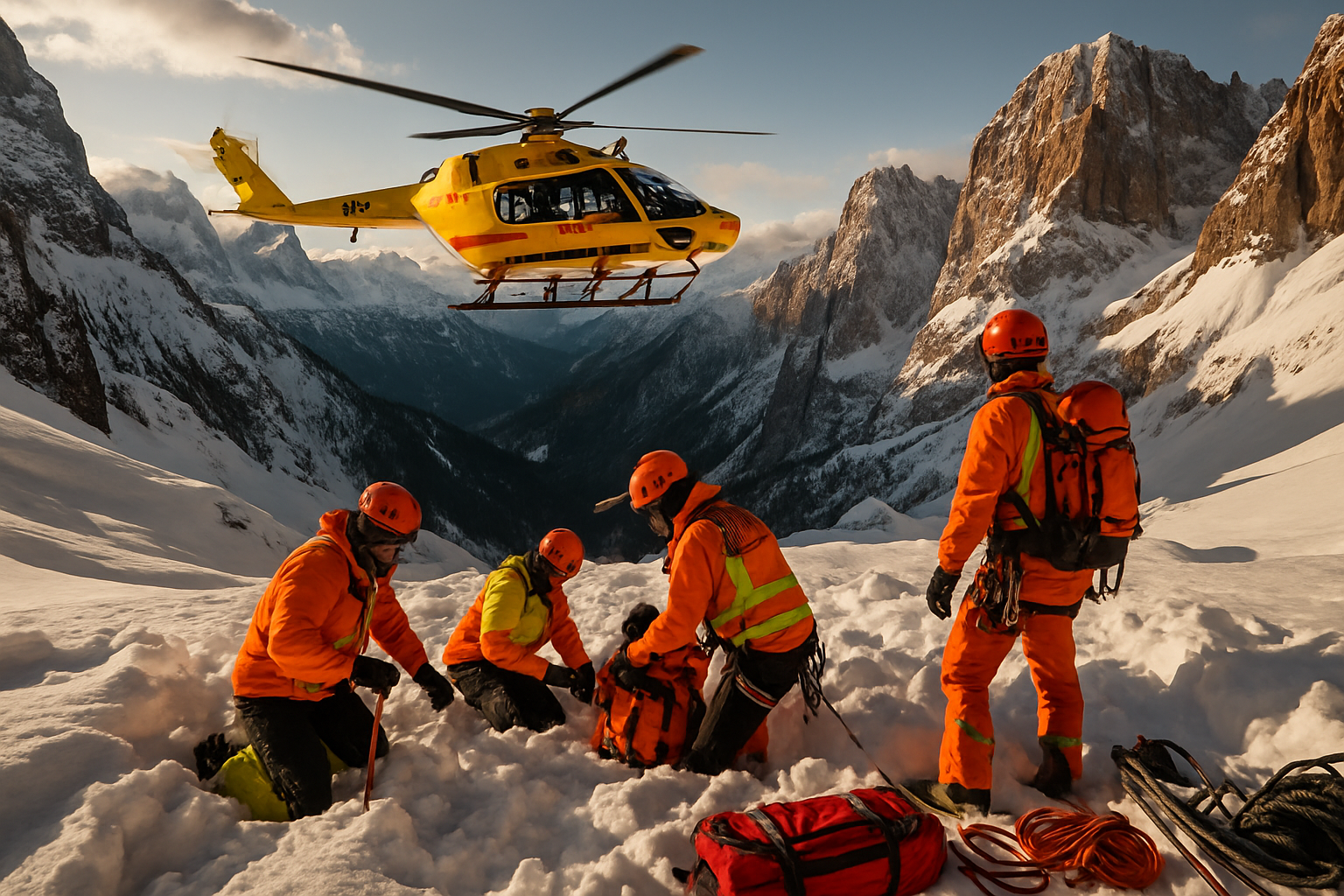
A deadly series of avalanches struck ski areas across the European Alps this weekend, killing at least three people and leaving several others critically injured as dangerous snow conditions continue to plague the region during what experts are calling Europe's harshest winter in decades.
The most serious incident occurred near the prestigious Italian ski resort of Courmayeur in the Aosta Valley, where two off-piste skiers were killed and a third was left in critical condition after being caught in a massive avalanche on Sunday morning. According to multiple sources, the three skiers were attempting to navigate steep, ungroomed terrain when the snow mass broke loose, burying them completely.
Italian Alpine rescue services confirmed that the victims were skiing outside the designated piste areas in a sector known for its challenging slopes and steep drops. The injured survivor was immediately airlifted to a regional hospital where they remain in serious but stable condition.
Austrian Incidents Add to Alpine Tragedy
Meanwhile, in Austria's Tirol region, a ski mountaineer suffered severe injuries after being caught in an avalanche below the Gampberg near St. Anton am Arlberg on Sunday afternoon. The winter sports enthusiast was partially buried by the snow mass and subsequently airlifted by helicopter crew to the Innsbruck clinic, according to a police spokesperson.
The St. Anton am Arlberg incident highlights the continuing dangers faced by backcountry enthusiasts, even in areas frequented by experienced mountaineers. Local authorities are still investigating whether the victim was completely or only partially buried by the avalanche.
Escalating Avalanche Warnings Across Region
The weekend's tragic events unfold against a backdrop of dramatically deteriorating snow conditions across Western Austria. Heavy snowfall over the weekend has led to a significant escalation in avalanche danger, with authorities raising the alert level to four on the five-point avalanche warning scale for parts of Tirol and Vorarlberg above the tree line starting Monday.
The affected regions include the Allgäu Alps, Lechtal Alps, Verwall group, and Silvretta range. Austria's avalanche warning service has issued stern warnings against winter sports activities outside secured piste areas, emphasizing the extreme risks posed by current snow conditions.
"The current avalanche situation requires extreme caution. We strongly advise against any winter sports activities outside the secured and marked pistes."
— Austrian Avalanche Warning Service
Part of Broader European Winter Crisis
This weekend's avalanche fatalities contribute to what has become an unprecedented European winter sports crisis. Historical context from previous incidents this season reveals a disturbing pattern of escalating danger across Alpine regions.
The deaths in Italy and Austria add to an already devastating 2025-2026 winter season that has seen avalanche fatalities reach alarming levels across European mountain regions. Earlier this month, three skiers were killed in an off-piste avalanche at Val d'Isère in the French Alps, including two British nationals and one French citizen, bringing France's seasonal death toll to 25.
The broader European avalanche crisis has now claimed more than 60 lives this winter season alone, making it one of the deadliest on record. These incidents have occurred despite or perhaps because of the extreme winter conditions that have created ideal natural snow conditions while simultaneously creating treacherous backcountry terrain.
Investigation and Emergency Response
Italian authorities have launched a comprehensive investigation into the Courmayeur incident, with the case assigned to the Guardia di Finanza (financial police) in Entrèves. The investigation will examine snow conditions, weather factors, terrain characteristics, and safety procedures at the time of the avalanche.
Emergency response coordination has been exemplary, with Alpine rescue services from both Italy and Austria demonstrating their expertise in challenging mountain conditions. However, the frequency of incidents is placing unprecedented strain on rescue services across the region.
The incidents occur during a period when much of Europe is experiencing what meteorologists describe as the continent's harshest winter in decades, with temperatures dropping to -30°C in some regions. These extreme conditions have created both ideal skiing conditions and extremely dangerous avalanche scenarios.
Olympic Context Adds Urgency
The timing of these tragedies is particularly poignant as they coincide with the Milano-Cortina 2026 Winter Olympics, currently taking place across the same Italian Alpine regions. The contrast between the celebration of winter sports excellence and the ongoing dangers faced by recreational skiers highlights the dual nature of the mountain environment.
During the Olympics, professional safety measures and controlled conditions protect competitors, but the same mountain ranges present life-threatening dangers to backcountry enthusiasts venturing outside designated areas.
Safety Experts Emphasize Prevention
Mountain safety experts continue to emphasize the critical importance of proper avalanche equipment, professional guide services, and careful attention to avalanche bulletins. However, they acknowledge that even with proper precautions, the inherent risks of off-piste skiing cannot be completely eliminated.
The current conditions across the European Alps represent a complex combination of factors: abundant natural snowfall creating excellent skiing conditions, but also unstable snow layers that can produce deadly avalanches with minimal triggering.
Weather Patterns Contributing to Danger
The extreme weather patterns affecting Europe this winter are part of a broader atmospheric disruption that has brought both record cold and dangerous mountain conditions. The succession of Atlantic storms—including Storm Leonardo, Storm Marta, and most recently Storm Nils—has contributed to rapidly changing snow conditions that make avalanche prediction particularly challenging.
Meteorologists note that the rapid alternation between heavy snowfall and temperature variations creates layered snow conditions that are particularly prone to avalanche formation. These conditions are expected to persist through the remainder of the winter season.
Impact on Tourism and Mountain Communities
The series of avalanche incidents is having a significant impact on Alpine tourism, with many resorts implementing additional safety measures and restrictions on off-piste access. The tourism industry, still recovering from previous challenges, must now balance visitor safety with maintaining access to the mountain experiences that draw millions to the Alps each year.
Local mountain communities, many of whom depend on winter sports tourism for their economic survival, are working closely with safety authorities to develop comprehensive risk management strategies that protect visitors while preserving the authentic Alpine experience.
International Cooperation in Mountain Safety
The cross-border nature of Alpine avalanche risks has prompted enhanced cooperation between Italian, Austrian, French, and Swiss safety authorities. Information sharing about snow conditions, weather patterns, and rescue techniques has become increasingly sophisticated, contributing to more effective emergency responses when incidents occur.
This international collaboration has been particularly evident in the context of the Milano-Cortina Olympics, where safety expertise from across the Alpine region has been coordinated to ensure the highest possible safety standards.
Looking Forward
As the winter season continues, avalanche experts emphasize that conditions remain highly dangerous across much of the European Alps. The combination of abundant snowfall, temperature variations, and underlying unstable snow layers creates ongoing risks that require extreme caution from all mountain users.
The tragic events of this weekend serve as a stark reminder that the mountains, while offering unparalleled beauty and recreational opportunities, demand respect and preparation from all who venture into their domain. For the families affected by these losses, the Alpine community continues to provide support during this difficult time.
Authorities across the region continue to monitor conditions closely and adjust safety recommendations based on evolving weather patterns and snow stability assessments. The message remains clear: anyone considering off-piste skiing must be properly equipped, informed about current conditions, and prepared for the serious risks involved.