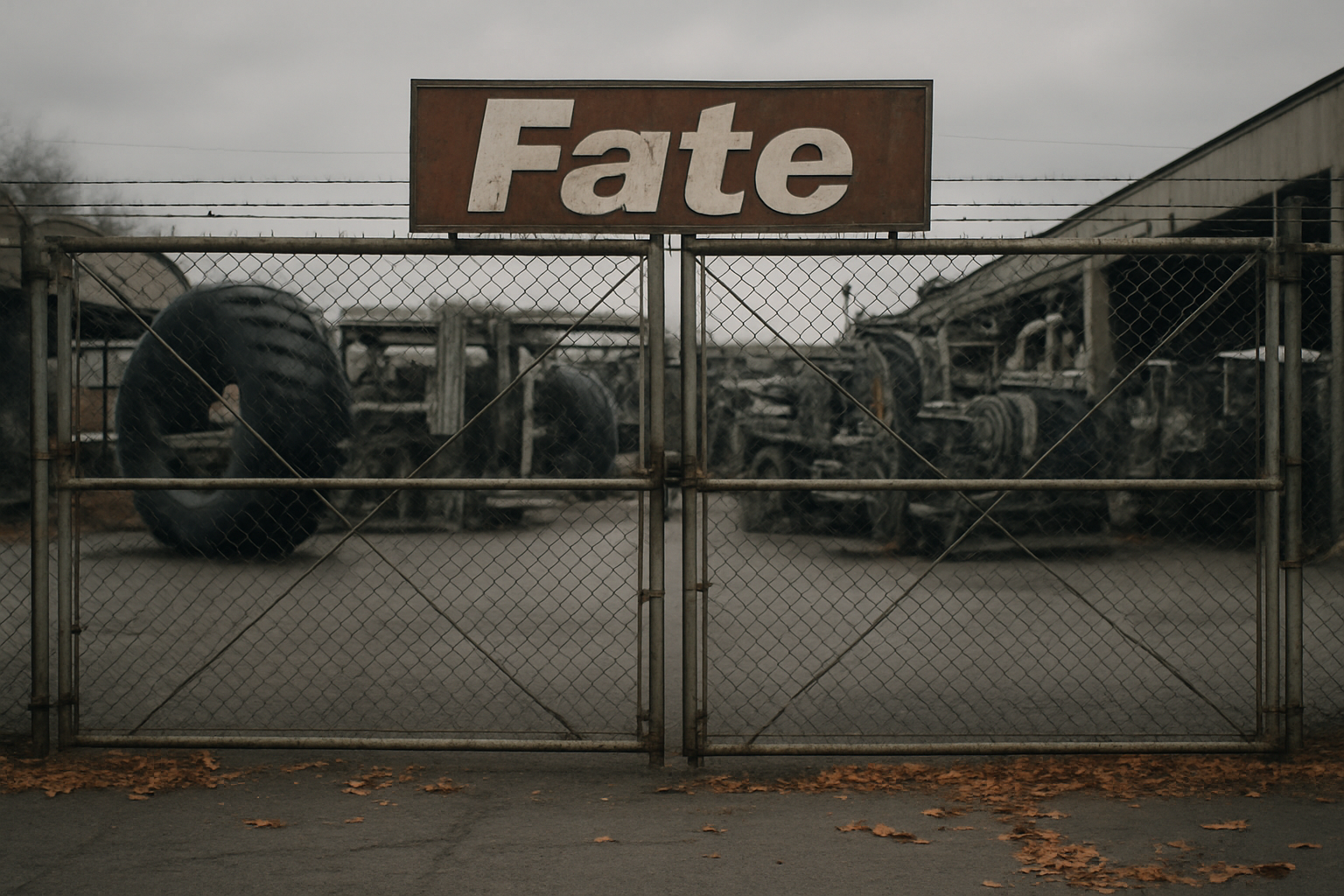
Argentina's historic Fate tire manufacturer has announced its definitive closure after eight decades of operation, leaving 920 workers without employment as the company succumbs to overwhelming competition from Chinese tire imports.
The 80-year-old company, owned by the prominent Madanes Quintanilla family, ceased operations Wednesday at its Virreyes plant in San Fernando, Buenos Aires Province. Workers arriving for their morning shifts discovered the factory gates locked and were informed by company notices that all productive activities had ended permanently.
"Today we found ourselves with the news at 6 AM that the plant was closed and that productive activity ceased at a general level," one affected worker told La Nación. "Both Fate employees and subcontracted workers are left out. They say they will pay us severance compensation in due time and form."
A Legacy of Argentine Manufacturing Excellence
Founded in the 1940s, Fate represented one of Argentina's premier industrial success stories, producing tires for the domestic market and establishing itself as a cornerstone of the country's manufacturing sector. The company's San Fernando facility employed nearly 1,000 workers directly and supported hundreds more through its supplier network.
The closure marks the end of an era for Argentine tire manufacturing and represents a devastating blow to the Madanes Quintanilla family's industrial empire. Company owner Javier Madanes Quintanilla has indicated he will now focus his business efforts on energy sector investments through his Aluar company.
Chinese Import Competition Proves Insurmountable
According to company statements and industry analysis, Fate's closure stems directly from the government's commercial liberalization policies that opened Argentine markets to an influx of Chinese tire imports. The dramatic price differential between domestically produced tires and Chinese imports made it impossible for Fate to remain competitive.
This closure occurs within the broader context of President Javier Milei's economic liberalization agenda, which has eliminated many protective tariffs and trade barriers. While supporters argue these policies will improve long-term competitiveness, critics point to immediate industrial devastation as evidence of the reforms' destructive impact.
The tire industry collapse reflects a larger pattern affecting Argentine manufacturing. According to data from the Superintendencia de Riesgos del Trabajo, 21,938 companies have ceased operations under the Milei administration, affecting 290,602 workers across various industrial sectors.
Workers Face Uncertain Future
The 920 displaced Fate employees join hundreds of thousands of Argentine workers who have lost their jobs during the current economic transformation. Many arrived at the plant Wednesday morning unaware of the closure, discovering locked gates and security personnel preventing entry.
"There are people who have been working here for 20, 30 years," another affected worker explained. "We have families, mortgages, children in school. This doesn't just affect us - it affects the entire community."
The company has promised to pay legally required severance compensation, though workers expressed skepticism about the timeline and adequacy of these payments. Union representatives are reviewing legal options to protect worker interests during the closure process.
Symbol of Broader Industrial Crisis
Fate's closure represents more than an isolated business failure - it symbolizes the broader challenges facing Argentine industry amid rapid economic liberalization. The 40-hectare San Fernando facility, once a symbol of national industrial capacity, now stands empty as a testament to the speed of economic transformation.
Interior Minister Patricia Bullrich recently acknowledged the government's labor reform initiatives face significant political pressure, with Article 44 on medical leave provisions likely to be eliminated due to parliamentary opposition. The Fate closure occurs as the administration pushes controversial reforms designed to increase labor market flexibility.
The timing coincides with other major economic developments, including the US-Argentina trade agreement eliminating over 1,600 American tariffs on Argentine goods. However, these international partnerships appear insufficient to compensate for the immediate industrial disruption caused by unrestrained import competition.
Regional Economic Impact
The closure affects not only direct employees but the entire San Fernando regional economy. Local suppliers, service providers, and retailers dependent on Fate workers' spending will experience cascading economic effects. The multiplier impact could affect thousands of additional jobs in the Buenos Aires metropolitan area.
Economic analysts note that while trade liberalization may eventually attract new investment and create different employment opportunities, the transition period creates severe hardship for affected communities. The speed of change has overwhelmed social safety nets designed for gradual economic adjustment.
Government Response and Policy Implications
The Milei administration maintains that short-term industrial disruption is necessary for long-term economic modernization and competitiveness. Government officials argue that protecting inefficient industries through tariffs and subsidies perpetuates economic stagnation and prevents Argentina from integrating effectively into global markets.
However, the Fate closure intensifies political pressure on the government's reform agenda. Opposition legislators and union leaders cite such closures as evidence that the administration's policies prioritize ideological goals over worker welfare and industrial preservation.
The General Confederation of Workers (CGT) has announced mobilization plans if labor reform legislation proceeds to the Chamber of Deputies, viewing industrial closures like Fate as validation of their concerns about the reform agenda's impact on employment security.
International Trade Context
Fate's demise occurs as China continues expanding its global industrial dominance, particularly in manufacturing sectors where Argentine companies previously maintained competitive advantages. Chinese tire manufacturers benefit from economies of scale, government subsidies, and lower production costs that make competition extremely difficult for smaller national producers.
The closure highlights the challenges facing developing countries attempting to maintain industrial diversity amid globalization pressures. While consumer prices may decrease through imports, the loss of domestic productive capacity creates economic vulnerabilities and employment disruption.
Argentina's recent trade agreements with the United States focus primarily on agricultural exports and critical minerals, offering limited compensation for manufacturing job losses. The country faces the challenge of redefining its economic identity as traditional industries struggle against international competition.
Looking Forward
The fate of the 40-hectare San Fernando facility remains uncertain. Real estate analysts suggest the industrial property could be repurposed for logistics, residential development, or alternative manufacturing uses. However, the transition timeline and impact on the surrounding community remain unclear.
For the 920 displaced workers and their families, the immediate priority involves securing alternative employment in an economy experiencing significant sectoral transitions. Government retraining programs and unemployment benefits provide limited support during what may be an extended adjustment period.
The Fate closure serves as a sobering reminder that economic transformation, however necessary, carries substantial human costs. As Argentina continues its liberalization experiment, the success of these policies will ultimately be measured not only by macroeconomic indicators but by their impact on working families and industrial communities like those devastated by this historic closure.