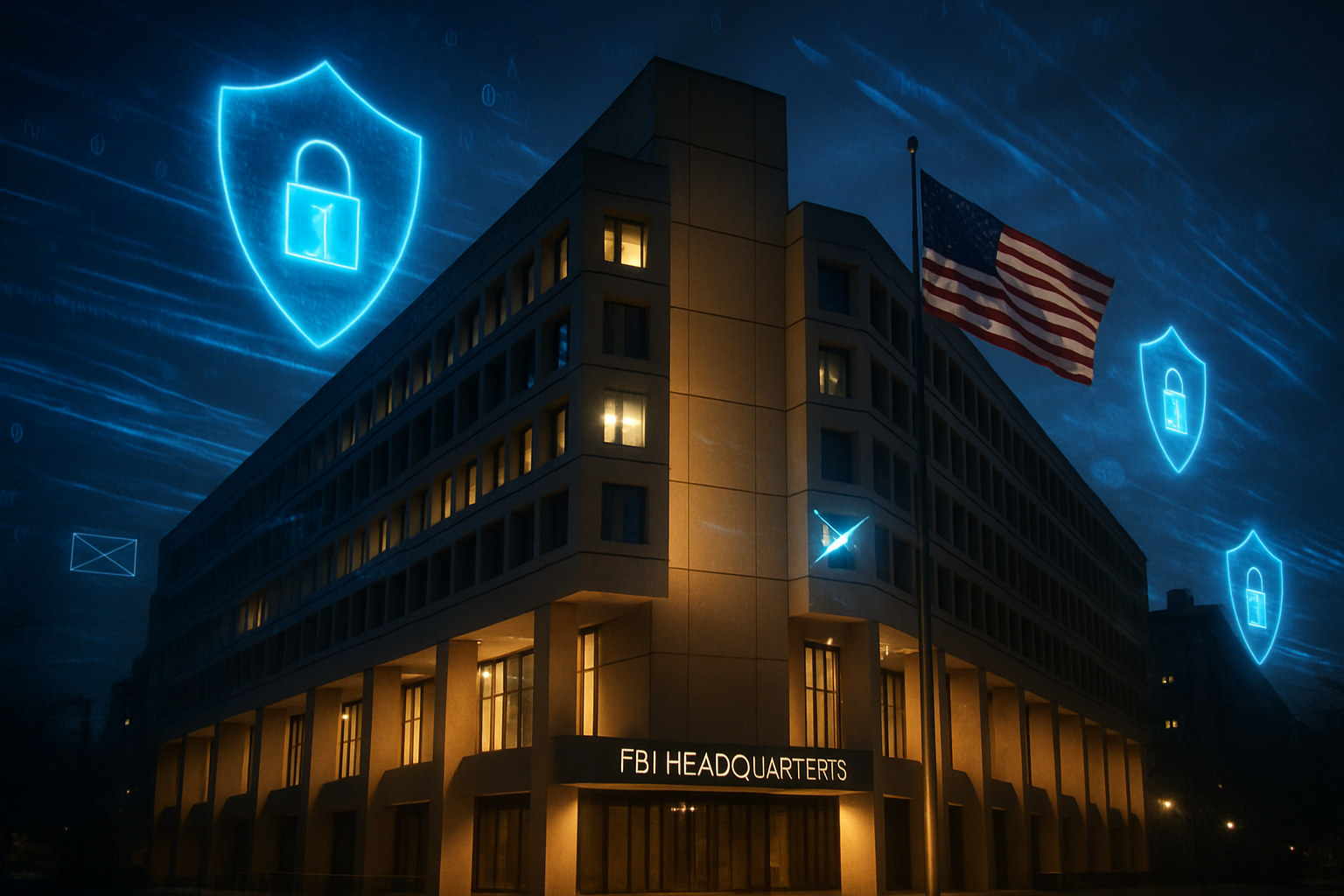
Iran-linked hackers have successfully breached FBI Director Kash Patel's personal email account and published sensitive photographs and documents online, marking one of the most significant cybersecurity incidents to target America's top law enforcement official.
The Handala Hack Team, a pro-Iranian hacking group, claimed responsibility for the breach on Friday, March 27, 2026, publishing a collection of personal photographs, curriculum vitae, and emails spanning from 2010-2019. The hackers taunted Patel in their announcement, stating he "will now find his name among the list of successfully hacked victims."
FBI Confirms Security Breach
The FBI confirmed the authenticity of the breach within hours of the hackers' announcement. Bureau spokesman Ben Williamson stated that "we have taken all necessary steps to mitigate potential risks associated with this activity" and emphasized that the compromised data was "historical in nature and involves no government information."
Justice Department officials verified that the material published online appeared authentic, though they declined to provide additional details about the scope of the breach or ongoing security measures.
Embarrassing Personal Content Exposed
Among the released materials were highly personal photographs showing Patel in compromising situations, including images of him smoking cigars, riding in an antique convertible, and posing with a large bottle of rum while making faces in a mirror. The hackers appeared to deliberately select the most embarrassing content to maximize humiliation.
Additional leaked documents included travel itineraries dating to 2012, with one revealing a trip to the Karibe Hotel in Port-au-Prince, Haiti, complete with hotel reservation numbers and confirmation details. The breach also exposed decade-old resume materials and personal correspondence that predated Patel's current role as FBI Director.
"Kash Patel, the current head of the FBI, who once saw his name displayed with pride on the agency's headquarters, will now find his name among the list of successfully hacked victims."
— Handala Hack Team Statement
Iran-Linked Criminal Network
The Handala Hack Team presents itself as a group of pro-Palestinian vigilante hackers but is considered by Western intelligence researchers to be one of several personas used by Iranian government-sponsored cyber operations. The group has been linked to previous attacks on Israeli infrastructure and allied nations' systems.
This breach represents a significant escalation in Iranian cyber operations targeting high-level U.S. officials. The timing coincides with ongoing tensions in the Middle East and demonstrates the increasing sophistication of state-sponsored hacking groups in penetrating personal communications of senior government figures.
Part of Broader Cybersecurity Crisis
The Patel hack occurs during an unprecedented global cybersecurity crisis that has seen a 20.6% surge in cyber incidents during Q4 2025. Criminal networks are increasingly using artificial intelligence-enhanced capabilities, with security experts documenting criminals instructing AI chatbots to act as "elite hackers" for automated vulnerability detection and sophisticated attack planning.
Recent major breaches include the Netherlands' Odido telecommunications company affecting 6.2 million customers (one-third of the country's population), and sustained attacks on critical infrastructure across Europe and North America. A global semiconductor shortage has created what experts call a "critical vulnerability window" until 2027, constraining the deployment of advanced security systems while criminal capabilities continue to advance.
International Cooperation Challenges
While law enforcement agencies have achieved some notable successes—including the recent takedown of the LeakBase stolen data trading platform through cooperation between Dutch police, Europol, the FBI, and 13 countries—traditional enforcement mechanisms remain inadequate against digitally native criminal organizations that can instantly relocate operations across international borders.
Security Implications for Federal Officials
The breach raises serious questions about the cybersecurity practices of high-ranking federal officials and their vulnerability to foreign intelligence operations. Cybersecurity experts note that personal email accounts often contain information that can be exploited for intelligence gathering, blackmail, or operational planning by hostile nations.
The FBI's acknowledgment that the breached account contained "historical" data suggests the hackers may have accessed years of personal communications, travel records, and private correspondence that could provide valuable intelligence about Patel's activities, associations, and potential vulnerabilities.
Democratic Governance Under Digital Assault
This incident represents part of a broader challenge facing democratic institutions in an increasingly connected but threatened digital environment. As Cyprus Data Protection Commissioner Maria Christofidou recently observed, "Personal data has become the currency of the digital age," making high-profile officials particularly attractive targets for sophisticated cyber operations.
The breach comes as European nations are implementing unprecedented regulatory coordination to address cybersecurity threats, with Spain leading efforts to establish criminal executive liability frameworks that hold technology company leaders personally accountable for security failures.
Ongoing Investigation and Response
The FBI has not disclosed specific details about its investigation into the breach or what additional security measures have been implemented to prevent similar incidents. The bureau's response follows established protocols for handling cybersecurity incidents involving senior officials, though the public nature of this breach creates additional challenges for damage assessment and mitigation.
Intelligence experts suggest that the full scope of the breach may not be immediately apparent, as sophisticated attackers often maintain access to compromised systems for extended periods while gathering intelligence before revealing their presence.
Broader Implications for National Security
The successful targeting of the FBI Director's personal communications demonstrates the evolving threat landscape facing U.S. officials and the increasing boldness of Iranian cyber operations. The incident underscores the vulnerability of even the most senior law enforcement officials to foreign intelligence gathering operations.
As artificial intelligence continues to enhance criminal capabilities and global cybersecurity threats escalate, the window for effective coordinated action is narrowing. The stakes extend beyond individual privacy to the preservation of democratic society amid systematic digital infrastructure threats that require unprecedented international cooperation while balancing security with fundamental democratic values.
The Patel email breach serves as a stark reminder that in the digital age, no official—regardless of their position or security clearance—is immune to the sophisticated cyber capabilities of determined state-sponsored actors.