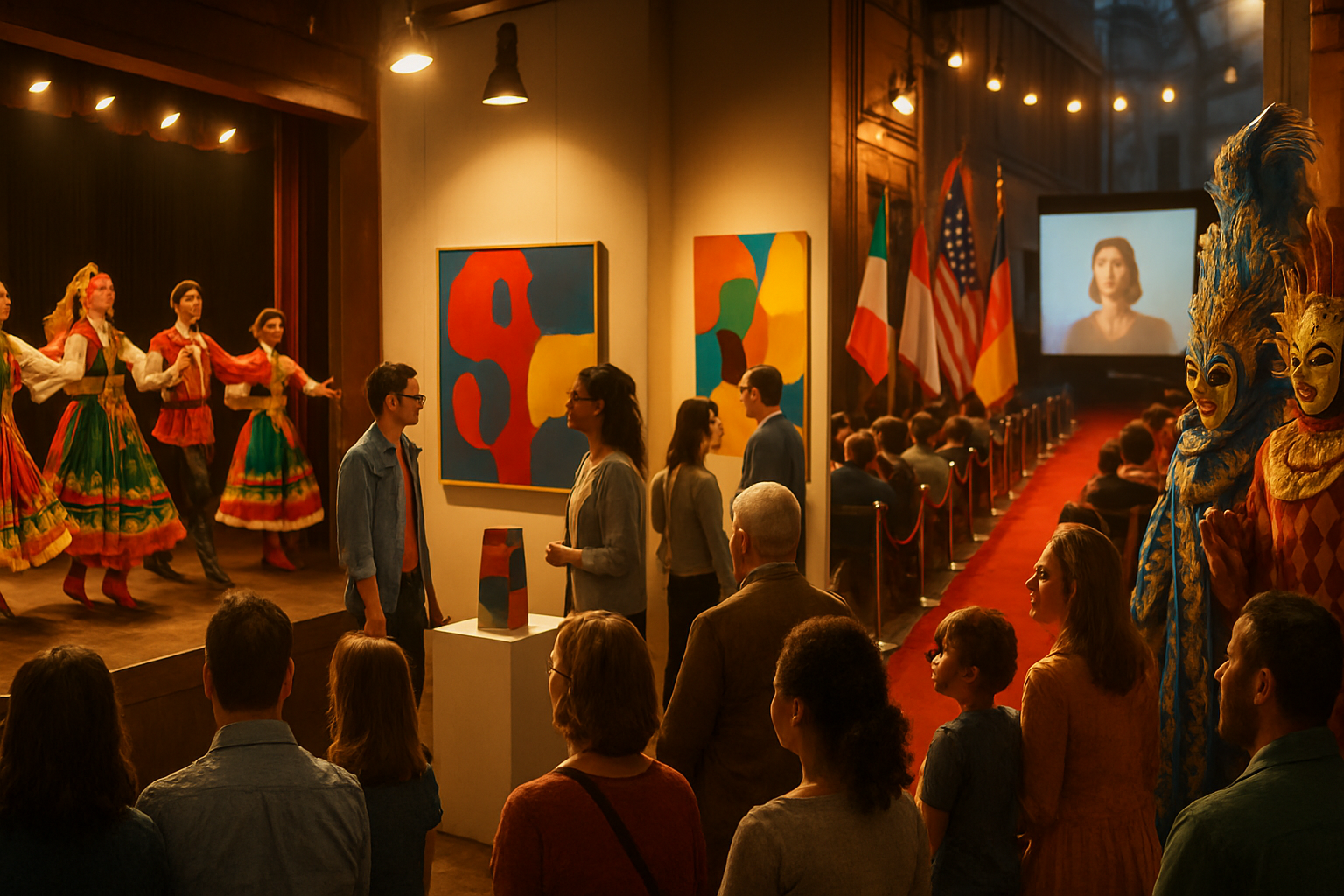
A remarkable cultural renaissance is unfolding across multiple nations this February, with artistic celebrations from intimate baroque concerts to groundbreaking musical theatre productions demonstrating an unprecedented global commitment to creative expression and cultural preservation.
The diverse range of events, spanning from Cyprus to Slovakia, reflects a sophisticated evolution in how communities approach cultural programming - balancing traditional authenticity with contemporary innovation while fostering international artistic collaboration.
Cyprus Embraces Baroque Elegance
The Mediterranean island of Cyprus is hosting an exquisite celebration of classical music heritage this Friday as the Cyprus Baroque Trio presents "The Joy of Baroque" at the Cyprus Wine Museum in Erimi village. The intimate chamber concert features Birgitta Birchall on harpsichord, Florian Rabe on flute, and Klaus Storm on oboe, offering audiences an immersive experience in the atmospheric setting of the historic wine museum.
The carefully curated program highlights the sophisticated musical dialogue characteristic of the baroque era, with works by Johann Christian Bach and Georg Philipp Telemann providing energy and brilliance, while compositions by J.S. Bach and Arcangelo Corelli reveal the profound emotional depth of the period. A special highlight includes Benjamin Britten's "Pan" from "Six Metamorphoses after Ovid," performed as a solo oboe work, demonstrating how contemporary programming can honor historical traditions while embracing artistic evolution.
Malta Achieves Historic Theatrical Milestone
Malta is experiencing a watershed moment in its cultural development as Maltese composers Kris Spiteri and Boris Čezek make history with their original musical "The Monster Bride." The production marks the first time a musical composed by Maltese artists has been included in a UK postgraduate conservatoire programme at the prestigious Guildford School of Acting.
"This is a milestone for Malta's musical theatre scene, representing years of dedication to creating authentic artistic content that resonates on international stages."
— Cultural Development Analysis
Co-written with playwright Brendan Cull and based on Paul Magrs' novel "Never the Bride," the musical runs from February 19-22, demonstrating how local artistic talent can achieve global recognition while maintaining distinctive cultural identity. This achievement positions Malta as an emerging force in international musical theatre, creating pathways for future collaborations between Mediterranean artists and established European cultural institutions.
Monaco Pioneers Electronic Music Innovation
The Principality of Monaco is launching into contemporary cultural programming with the inaugural "Mona in Wonderland" electronic music festival, scheduled for Saturday, May 30th at the iconic Chapiteau de l'Espace Fontvieille. Organized by AEG Presents France, the event represents a strategic shift toward diversifying Monaco's cultural offerings beyond traditional classical and operatic programming.
The festival features confirmed performances by Miss Monique and Worakls, with additional artists to be announced. Running from 6 PM to midnight, the event promises an immersive production experience within Fontvieille's distinctive big top venue. Tickets range from €45.50 for standard entry to €111.50 for VIP packages, reflecting the premium positioning of Monaco's entertainment market while maintaining accessibility for diverse audiences.
International Sports and Cultural Convergence
Monaco is also demonstrating cultural diversity through sporting events that carry deep cultural significance. The 14th edition of the Saint Dévote Tournament, one of the world's largest under-12 international rugby competitions, will transform the Stade Louis II on March 20-21. With official backing from World Rugby and Rugby Europe, the tournament welcomes 24 teams representing 23 nations, creating the most international edition in the event's history.
Teams traveling from South Africa, Argentina, England, Scotland, Wales, France, Italy, Spain, Georgia, Greece, Japan, India, Singapore, Zimbabwe, Mauritius, Ecuador, the United States, Belgium, Luxembourg, Switzerland, Andorra, UAE, and Monaco itself demonstrate how sporting events can serve as powerful platforms for cultural exchange and international friendship building.
Caribbean Cultural Expression Gains Global Recognition
The Caribbean region is experiencing significant cultural recognition as KestheBand takes Soca music to new international heights through a featured interview on ABC News Live, filmed at Jazz at Lincoln Center in New York City. The Black History Month segment, released during Trinidad Carnival celebrations, places Soca at the center of broader cultural conversations about Caribbean artistic contributions to global music.
This exposure represents a crucial moment for Caribbean cultural diplomacy, as traditional musical forms gain mainstream recognition on major American media platforms. The timing during Trinidad Carnival 2026 celebrations amplifies the cultural significance, demonstrating how regional artistic traditions can achieve international visibility while maintaining authentic cultural roots.
Slovakia Honors Musical Legacy Through Tribute
Slovakia continues the global cultural momentum with the return of "ICONIC MJ – Michael Jackson Tribute" show, capitalizing on renewed international interest in the King of Pop coinciding with the April 2026 release of a new global film about Michael Jackson's life. The tribute performance represents the intersection of nostalgia-driven entertainment and contemporary cultural programming, appealing to multigenerational audiences seeking shared musical experiences.
The show's return to Slovakia "in grand style" after previous sold-out performances demonstrates how tribute productions can serve as cultural bridges, connecting international artistic legacies with local audience engagement while supporting domestic entertainment infrastructure.
Technology and Tradition in Cultural Programming
Across all these cultural developments, a sophisticated pattern emerges regarding the integration of technology with traditional artistic expressions. From the Cyprus Wine Museum's atmospheric setting enhancing baroque intimacy to Monaco's cutting-edge electronic music production capabilities, cultural institutions are discovering how technological innovation can amplify rather than replace authentic artistic experiences.
The success of Malta's musical theatre achievement demonstrates how digital platforms and international communication networks enable small nations to participate in global cultural conversations while maintaining distinctive artistic identities. Similarly, the Caribbean's media presence on major American platforms shows how traditional musical forms can leverage contemporary distribution methods to reach new audiences without compromising cultural authenticity.
Economic Impact of Cultural Renaissance
The economic implications of this cultural renaissance extend far beyond ticket sales and immediate tourism revenue. Cyprus's baroque concert series, Malta's theatrical breakthrough, and Monaco's festival innovations create lasting cultural infrastructure that attracts ongoing international attention, educational partnerships, and creative industry development.
These events generate employment across multiple sectors including performance, production, hospitality, marketing, and cultural tourism. They also establish reputation advantages for participating nations, positioning them as culturally sophisticated destinations for both leisure and business travel while creating opportunities for future artistic collaborations and cultural exchange programs.
Global Context of Cultural Collaboration
These developments occur within the broader context of what cultural analysts are identifying as the "February 2026 Cultural Renaissance" – an unprecedented period of coordinated international cultural activity. Previous months have witnessed similar cultural initiatives across Europe, Asia, Africa, and the Americas, suggesting a global recognition of culture as essential infrastructure for community development and international cooperation.
The success factors evident across all these events include community engagement with authentic cultural expression, strategic use of technology to enhance rather than replace traditional elements, economic viability through cultural tourism, and institutional support for sustainable cultural development. These principles are creating templates that other communities and nations can adapt to their specific cultural contexts and resources.
Future Implications for Cultural Development
The diverse range of cultural initiatives documented across Cyprus, Malta, Monaco, Saint Vincent and the Grenadines, and Slovakia provides compelling evidence for culture's role as a catalyst for international cooperation, economic development, and community building. These events demonstrate that successful 21st-century cultural programming requires balancing tradition with innovation, local authenticity with global appeal, and artistic excellence with community accessibility.
The international recognition achieved by Malta's musical theatre production, the sophisticated programming evident in Cyprus's baroque concert, and the strategic cultural diversification represented by Monaco's electronic music festival suggest that smaller nations and communities can compete effectively in global cultural markets through creative programming, authentic artistic expression, and strategic international partnerships.
As these cultural initiatives continue to develop throughout 2026, they are establishing precedents for sustainable cultural development that honors historical traditions while embracing contemporary possibilities. The success of these diverse artistic celebrations provides practical models for communities worldwide seeking to strengthen cultural identity, attract international recognition, and create meaningful opportunities for creative expression and cultural exchange.