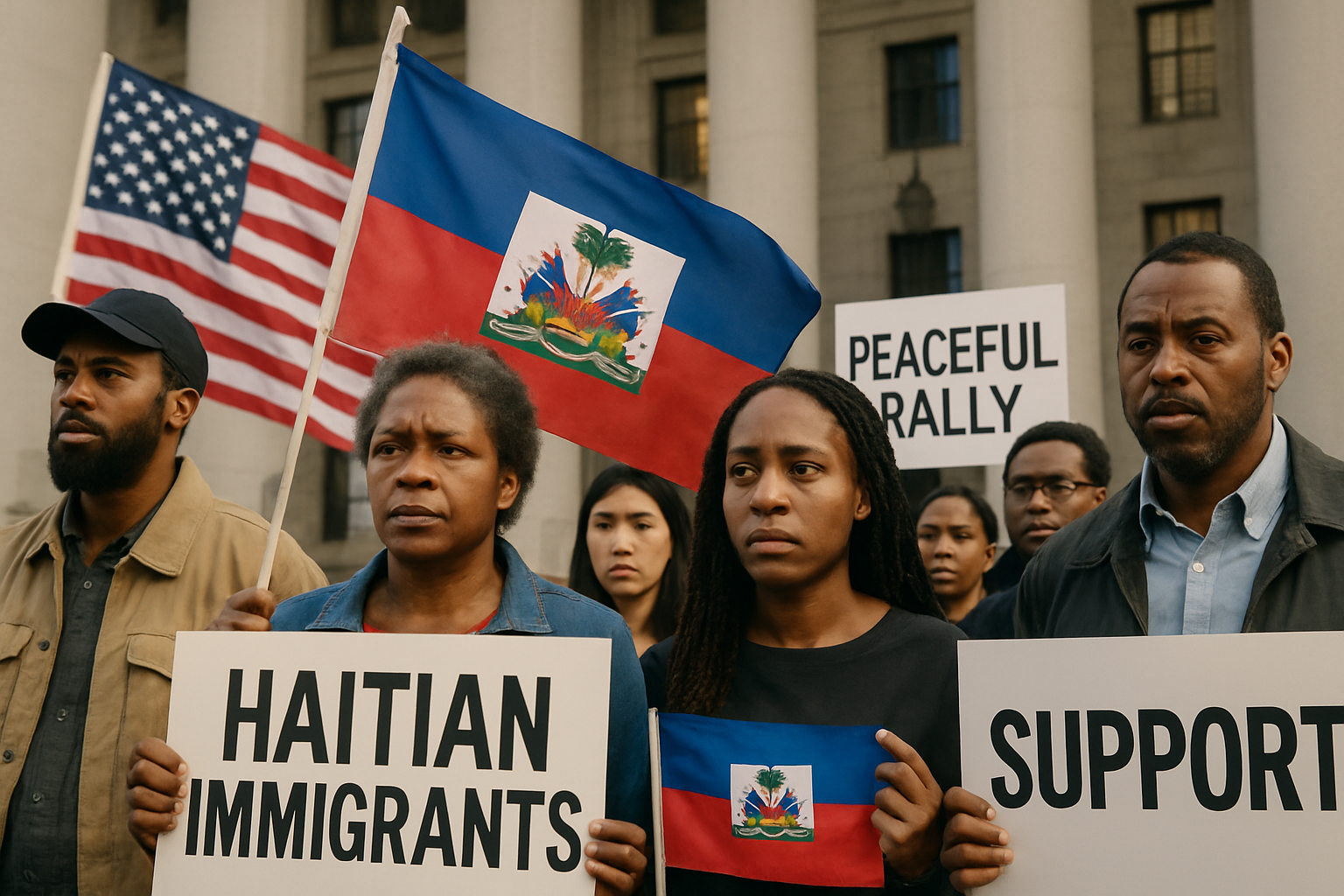
Federal Judge Ana Reyes has temporarily blocked the Trump administration from revoking Temporary Protected Status (TPS) for approximately 350,000 Haitians living in the United States, dealing a significant legal setback to the administration's immigration enforcement agenda just one day before the protections were set to expire.
The ruling, issued on February 2, 2026, came as TPS designations for Haiti were scheduled to end on February 3, 2026. Judge Reyes determined that the administration's attempt to terminate the program was motivated by discriminatory considerations, specifically citing derogatory statements made by President Trump regarding Haitians during his campaign and early presidency.
Legal Basis for the Injunction
In her ruling, Judge Reyes found that the Trump administration's decision to terminate TPS for Haitians was influenced by discriminatory animus rather than legitimate policy considerations. The judge referenced a pattern of disparaging remarks made by Trump about Haitian immigrants, including statements during the 2024 campaign that characterized Haitian communities in derogatory terms.
The legal challenge was brought by immigrant rights organizations and U.S. citizens whose family members hold TPS status. The plaintiffs argued that ending the protections would cause irreparable harm to families and communities across the United States, particularly in Florida, New York, and Massachusetts, where large Haitian immigrant populations reside.
"This decision recognizes that immigration policy cannot be driven by prejudice and discrimination," said Maria Gonzalez, attorney for the plaintiffs. "The judge correctly identified that the administration's actions were motivated by bias rather than legitimate national security or foreign policy concerns."
Context of Haiti's Humanitarian Crisis
Haiti has faced unprecedented challenges in recent years that originally justified TPS designation. The Caribbean nation continues to grapple with political instability, economic collapse, and widespread gang violence that has displaced hundreds of thousands of people internally. The security situation has deteriorated significantly since the 2021 assassination of President Jovenel Moïse, with armed groups now controlling an estimated 60% of the capital, Port-au-Prince.
Temporary Protected Status was designed to provide humanitarian relief to foreign nationals whose home countries face ongoing armed conflict, environmental disasters, or extraordinary circumstances that prevent safe return. Haiti's TPS designation has been renewed multiple times by both Democratic and Republican administrations due to the country's continued instability.
Administration's Response and Appeal Plans
The Department of Homeland Security has indicated it will appeal Judge Reyes' decision, maintaining that the TPS program has been misused and should be terminated. Administration officials argue that conditions in Haiti have sufficiently improved to allow for the safe return of Haitian nationals, despite evidence to the contrary from international humanitarian organizations.
"We believe the judge's ruling is legally flawed and fails to recognize the president's broad authority over immigration matters. We will vigorously appeal this decision."
— DHS Spokesperson, Statement to Reuters
The appeal is expected to work its way through the federal court system, potentially reaching the Supreme Court. Legal experts note that immigration law provides significant deference to executive branch decisions, but courts have consistently ruled that such decisions cannot be motivated by discriminatory intent.
Impact on Haitian Communities
The temporary reprieve provides crucial relief to hundreds of thousands of Haitian immigrants who have built lives in the United States over the past decade. Many TPS recipients have U.S. citizen children, own businesses, and have become integral parts of their communities.
In South Florida, home to the largest Haitian immigrant population in the United States, community leaders expressed cautious optimism while preparing for continued legal battles. Marleine Bastien, executive director of Haitian Women of Miami, emphasized that the fight is far from over.
"While we celebrate this temporary victory, we know the administration will continue its attacks on our community," Bastien said during a press conference in Little Haiti. "We must remain vigilant and organized to protect our families and neighbors."
Broader Immigration Enforcement Context
The TPS ruling comes amid the Trump administration's broader immigration enforcement push, which has included increased ICE raids, expanded detention facilities, and attempts to end multiple humanitarian protection programs. The administration has faced legal challenges to many of these initiatives, with federal courts serving as a critical check on executive power.
Recent events have heightened tensions around immigration enforcement, including the January 20, 2026 detention of five-year-old Liam Conejo Ramos and his father in Minneapolis, which sparked nationwide protests and a federal judge's scathing rebuke of the administration's tactics.
The current case also occurs against the backdrop of a partial government shutdown that began over Democratic opposition to immigration enforcement methods, specifically following the killing of two protesters in Minneapolis by federal agents.
Economic and Social Implications
Economic analyses suggest that ending TPS for Haitians would have significant negative impacts on the U.S. economy. The Center for Migration Studies estimates that Haitian TPS recipients contribute approximately $4.8 billion annually to the U.S. economy through taxes, spending, and entrepreneurship.
Many TPS recipients work in essential industries, including healthcare, construction, and food service. Their removal would create labor shortages in already stressed sectors, particularly in Florida, New York, and New Jersey.
Educational institutions would also be significantly affected, as many TPS recipients have children enrolled in U.S. schools. The American Federation of Teachers estimates that ending TPS could disrupt the education of over 200,000 U.S. citizen children whose parents hold the protected status.
International Diplomatic Considerations
The Trump administration's approach to Haitian TPS occurs amid broader diplomatic tensions in the Caribbean region. The administration has taken a hardline stance toward several Caribbean nations, including recent threats against Cuba and ongoing disputes over migration from the region.
International human rights organizations, including the United Nations High Commissioner for Refugees, have urged the United States to maintain protections for Haitians given the ongoing humanitarian crisis in their homeland. UN officials note that forced returns to Haiti could violate international principles of non-refoulement, which prohibit returning people to countries where they face persecution or serious harm.
Legal Precedent and Future Implications
Judge Reyes' ruling adds to a growing body of case law that limits the executive branch's ability to make immigration decisions based on discriminatory motives. Previous federal court decisions have struck down travel bans, asylum restrictions, and other immigration policies where evidence suggested discriminatory intent.
Legal scholars note that the ruling could have implications beyond the Haitian TPS case, potentially affecting other immigration programs targeted by the Trump administration. The precedent establishes that courts will scrutinize immigration policies for evidence of bias, even when the executive branch claims legitimate policy justifications.
Community Mobilization and Advocacy
Haitian immigrant communities across the United States have mobilized extensively in response to threats to their TPS status. Advocacy organizations have organized rallies, letter-writing campaigns, and legal challenges while building coalitions with other immigrant communities facing similar threats.
The Florida Immigrant Coalition has coordinated much of the advocacy effort, working with churches, labor unions, and community organizations to raise awareness about the humanitarian implications of ending TPS. Similar efforts have emerged in other states with significant Haitian populations.
Religious leaders from multiple faiths have also spoken out against ending TPS, citing moral obligations to protect vulnerable populations. The U.S. Conference of Catholic Bishops issued a statement calling the administration's policy "contrary to our values as a nation built by immigrants."
Looking Ahead
While the temporary injunction provides immediate relief, the long-term status of Haitian TPS recipients remains uncertain. The case will likely take months or years to resolve through the appeals process, leaving hundreds of thousands of people in legal limbo.
Immigration attorneys are advising TPS recipients to renew their documentation while the injunction remains in effect and to explore other potential avenues for permanent legal status. However, options are limited for most recipients, highlighting the need for comprehensive immigration reform.
The Biden administration had previously extended TPS for Haiti through 2026, but the Trump administration moved quickly after taking office to begin termination proceedings. The legal battle over Haitian TPS is expected to become a defining case for the broader conflict between humanitarian concerns and immigration enforcement priorities.
As the case proceeds through the courts, advocacy groups are preparing for continued legal challenges while working to build public support for permanent solutions that would provide stability for long-term TPS recipients who have made the United States their home.