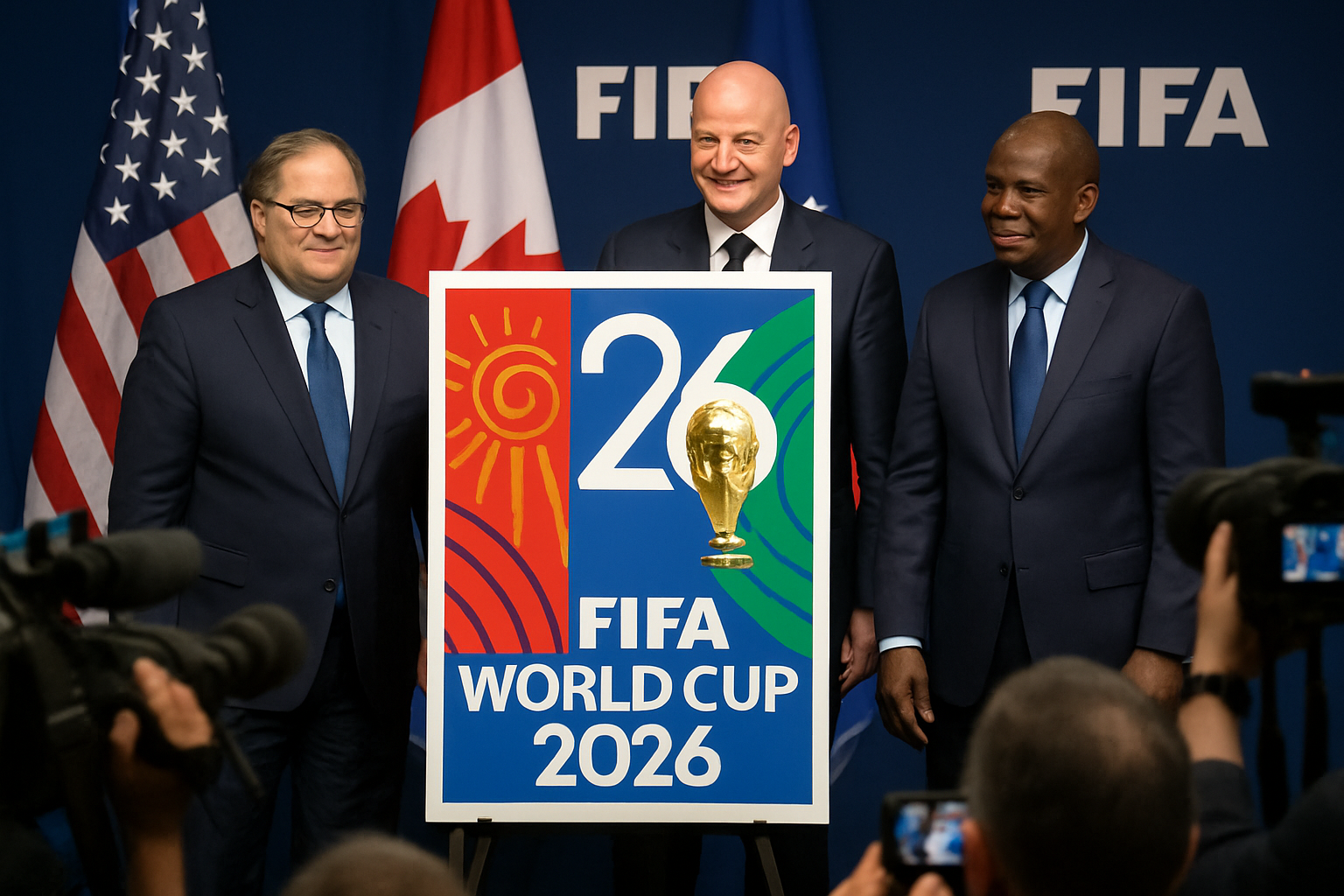
FIFA has unveiled the official poster for the 2026 World Cup as the tournament enters its final 100-day countdown, marking a historic milestone for the largest World Cup in history that will be jointly hosted across the United States, Canada, and Mexico.
The International Football Federation's press office released the poster as Mexico City marked the 100-day countdown with spectacular light projections on the Torre Latinoamericana and celebratory events in the capital. The tournament is set to begin on June 11, 2026, at Mexico City's iconic Estadio Azteca and conclude on July 19 at the New York New Jersey Stadium.
Unprecedented Tournament Scale
The 2026 World Cup represents the most ambitious football tournament ever attempted, expanding from the traditional 32-team format to 48 teams competing across 104 matches. This tri-national hosting model requires unprecedented coordination across borders for logistics, security, and visa processing, as the tournament spans over 400 kilometers across seven venues in three countries.
The expanded format has already generated significant commercial success, with FIFA confirming nearly 2 million tickets sold in the first two phases of sales. The tournament's economic impact is expected to be unprecedented across North America, with Mexico particularly counting on the event for post-pandemic tourism recovery.
Security Challenges in Host Cities
While the poster unveiling celebrates the approaching tournament, preparations have faced significant challenges, particularly in Mexico. Guadalajara, one of three Mexican host cities, experienced security concerns following violent incidents in February 2026 that prompted enhanced safety protocols.
FIFA President Gianni Infantino has maintained "complete confidence" in Mexico's hosting capabilities despite requesting detailed security reports from all three host nations. The organization has worked closely with Mexican authorities to ensure the safety of the millions of international visitors expected for the tournament.
"Everything's good. It's going to be spectacular"
— Gianni Infantino, FIFA President
Ongoing Diplomatic Complications
The tournament faces additional challenges beyond security concerns. Iranian Football Federation President Mehdi Tadj has confirmed "no clarity" on Iran's participation due to ongoing US-Iran geopolitical tensions, potentially marking the first exclusion of a qualified nation due to political conflict in World Cup history.
Iran is drawn in Group G with Belgium, New Zealand, and Egypt, with matches scheduled in Inglewood, California, and Seattle. This unprecedented situation has created a diplomatic challenge for FIFA as they maintain political neutrality while managing security concerns.
Infrastructure and Logistical Preparations
Despite challenges, infrastructure preparations continue across all three host nations. The tri-national format requires sophisticated coordination for transportation systems, security protocols, and visitor services. Major cities are completing final venue preparations and transportation upgrades to accommodate the expected influx of international visitors.
The tournament's legacy plans include permanent infrastructure improvements, youth development programs, and football academies that will benefit North American soccer development for decades to come. These investments represent the long-term vision beyond the six-week competition period.
Economic and Cultural Impact
The economic significance of the 2026 World Cup extends far beyond the tournament itself. Strong ticket sales and international interest demonstrate the global appeal of the expanded format and North American hosting. The event is positioned to generate unprecedented revenue while showcasing the cultural diversity and unity of the three host nations.
Mexico's celebrations at the Torre Latinoamericana exemplify the cultural significance of the tournament for the host countries. The 100-day countdown represents not just a sporting milestone but a moment of national pride and international cooperation.
Technology and Innovation
The 2026 World Cup is pioneering new approaches to tournament organization, utilizing advanced technology for visa processing, security coordination, and fan services across multiple countries. These innovations could establish templates for future international sporting events requiring cross-border cooperation.
The tournament's scale and complexity make it a testing ground for modern sports event management, with lessons that will influence how major competitions are organized in an increasingly connected world.
Path to June 11
With 100 days remaining until kickoff at the Estadio Azteca, the focus now turns to finalizing preparations and resolving outstanding challenges. The success of the 2026 World Cup will depend on effective coordination between the three host nations and their ability to deliver a safe, memorable tournament for players and fans alike.
As the official poster serves as a visual symbol of this historic tournament, it represents not just a football competition but a celebration of international cooperation and the unifying power of sport. The next 100 days will determine whether this ambitious vision becomes reality when the world's most popular sporting event begins in Mexico City on June 11, 2026.