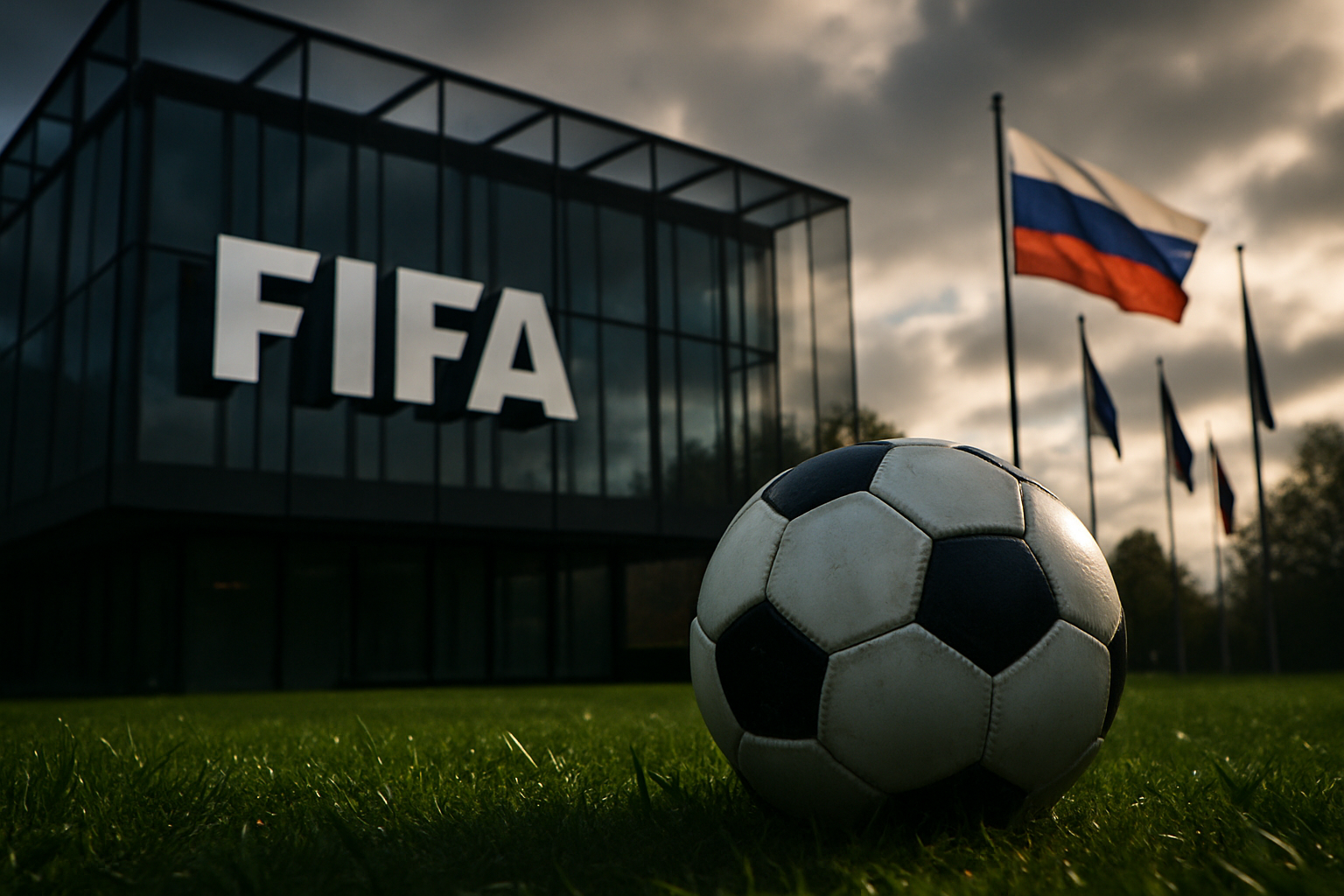
FIFA President Gianni Infantino has controversially called for Russia's return to international football competitions, arguing that the four-year ban imposed following the country's invasion of Ukraine has failed to achieve its intended goals and has instead "created more frustration and hatred."
In interviews with multiple European media outlets on February 2, 2026, Infantino suggested that FIFA should lift the prohibition that has kept Russian national teams and clubs out of international competitions since February 2022. The FIFA chief's comments come at a particularly sensitive time, as Ukraine-Russia-US trilateral peace talks are scheduled for February 4-5, 2026, in Abu Dhabi.
Infantino's Controversial Position
Speaking to Sky Sports and other media, Infantino questioned the effectiveness of sports sanctions, stating that the ban "has not achieved anything, it has just created more frustration and hatred." The Swiss-Italian administrator argued that football should not be used as a tool for political punishment, despite the ongoing military conflict.
"We have to do it," Infantino said, referring to Russia's potential readmission to international football.
— Gianni Infantino, FIFA President
The FIFA president's stance extends beyond Russia, as he also expressed opposition to excluding Israel from international competitions despite ongoing conflicts in Gaza. This position aligns with FIFA's traditional claim of political neutrality in sports, though critics argue this neutrality becomes meaningless when applied to situations involving active warfare and civilian casualties.
International Reactions and Opposition
The timing of Infantino's comments has drawn sharp criticism from Ukrainian sources and several European nations. Ukraine's Kyiv Post highlighted the statement as particularly tone-deaf, given that Russian attacks continue to target Ukrainian civilian infrastructure and have resulted in thousands of casualties in recent months.
European media coverage from Hungary, Lithuania, Norway, Latvia, Denmark, and Romania reflected varying degrees of skepticism about the proposal. Nordic countries, which have been among the strongest supporters of Ukraine, showed particular resistance to the idea of prematurely lifting sports sanctions against Russia.
Context of Russia's Exclusion
Russia was banned from FIFA competitions in February 2022, shortly after launching its full-scale invasion of Ukraine. The decision was part of a broader international sanctions regime that included exclusions from the Olympics, Formula 1, and numerous other sporting events. Belarus, as Russia's ally, was also subject to similar restrictions.
The ban prevented Russia from competing in the 2022 World Cup qualifiers and has kept the country out of European Championships and other international tournaments. Russian clubs were also expelled from European competitions, including the Champions League and Europa League.
Current Conflict Status
Infantino's call for Russia's return comes despite the ongoing nature of the Ukraine conflict. Recent reports indicate that Russia launched over 10,000 drones and bombs against Ukrainian targets in January 2026 alone, with continued attacks on energy infrastructure and civilian facilities.
Just days before Infantino's statements, Russian drone strikes killed 15 Ukrainian energy workers in the Dnipropetrovsk region, highlighting the continued intensity of the conflict. The attacks have left thousands of Ukrainians without electricity during harsh winter conditions, with temperatures dropping to minus-30°C in some regions.
Political Implications for FIFA
Infantino's position places FIFA at odds with the broader international consensus on maintaining pressure on Russia through various sanctions mechanisms. The organization's stance could complicate relationships with European football federations, many of which strongly support continued exclusion of Russian teams.
The FIFA president's comments also raise questions about the organization's criteria for lifting sports sanctions. Critics argue that premature readmission of Russian teams could be interpreted as legitimizing military aggression and undermining international legal principles.
Broader Sports Sanctions Debate
The controversy reflects a broader debate within international sports about the role of athletics in geopolitical conflicts. While FIFA and the International Olympic Committee have historically claimed political neutrality, recent conflicts have challenged these organizations to take clearer stances on issues involving human rights and international law.
Some sports administrators argue that individual athletes should not be punished for their governments' actions, while others contend that state-sponsored teams inherently represent their countries' policies and should be held accountable accordingly.
Looking Ahead
The timing of Infantino's statements, coinciding with upcoming peace talks in Abu Dhabi, suggests potential coordination with broader diplomatic efforts. However, Ukrainian officials have maintained that any meaningful peace must include Russian withdrawal from occupied territories and accountability for war crimes.
As the conflict approaches its fourth anniversary, the debate over Russia's place in international football reflects larger questions about how the global community should respond to acts of aggression while maintaining the integrity of international institutions and sports competitions.
FIFA's final decision on Russia's status will likely depend on developments in the peace negotiations and the broader international political climate. For now, Infantino's controversial position has added another layer of complexity to an already challenging diplomatic landscape.