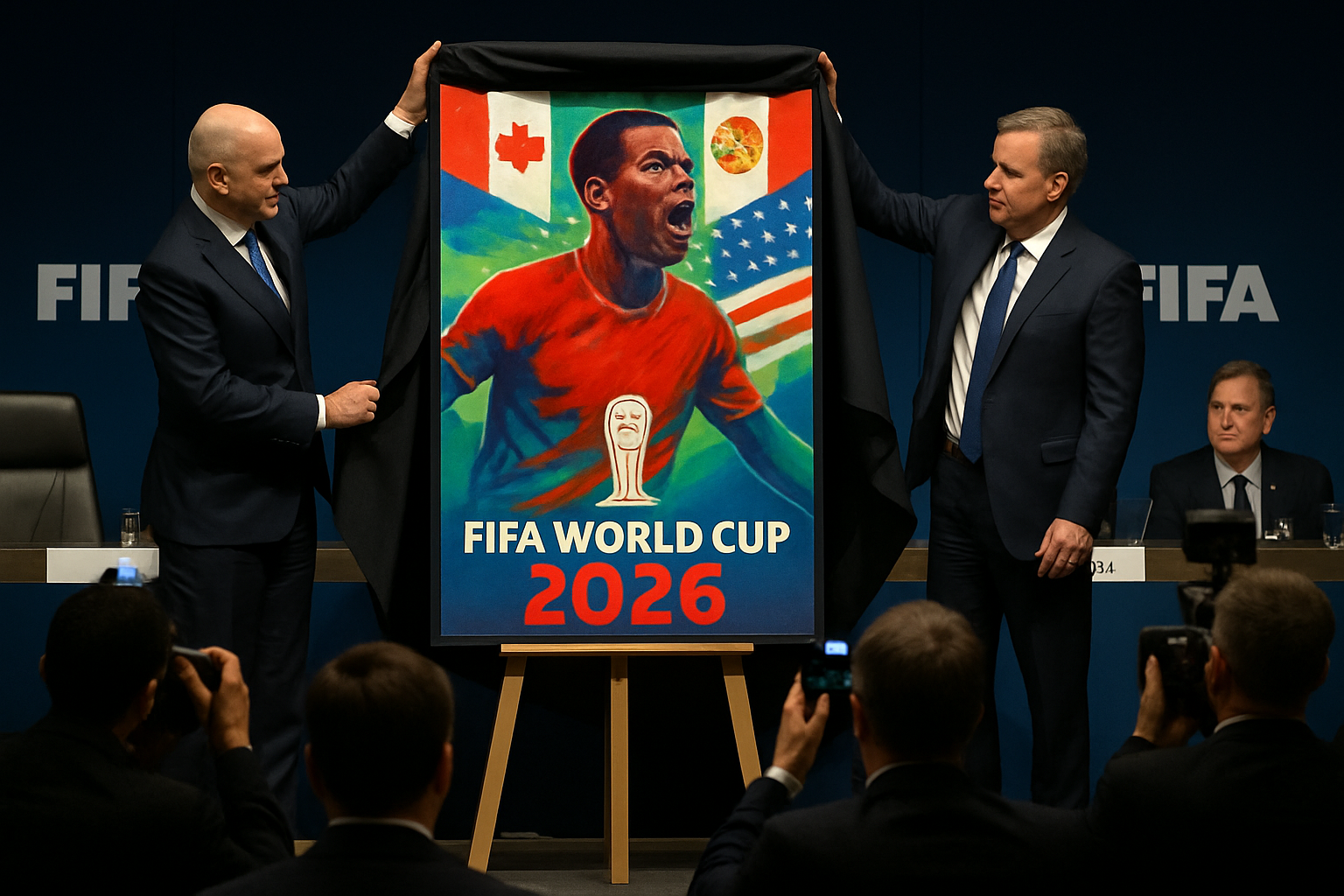
FIFA unveiled the Official Tournament Poster for the 2026 FIFA World Cup on Tuesday, March 3, marking exactly 100 days until the start of the largest and most ambitious World Cup in history, which will be jointly hosted by Canada, Mexico, and the United States.
The newly revealed poster completes FIFA's official World Cup 2026 poster collection, following the release of 16 individual Host City posters throughout 2025. Designed as a vibrant collage featuring a central player figure, the artwork celebrates football's unique ability to unite cultures and nations across the North American continent.
Unprecedented Artistic Collaboration
In a groundbreaking first for the tournament, three distinguished artists collaborated on the official design, representing each of the three host nations. Canadian illustrator Carson Ting, Mexican artist Minerva GM, and American artist Hank Willis Thomas worked together to create a visual representation of the tournament's historic tri-national scope.
The poster combines red, blue, and green tones in a deliberate tribute to the flags of Canada, the United States, and Mexico respectively, symbolizing the unprecedented cooperation that has made this expanded World Cup possible. The artistic collaboration reflects the broader spirit of unity that organizers hope will define the 2026 tournament.
Tournament of Historic Proportions
The 2026 World Cup represents a quantum leap in scale and ambition for FIFA's flagship event. Set to be the largest in World Cup history, the tournament will feature 48 teams competing in a record 104 matches across three countries. This expansion from the traditional 32-team format creates new opportunities for nations to participate on football's biggest stage while presenting unprecedented logistical challenges.
The competition will officially kick off at Mexico City's iconic Estadio Azteca on June 11, 2026, with the final scheduled for the newly constructed New York New Jersey Stadium on July 19. The six-week tournament will span multiple time zones and climate conditions, requiring sophisticated coordination between the three host nations.
Security and Preparation Challenges
However, the tournament's ambitious scale has not been without complications. Recent months have seen significant security concerns, particularly regarding Mexico's hosting capabilities. The February elimination of cartel leader Nemesio Oseguera Cervantes "El Mencho" triggered widespread violence across western Mexico, directly affecting Guadalajara, one of the designated World Cup host cities.
Despite these challenges, FIFA President Gianni Infantino has repeatedly expressed "complete confidence" in Mexico's ability to host its portion of the tournament safely. The organization has requested detailed security reports from all three host nations and maintains close coordination with local authorities.
Additional complications include ongoing questions about Iran's participation due to geopolitical tensions, funding challenges for U.S. host cities following federal budget constraints, and logistical complexities of managing the first-ever three-nation World Cup.
Economic and Cultural Impact
The 2026 World Cup is expected to generate unprecedented economic benefits across North America. Mexico, in particular, is counting on the tournament to drive post-pandemic tourism recovery, despite recent security challenges and a measles outbreak that has affected over 8,000 people nationwide, including in Guadalajara.
The tournament's cultural significance extends beyond sports, representing a celebration of North American diversity and collaboration. The official poster's artistic fusion exemplifies this broader theme, with organizers emphasizing football's power to transcend political and cultural boundaries.
"The 2026 World Cup will showcase the very best of football while celebrating the rich cultural tapestry of North America. This tournament belongs to all three nations and their peoples."
— FIFA Official Statement
Legacy and Innovation
Beyond its immediate impact, the 2026 World Cup is being positioned as a transformative event for football in North America. The tournament's legacy plans include sustained infrastructure development, enhanced youth football programs, and the establishment of permanent football academies across the region.
The innovative tri-national hosting model, if successful, could establish a template for future major sporting events in an increasingly interconnected world. FIFA officials have emphasized that the 2026 tournament represents not just an expansion of the World Cup, but an evolution of how global sporting events can be conceived and executed.
Looking Toward June
As the 100-day countdown begins, attention will intensify on the final preparations across all three host nations. The successful unveiling of the official poster represents a symbolic milestone, but organizers acknowledge that significant work remains to ensure the tournament's success.
The coming weeks will be crucial for resolving outstanding security concerns in Mexico, finalizing transportation and accommodation logistics across borders, and managing the complex visa and immigration processes for the millions of visitors expected to travel across North America for the tournament.
The 2026 FIFA World Cup promises to be a watershed moment for football, combining the sport's traditional passion with North American innovation and scale. Whether it fulfills its ambitious vision will be determined over the next 100 days and the six weeks of competition that follow.