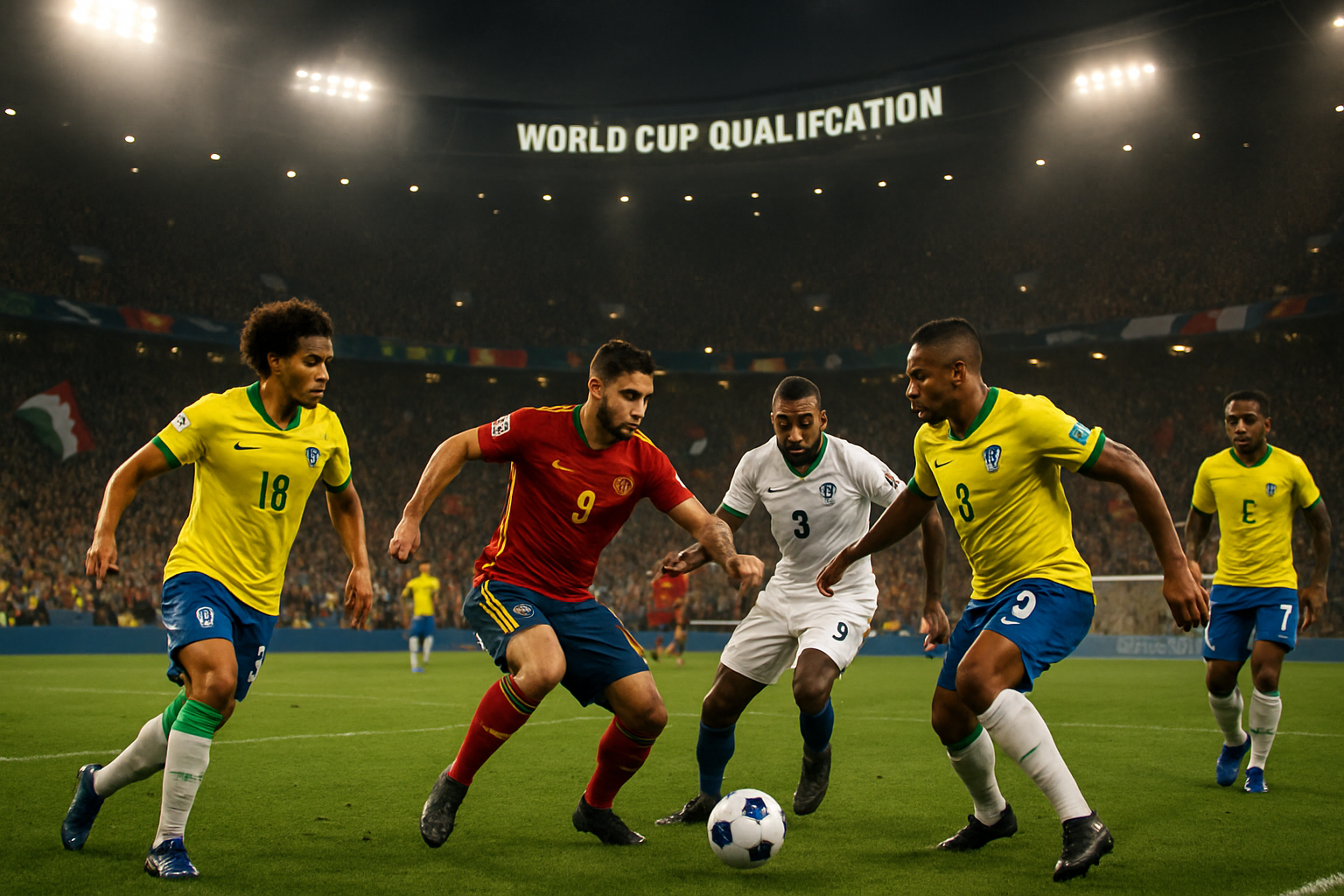
The FIFA World Cup 2026 qualification process delivered another night of dramatic upheavals as playoff matches across multiple confederations reshaped the tournament landscape, with Bolivia advancing to face Iraq in a final intercontinental playoff while European nations battled for the last remaining spots in the expanded 48-team tournament.
Bolivia's Historic Comeback Against Suriname
In perhaps the most dramatic match of the qualification round, Bolivia defeated Suriname 2-1 in Monterrey, Mexico, securing their place in the intercontinental playoff final. The South American nation, seeking to end a 32-year absence from the World Cup, found themselves trailing after Liam Van Gelderen scored for Suriname just three minutes into the second half.
However, Bolivia's resilience shone through in the closing stages. Moisés Paniagua equalized in the 72nd minute with a precise finish after a series of intricate passes that brought the crowd to life with chants of "sí se puede" (yes we can). The comeback was completed seven minutes later when Miguel Terceros converted a penalty after Juan Sinforiano Godoy was fouled in the area, sending his spot-kick into the bottom left corner of the net.
"Bolivia is now just 90 minutes away from the World Cup after a 32-year drought. The entire nation is behind this team."
— La Razón Sports Editor
The victory sets up a fascinating final playoff against Iraq, who overcame their own qualifying challenges. For Bolivia, this represents their best chance since 1994 to return to football's greatest stage, with the winner earning a place in Group D alongside Paraguay, Australia, and the United States.
European Drama: Bosnia-Herzegovina Stuns Wales
In European playoff action, Bosnia and Herzegovina produced one of the biggest upsets by eliminating Wales on penalties after a 1-1 draw in Cardiff. The "Dragons" (Zmajevi) showed tremendous character, with veteran striker Edin Džeko scoring a crucial 86th-minute equalizer to cancel out Daniel James's 52nd-minute opener for Wales.
The penalty shootout drama saw Bosnia advance to face Italy in the final, marking a potential breakthrough moment for the Balkan nation. Celebrations erupted across Sarajevo, with car horns and trumpets heard throughout the city as fans waved flags and celebrated what could be their first-ever World Cup qualification.
Bosnia's path has been remarkable, having overcome significant odds to reach this stage. They now face Italy, who themselves are desperate to avoid missing a third consecutive World Cup after their shock absences from both 2018 and 2022 despite being defending European champions.
Ireland's Heartbreak in Prague
Republic of Ireland's World Cup dreams ended in heartbreak as they fell to the Czech Republic on penalties following a goalless draw in Prague. Despite a valiant performance from Heimir Hallgrímsson's side, goalkeeper Matěj Kovář proved to be the hero for the hosts, saving penalties from Finn Azaz and Alan Browne in the decisive shootout.
The defeat continues Ireland's struggles in major tournament qualification, adding to their disappointments in recent playoff campaigns. For the Czech Republic, the victory keeps alive their hopes of reaching their first World Cup since 2006.
Northern Ireland also saw their qualification hopes dashed, falling 2-0 to Italy in their playoff semifinal. Second-half goals from Sandro Tonali and Moise Kean ensured the Azzurri's progression, though Italy's path to qualification remains challenging given their recent World Cup absences.
Intercontinental Playoffs Taking Shape
The intercontinental playoff structure has provided dramatic storylines, with multiple confederations represented in the final qualification battles. The Bolivia vs. Iraq matchup represents a fascinating clash between South American resilience and Asian determination, with both nations carrying the hopes of regions seeking greater World Cup representation.
Iraq's presence in the final playoff phase continues Asia's strong showing in qualification, while Bolivia's advancement ensures South America maintains competitive depth beyond their traditional powerhouses. The winner will join a World Cup that has already seen significant changes, including Iran's unprecedented withdrawal due to geopolitical tensions.
European Playoff Finals Set
The European playoff finals on March 31 will determine the continent's final qualifiers. Italy faces Bosnia and Herzegovina in Zenica, while Sweden meets Poland in Stockholm. Both matches carry enormous significance, with traditional powers potentially missing out on the expanded tournament.
Italy's potential third consecutive World Cup absence would be seismic for international football, given their status as defending European champions. Meanwhile, Bosnia's potential qualification would represent a historic breakthrough for the nation that has consistently competed at the highest level without reaching a World Cup.
Tournament Context and Challenges
These qualification battles occur against the backdrop of an already challenging World Cup preparation. The 2026 tournament, jointly hosted by the United States, Canada, and Mexico, has faced numerous logistical hurdles including security concerns in Mexico, Iran's withdrawal due to military conflict, and complex tri-national coordination requirements.
The expanded 48-team format has created more qualifying opportunities while maintaining the intensity of playoff drama. Nations like Bolivia, Bosnia-Herzegovina, and others are seizing these chances to break through traditional barriers and reach football's premier stage.
FIFA has maintained confidence in the tournament's execution despite various challenges, with President Gianni Infantino expressing complete faith in the hosting capabilities across all three nations. The organization has requested detailed security reports and continues working with host countries to ensure a successful tournament beginning June 11, 2026.
Looking Ahead to the Finals
As the World Cup qualification process enters its final phase, the stakes couldn't be higher for the remaining contenders. Bolivia's clash with Iraq will determine which nation ends their lengthy World Cup drought, while European playoffs will settle some of the continent's most compelling qualification battles.
The upcoming matches represent more than just tournament qualification—they offer opportunities for nations to write new chapters in their football histories. For countries like Bolivia and Bosnia-Herzegovina, reaching the World Cup would vindicate years of development and investment in their national programs.
With the expanded tournament format providing more opportunities than ever before, these qualification campaigns demonstrate that the beautiful game continues to reward determination, resilience, and tactical excellence regardless of traditional hierarchies. The final qualification places promise to be decided by the finest margins, adding to the drama of what has already been a captivating qualification campaign.