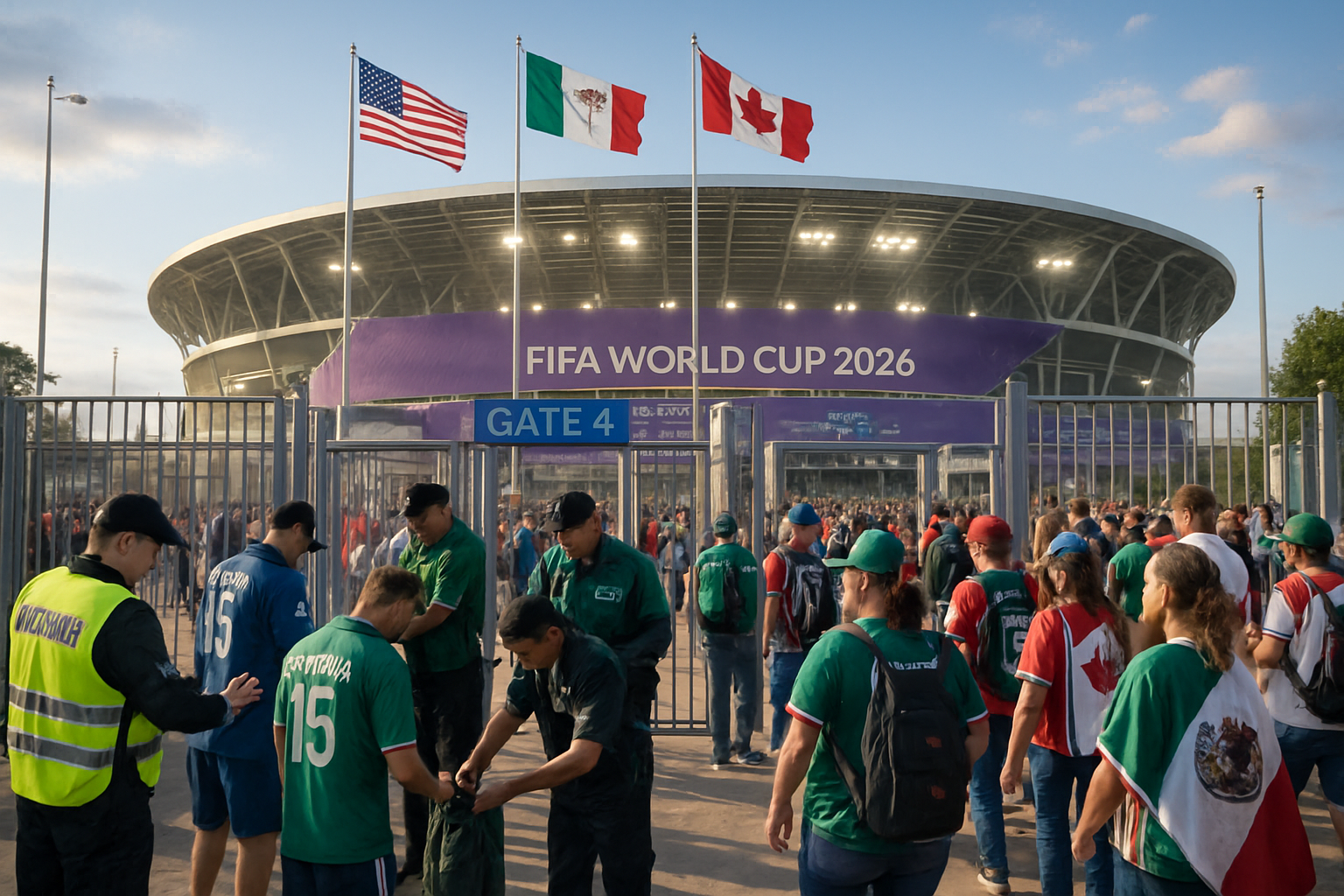
FIFA President Gianni Infantino declared "complete confidence" in Mexico's capacity to co-host the 2026 World Cup alongside the United States and Canada, despite escalating cartel violence that has claimed at least 70 lives and prompted multiple countries to issue urgent travel advisories just four months before the tournament begins.
The reassurance comes as Mexico faces its most severe security crisis in recent years following the death of Nemesio Oseguera Cervantes, known as "El Mencho," the leader of the Jalisco New Generation Cartel (CJNG). The February 22 elimination of the world's most wanted drug criminal triggered systematic retaliation across 20 Mexican states, with particular intensity in Jalisco state, home to World Cup host city Guadalajara.
Crisis in a World Cup Host City
Guadalajara's Akron Stadium, set to host multiple World Cup matches, sits at the center of a region now under "red code" emergency status. Governor Pablo Lemus suspended schools across eight states as CJNG loyalists launched coordinated attacks including vehicle burnings, highway blockades, and targeted strikes on government infrastructure and businesses.
The violence has resulted in confirmed casualties of 25 National Guard members, one police officer, and one judicial employee, while Mexican forces eliminated approximately 70 CJNG members during operations. Puerto Vallarta, a major tourist destination near Guadalajara, witnessed the burning of a Costco store and systematic targeting of civilian infrastructure.
"All the guarantees for safety were in place for the top international soccer tournament,"
— President Claudia Sheinbaum, during daily press conference
Mexican President Claudia Sheinbaum maintained there was "no risk" to fans coming to the country for the World Cup, despite deploying more than 10,000 troops across western regions in what represents the largest security operation in years. The president assured that the situation was "normalizing" with security forces working to safeguard the public.
FIFA's Unwavering Support
Speaking to reporters in Barranquilla, Colombia, FIFA President Infantino emphasized his confidence in Mexico's hosting capabilities. "I feel very calm" about Mexico hosting the tournament, he stated, adding that "everything is going" according to plan for the summer championship.
The FIFA chief's statements represent a calculated risk assessment as the organization balances security concerns against the massive logistical and financial implications of altering World Cup venues with just months remaining before kickoff. The tournament is expected to attract millions of international visitors across North America's three host nations.
International Travel Warnings Escalate
The security crisis has prompted a cascade of international travel advisories that threaten to undermine visitor confidence. Canada announced it was "closely monitoring" the situation, with Air Canada and WestJet implementing temporary flight suspensions before resuming service. Australia urged travelers to exercise a "high degree of caution" when visiting Mexico.
Belize took the strongest stance, with Ambassador Oscar Arnold advising nationals to "reconsider or delay Mexico travel entirely" until greater stability is restored. The Dominican Republic specifically warned against non-essential travel to Jalisco state, while Malaysia's Foreign Ministry urged citizens to "remain vigilant and exercise caution" in areas affected by security operations.
Economic Stakes and Tourism Impact
The violence represents the strongest threat to Mexico's tourism industry since the pandemic, with major hotel chains closing facilities and popular destinations experiencing significant disruptions. The tourism sector had projected the World Cup would provide the strongest post-pandemic performance, serving as a catalyst for sustained infrastructure development and international marketing benefits extending beyond the competition period.
Mexico was counting on co-hosting the World Cup with the US and Canada to showcase its capacity for managing large-scale international events while demonstrating security improvements. The current crisis now tests the government's ability to restore international confidence while managing sophisticated transnational criminal organizations.
A Pattern of Leadership Eliminations
The death of El Mencho represents the most significant cartel leadership elimination since the capture of Joaquín "El Chapo" Guzmán in 2016. However, security analysts warn that historical patterns show such eliminations often cause organizational splintering rather than decreased violence, as regional commanders compete for control of lucrative territories and operations.
The operation that killed El Mencho resulted from successful US-Mexico intelligence cooperation, with American agencies providing crucial tracking support to locate the cartel leader through romantic partner surveillance. The collaboration demonstrates effective bilateral security frameworks, though the violent aftermath tests their capacity to manage consequences.
Government Response and Military Deployment
Defense Secretary Ricardo Trevilla confirmed a "sophisticated intelligence breakthrough" that enabled the successful operation against El Mencho. The government has deployed all necessary resources to restore order and protect civilian populations, with President Sheinbaum maintaining real-time communication with her security cabinet throughout the crisis.
The scale of Mexico's response, involving over 10,000 troops, reflects the government's recognition of the stakes involved. Success in managing this crisis will significantly influence international perceptions of Mexico's institutional capacity and provide a template for democratic responses to sophisticated criminal challenges.
US Funding Concerns Add Complexity
The security crisis comes as the United States faces its own World Cup preparation challenges. FEMA had frozen $900 million in World Cup security funds during a government shutdown, scaling back operations to "bare-minimum" levels. House Homeland Security Committee hearings revealed "catastrophic" security preparation delays with representatives citing frozen funds and federal-local coordination failures.
This funding crisis in the US adds another layer of complexity to North American security coordination, as the three host nations must ensure seamless cooperation to protect millions of visitors across borders during the tournament.
Looking Ahead to June
With the World Cup scheduled to begin in June 2026, Mexico faces a critical four-month window to restore stability and rebuild international confidence. The success or failure of current operations will influence how other countries approach sophisticated transnational criminal organizations and could provide a template for democratic institutions responding to 21st-century security challenges.
FIFA's confidence represents more than tournament logistics—it reflects a calculated assessment that Mexico's institutional capacity can overcome the current crisis. The coming months will determine whether that confidence is justified and whether the beautiful game can indeed transcend the complex security challenges facing modern Mexico.
As the world watches, the 2026 World Cup preparations have become a test case for international cooperation, democratic resilience, and the capacity of major sporting events to proceed safely in an increasingly complex global security environment.