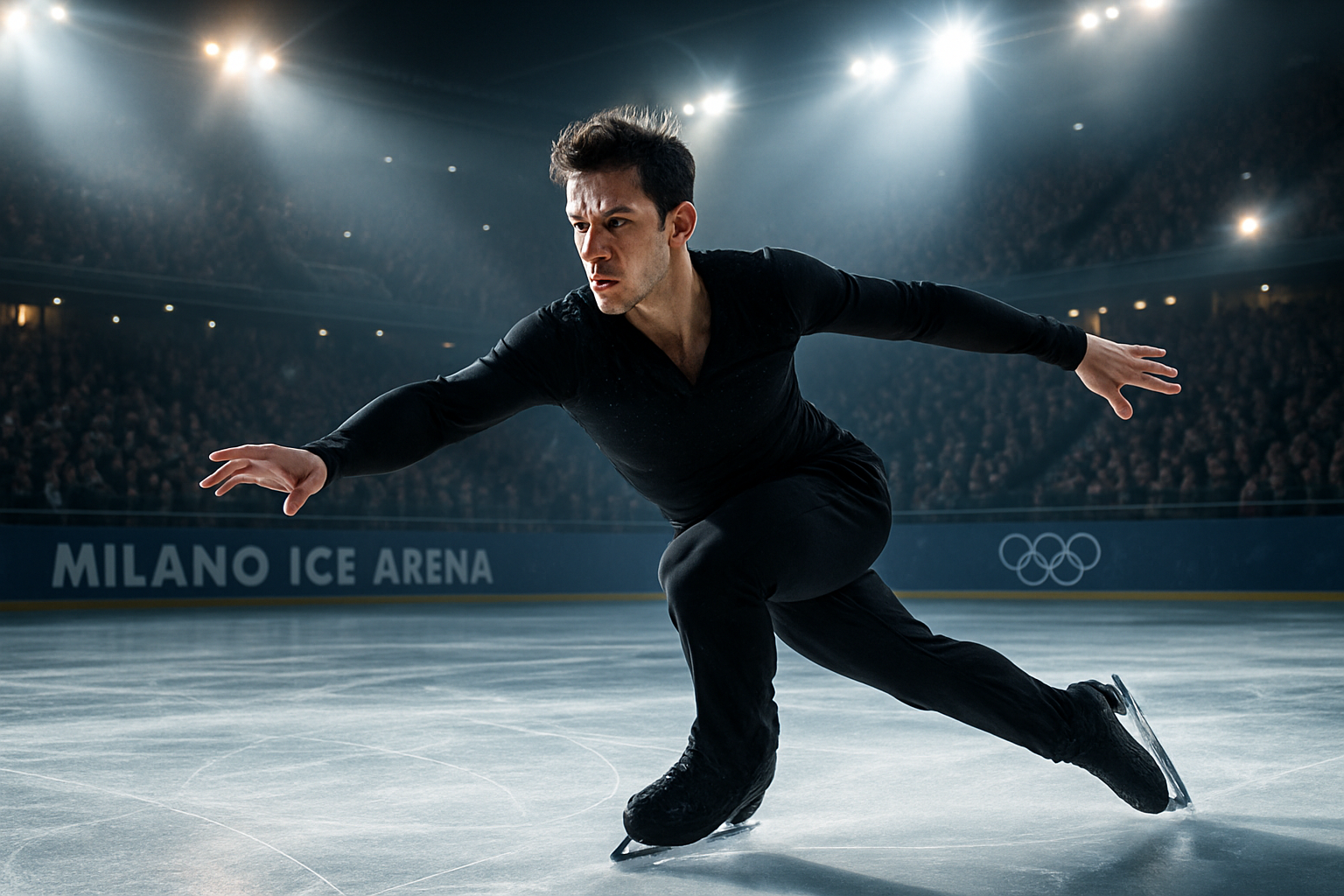
In one of the most shocking upsets in Olympic figure skating history, Kazakhstan's Mikhail Shaidorov (21) claimed stunning gold in men's figure skating at the Milano Ice Arena on February 13-14, 2026, while overwhelming favorite Ilia Malinin of the United States suffered a devastating collapse that left him finishing in eighth place.
Shaidorov's victory with 291.58 points represents Kazakhstan's first-ever Olympic figure skating medal and one of the biggest surprises in Winter Olympic history. The 21-year-old entered the competition ranked fifth after the short program but delivered a flawless free skate performance under immense pressure to secure his nation's historic breakthrough.
Malinin's Olympic Nightmare
American prodigy Ilia Malinin, just 17 years old and the reigning world champion who had been undefeated since 2023, experienced what can only be described as an Olympic nightmare. The skater known for his mastery of the quad axel - a jump no other competitor has successfully landed in competition - fell twice during his free skate program and committed multiple technical errors.
"He is the Olympiasieger im Eiskunstlauf," reported Swiss media of Shaidorov's disbelief at his victory, while describing how "Der Amerikaner Malinin, der in Italien wieder einmal Geschichte schreiben wollte, patzt, fällt, gibt auf – und landet auf einem beschämenden achten Platz" (The American Malinin, who wanted to make history again in Italy, stumbles, falls, gives up - and lands in an embarrassing eighth place).
Japanese Skaters Claim Silver and Bronze
Japan's men capitalized on Malinin's struggles to claim both silver and bronze medals. Yuma Kagiyama delivered when opportunity arose, earning silver with 280.06 points, while Shun Sato secured bronze. The Japanese performances demonstrated the incredible depth and consistency that has made their skating program one of the world's strongest.
Kagiyama had positioned himself as Malinin's primary challenger throughout the season and proved ready when the American faltered under Olympic pressure. Both Japanese skaters delivered solid, consistent performances that exemplified their nation's technical excellence and mental fortitude.
Kazakhstan's Historic Breakthrough
For Kazakhstan, Shaidorov's victory represents far more than a single medal. It marks a watershed moment for the country's winter sports development and demonstrates how nations traditionally outside figure skating's elite circles can break through at the highest level.
The victory comes as part of a broader trend of winter sports democratization evident throughout the Milano-Cortina 2026 Games, where athletes from non-traditional skating powerhouses have made significant breakthroughs. With traditional powerhouses like Russia absent from competition, the field has become more competitive and unpredictable than ever.
The Collapse of a Favorite
Malinin's eighth-place finish is particularly shocking given his dominance over the past three years. The teenager had won the team event gold earlier in the Games, giving no indication of the individual disaster to come. His quad axel mastery and technical superiority had made him appear virtually unbeatable.
The collapse highlights the incredible pressure and unpredictability of Olympic competition, where even the most dominant athletes can crumble under the weight of expectation. At just 17, Malinin still has multiple Olympic cycles ahead of him, but this defeat will undoubtedly serve as a humbling reminder that Olympic gold is never guaranteed.
Revolutionary Olympics Setting
The competition took place as part of the Milano-Cortina 2026 Winter Olympics, the most geographically dispersed Games in Olympic history, spanning over 400 kilometers across northern Italy. The revolutionary dual-city hosting model has proven successful despite initial infrastructure challenges, demonstrating that Olympic excellence can be maintained while embracing environmental responsibility and geographic distribution.
The figure skating events have been enhanced by cutting-edge technology, including OMEGA's AI-powered analysis system and Alibaba's Qwen AI integration for broadcasting and spectator services - the first Olympic deployment of large language model technology.
Broader Implications
This result exemplifies the changing landscape of international figure skating, where depth and unpredictability have reached new heights. The absence of Russian skaters, who had dominated the sport in recent years, has opened opportunities for skaters from countries that traditionally haven't competed for Olympic medals.
For American figure skating, the result represents a significant disappointment, though Malinin's youth suggests he will have multiple opportunities to claim Olympic gold in future competitions. The sport has shown repeatedly that early career setbacks can fuel later triumphs.
Shaidorov's victory will likely inspire a new generation of skaters from Kazakhstan and other Central Asian nations, demonstrating that with proper development and support, breakthrough performances are possible even from the most unexpected sources.
Olympic Drama Personified
The men's figure skating competition at Milano-Cortina 2026 will be remembered as a defining moment that exemplified the unpredictable nature of Olympic sport. In a single evening, careers were made and dreams were shattered, showing why the Olympics continue to captivate global audiences.
As competition continues through February 22 across the Italian Alps, Shaidorov's triumph stands as perhaps the defining upset of these revolutionary Games - a reminder that in Olympic competition, anything can happen, and the most unexpected heroes can emerge from the most unlikely places.