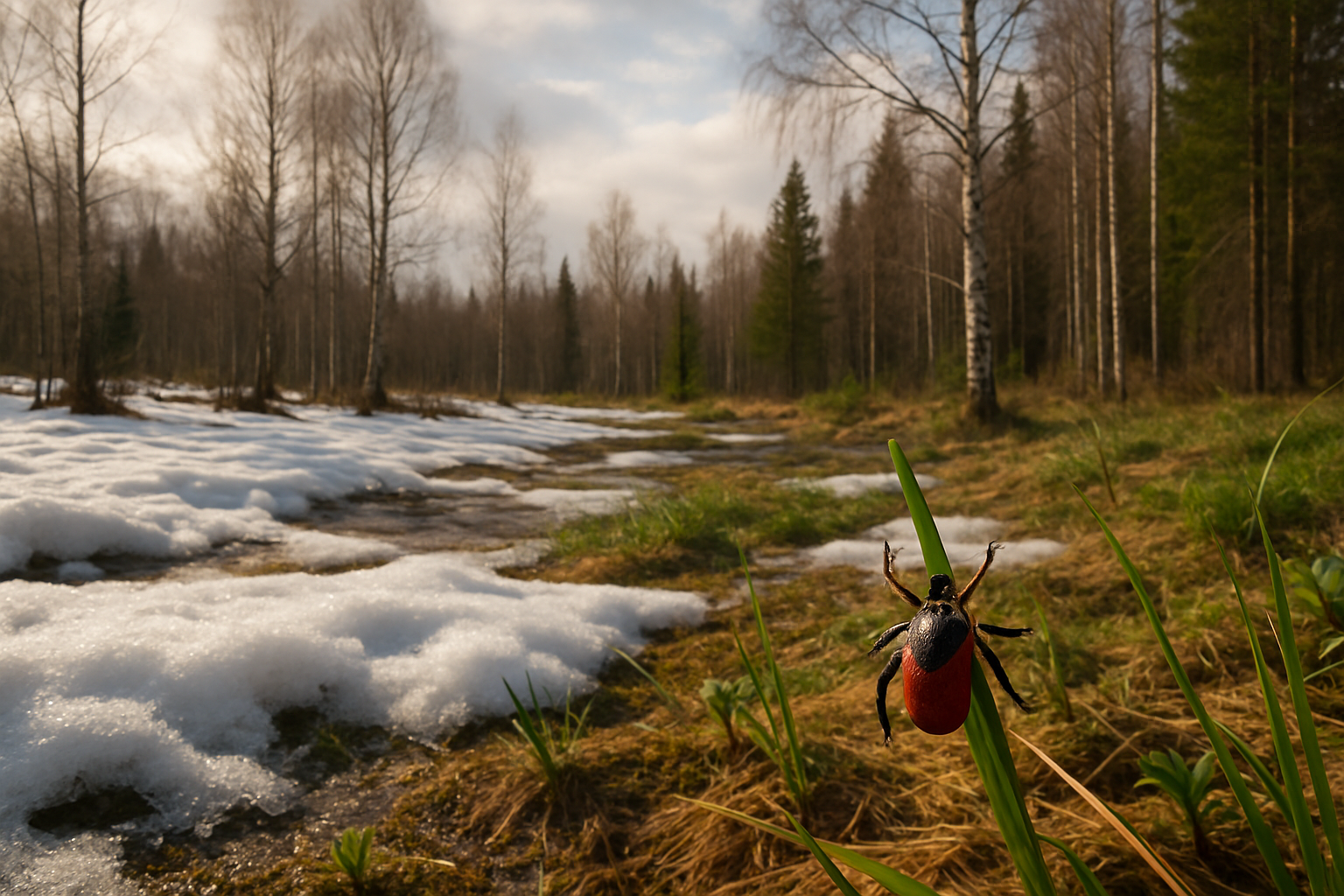
Finland is experiencing its most dramatic seasonal shift in recorded meteorological history, with March 2026 temperatures reaching the highest levels in 145 years while triggering an unprecedented early tick season that has extended far into northern regions previously unaffected during winter months.
The Finnish Meteorological Institute has confirmed that current March temperatures represent the warmest conditions since systematic weather recording began in the country. This extraordinary warming has created cascading ecological effects throughout Finland's natural systems, with implications extending far beyond simple temperature records.
Record-Breaking Tick Activity Across Finland
Wildlife monitoring stations across Finland have documented tick activity beginning in February and intensifying throughout March, representing the earliest recorded tick season in the nation's history. Observations have been reported as far north as the Oulu region, where ticks are typically not active until late spring or early summer months.
The unusually warm conditions and reduced snow cover have created optimal conditions for tick emergence, despite the minimal winter frost that typically suppresses tick populations. Environmental researchers note that traditional winter conditions, including sustained sub-zero temperatures and substantial snow accumulation, have historically served as natural population controls for tick communities.
"The current situation is unprecedented in our monitoring records," explains Dr. Matti Huutonen, a meteorologist who has been tracking Finland's seasonal patterns for over two decades. "We're observing biological responses that are weeks, sometimes months ahead of traditional timing patterns that have guided Finnish wildlife management for generations."
Extensive Wildlife Activity Shifts
The early warming has triggered far more than just tick activity. Finnish naturalists have documented the arrival of the first migratory birds, with species typically associated with late April and May conditions appearing in early March. Additionally, snakes and ants have emerged from their winter dormancy periods significantly ahead of schedule.
This premature wildlife activity represents a fundamental disruption of ecological relationships that have evolved over millennia. The timing mismatches between species that depend on each other for food, pollination, and other ecological services create potential cascade effects throughout Finland's forest and wetland ecosystems.

Infrastructure Challenges from Rapid Weather Transitions
Finland's infrastructure systems, designed around predictable seasonal patterns, are facing unprecedented stress from the rapid temperature fluctuations. The Tuira swimming beach in Oulu has experienced repeated damage to pier structures from unexpected ice formations and flows in the Oulujoki River, creating millions of cubic meters of ice movement that destroys carefully constructed facilities.
Municipal water systems have also faced challenges, with Rauma experiencing a citywide water main break that caused complete pressure collapse throughout the city. These infrastructure failures highlight the vulnerability of systems designed for historical climate patterns when confronted with the new reality of extreme weather volatility.
Transportation networks across Finland have required constant adaptation, with traditional winter maintenance schedules proving inadequate for the unpredictable freeze-thaw cycles that characterize the current weather patterns. Road surfaces experience unprecedented stress from temperature swings that can exceed 20 degrees Celsius within 24-hour periods.
Global Climate Context and Finland's Position
Finland's extreme weather conditions occur within the broader context of what climate scientists are calling an unprecedented global warming period. March 2026 marks the 21st consecutive month that global temperatures have exceeded 1.5°C above pre-industrial levels - the longest sustained extreme warming period in recorded human history.
"What we're seeing in Finland is part of a global pattern where human-induced climate change is fundamentally overriding natural climate variability, including traditional cooling mechanisms like La Niña effects."
— Dr. Elina Virtanen, Climate Research Institute
The sustained warming is creating what researchers describe as a "climate volatility paradox" - while global temperatures continue to rise, regional weather systems experience increasingly extreme variations. This explains how Finland can simultaneously experience record-breaking warm periods while other regions face severe winter storms.
Agricultural and Economic Implications
Finnish agricultural communities are adapting to seasonal patterns that no longer align with traditional planting and harvesting schedules. Maple sap flows have begun weeks early, forcing syrup producers to accelerate their operations. Forest management companies are reassessing timber harvesting schedules as ground conditions change unpredictably.
The tourism industry faces complex challenges as winter sports seasons become shorter and less predictable, while traditional summer activities begin earlier. The famous Finnish forest hiking and camping industries must adapt to extended seasons of tick activity, requiring enhanced safety protocols and public education campaigns.
Economic sectors dependent on seasonal predictability - from agriculture to energy consumption - are experiencing disruptions that require fundamental adaptations to business models developed over decades of relatively stable seasonal patterns.
Public Health and Safety Measures
Finnish health authorities have initiated comprehensive public awareness campaigns about tick-borne disease risks during this unprecedented early season. The extended tick activity period increases exposure risks for outdoor enthusiasts, forest workers, and rural communities who may not expect tick encounters during traditional winter months.
The early emergence and northern expansion of tick populations has prompted enhanced monitoring systems throughout Finland's national parks and forest recreation areas. Warning systems now operate year-round rather than seasonally, reflecting the new reality of extended risk periods.
Medical professionals across Finland have reported increased consultations related to tick encounters and concerns about Lyme disease transmission during months when such cases were previously extremely rare.
Scientific Monitoring and Research Response
The University of Turku has expanded its pollen bulletin systems to track the increased long-distance allergen transport that results from altered atmospheric circulation patterns. These monitoring systems provide early warning capabilities for communities dealing with extended allergy seasons and changing environmental conditions.
Research institutions across Finland are documenting these ecological changes through sophisticated monitoring networks that combine satellite imagery, environmental DNA sampling, and traditional field observations. This data contributes to global climate research while providing practical guidance for Finnish communities adapting to changing environmental conditions.
International collaboration with other Nordic countries and Arctic research institutions has intensified, as Finland's experience provides crucial insights for regions worldwide facing similar rapid environmental transitions.
Adaptation and Future Preparedness
Finnish authorities are implementing what experts describe as "transformative adaptation" approaches - moving beyond reactive responses to proactive systems designed for permanent climate volatility. This includes revised emergency preparedness protocols, enhanced early warning systems, and infrastructure improvements designed for extreme weather variability rather than historical patterns.
Community resilience programs emphasize the integration of traditional Finnish environmental knowledge with modern climate science. Local communities are developing hybrid adaptation approaches that combine centuries of experience with forest and weather patterns with advanced meteorological forecasting capabilities.
The Finnish government has accelerated climate adaptation investments, recognizing that current conditions may represent a preview of routine environmental circumstances in the 2030s without immediate comprehensive action.
Regional and International Implications
Finland's experience provides a crucial case study for other northern latitude countries facing similar rapid environmental transitions. The combination of ecological disruption, infrastructure challenges, and social adaptation requirements offers lessons for regions from Canada to Siberia dealing with accelerated climate change impacts.
Nordic cooperation frameworks are evolving to address concurrent rather than sequential climate emergencies. Traditional mutual aid mechanisms, designed for isolated regional disasters, require fundamental restructuring when multiple countries face simultaneous extreme weather conditions.
The European Union's Civil Protection Mechanism has been repeatedly activated throughout 2026, with coordinated responses reaching unprecedented scales. Finland's adaptation strategies contribute to broader European climate resilience planning during this critical period of environmental change.
Looking Forward: The New Finnish Climate Reality
March 2026 represents what climate researchers describe as a watershed moment for Finnish climate preparedness. The choice between reactive crisis management and transformative infrastructure adaptation has become increasingly urgent as traditional seasonal patterns prove unreliable for planning frameworks that guided Finnish society for generations.
Scientists emphasize that the current conditions offer a preview of routine environmental circumstances without immediate comprehensive climate action. The window for effective adaptation is narrowing rapidly, but Finland's response to these unprecedented challenges demonstrates the potential for coordinated action to maintain community resilience during environmental change.
The convergence of extreme weather, ecological disruption, and infrastructure vulnerabilities in March 2026 underscores the urgent need for coordinated international action. Finland's experience during this critical period will influence environmental protection and climate adaptation approaches for generations, providing essential lessons for maintaining habitability during Earth's most environmentally challenging period in recorded history.
As Finnish communities adapt to the reality of year-round tick activity, extended allergy seasons, and unpredictable weather patterns, they are pioneering adaptation strategies that may prove essential for northern communities worldwide facing the acceleration of climate change impacts in the years ahead.