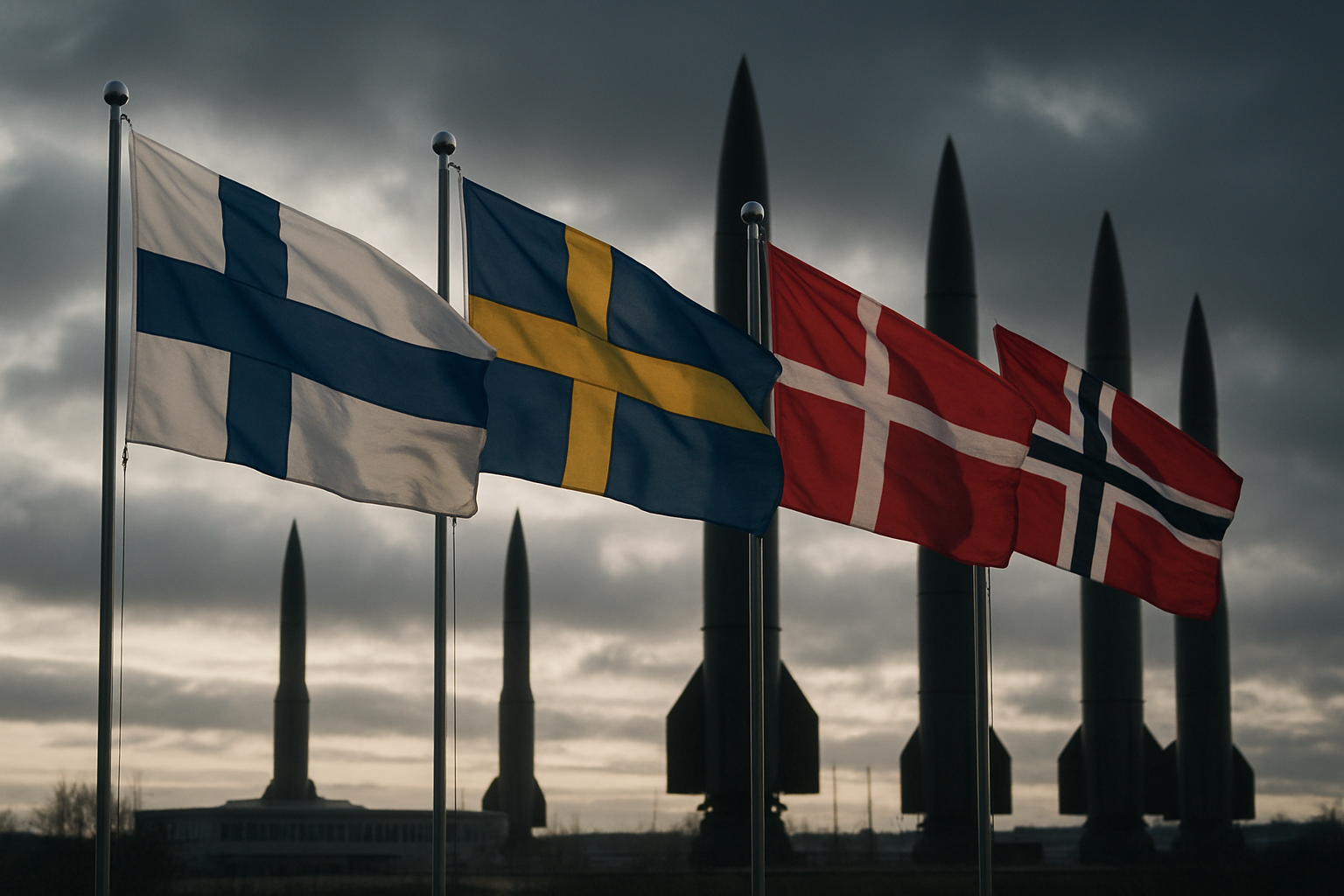
Finland's government has announced plans to lift the nation's comprehensive ban on nuclear weapons within its territory "as soon as possible," marking a seismic shift in Nordic defense policies that could fundamentally alter the regional security architecture.
Defense Minister Antti Häkkänen (National Coalition Party) declared at a March 5, 2026 press conference that Finland's "current legislation does not meet the needs Finland has as a NATO member," signaling the most dramatic departure from Nordic nuclear-free policies since the Cold War era.
Historic Break from Nordic Nuclear Consensus
The proposed policy change would make Finland the only Nordic country without restrictions on nuclear weapons, according to Social Democratic Party leader Antti Lindtman. This represents a fundamental break from the nuclear-free stance that Nordic nations have maintained collectively for decades, even as some neighboring countries joined NATO's nuclear sharing arrangements.
Swedish Defense Minister Pål Jonson had previously announced in February 2026 that Sweden would be willing to host nuclear weapons during wartime conditions, marking the first crack in Nordic nuclear consensus. However, Finland's proposal goes significantly further by removing peacetime restrictions entirely.
"Finland must maximize its security," Defense Minister Häkkänen stated, emphasizing the strategic imperative behind the policy shift.
— Antti Häkkänen, Finnish Defense Minister
Strategic Context and NATO Membership
The announcement comes as Finland continues integrating into NATO following its membership approval in April 2023, abandoning decades of military neutrality in response to Russia's invasion of Ukraine. The nuclear policy revision represents the practical consequences of full alliance membership and collective defense responsibilities under Article 5.
This shift coincides with broader European strategic autonomy discussions, including France's March 2026 announcement of nuclear arsenal expansion and establishment of "advanced deterrence" cooperation with eight European nations. The convergence of these developments signals the most significant transformation in European nuclear doctrine since the Cold War.
Opposition Voices and Regional Concerns
Social Democratic Party leader Antti Lindtman characterized Finland's deviation from the Nordic line as "extremely problematic," highlighting the domestic political divisions over the nuclear policy reversal. The opposition argues that breaking with Nordic nuclear-free traditions could undermine regional stability and diplomatic coordination.
The timing is particularly sensitive as the region faces unprecedented security challenges. The February 2026 expiration of the New START Treaty eliminated 50+ years of US-Russia nuclear constraints, creating what UN Secretary-General António Guterres called a "grave turning point" with nuclear risks at their "highest in decades."
European Nuclear Deterrence Revolution
Finland's nuclear policy shift must be understood within the broader context of European strategic transformation. German Chancellor Friedrich Merz has confirmed direct negotiations with French President Emmanuel Macron about expanding France's nuclear deterrent beyond national scope, with Germany, Poland, and Finland participating in preliminary conversations about extended deterrence arrangements.
This represents the first serious European nuclear deterrence discussions since the Cold War's end, reflecting deep concerns about US security guarantee reliability and the need for European strategic autonomy in an increasingly multipolar world.
Implications for Arctic Security
The policy change carries particular significance for Arctic security coordination. NATO's Arctic Sentry mission, launched in February 2026, involves the UK doubling its troop presence in Norway and Sweden deploying Gripen jets to Greenland exercises. Finland's nuclear flexibility could provide additional strategic options for alliance Arctic defense capabilities.
Russian responses to Nordic NATO integration have included Cold War-era base reopenings and increased reconnaissance activities in the Baltic Sea region, including the recent incident where a Russian drone from reconnaissance vessel Zhigulevsk was intercepted near the French aircraft carrier Charles de Gaulle during NATO exercises.
Implementation Challenges and Timeline
The Finnish government's "as soon as possible" timeline faces significant parliamentary and legal obstacles. The proposal requires constitutional amendments, new legal frameworks, and extensive coordination with NATO nuclear doctrine and command structures to avoid competing authorities during crisis management.
Technical implementation involves massive financial investments and infrastructure development, similar to challenges facing France's nuclear cooperation initiatives with European partners. Finnish officials acknowledge that preliminary frameworks alone may require years to establish, with full operational capability potentially taking until the next decade.
Regional and Global Implications
Finland's nuclear policy reversal breaks an 80-year taboo on Nordic nuclear alternatives to US guarantees, potentially creating a template for other regions facing similar security challenges. The success or failure of Finland's integration of nuclear capabilities could influence broader European strategic autonomy development and NATO adaptation to 21st-century threats.
The announcement adds urgency to ongoing Ukraine peace negotiations, where nuclear governance and European security architecture questions intersect with territorial sovereignty principles. The June 2026 Washington venue talks will likely address how Nordic nuclear policy changes affect broader European stability.
As Finland prepares to potentially become the only Nordic nation without nuclear weapons restrictions, the decision represents not just a national policy change but a fundamental shift in post-Cold War European security assumptions, with implications extending far beyond Scandinavia to global nuclear governance and alliance coordination in an era of great power competition.